 FIELD
FIELD Magnetism: testing minerals with a magnet
A cheap magnet is one of the most decisive tools in a rockhound’s pocket — a mineral either tugs at it or it does not, and that single yes-or-no answer rules whole families of look-alikes in or out.
Magnetism is the property that lets a handful of minerals attract, or be attracted by, an ordinary magnet. It is one of the quickest and least ambiguous field tests you can run: unlike colour or luster, which shift with weathering and lighting, a mineral’s response to a magnet is a clean yes, no or faint maybe. Only a small number of species react strongly, so a positive result narrows the field dramatically — and the star of the show, magnetite, is common enough that every collector meets it sooner or later.
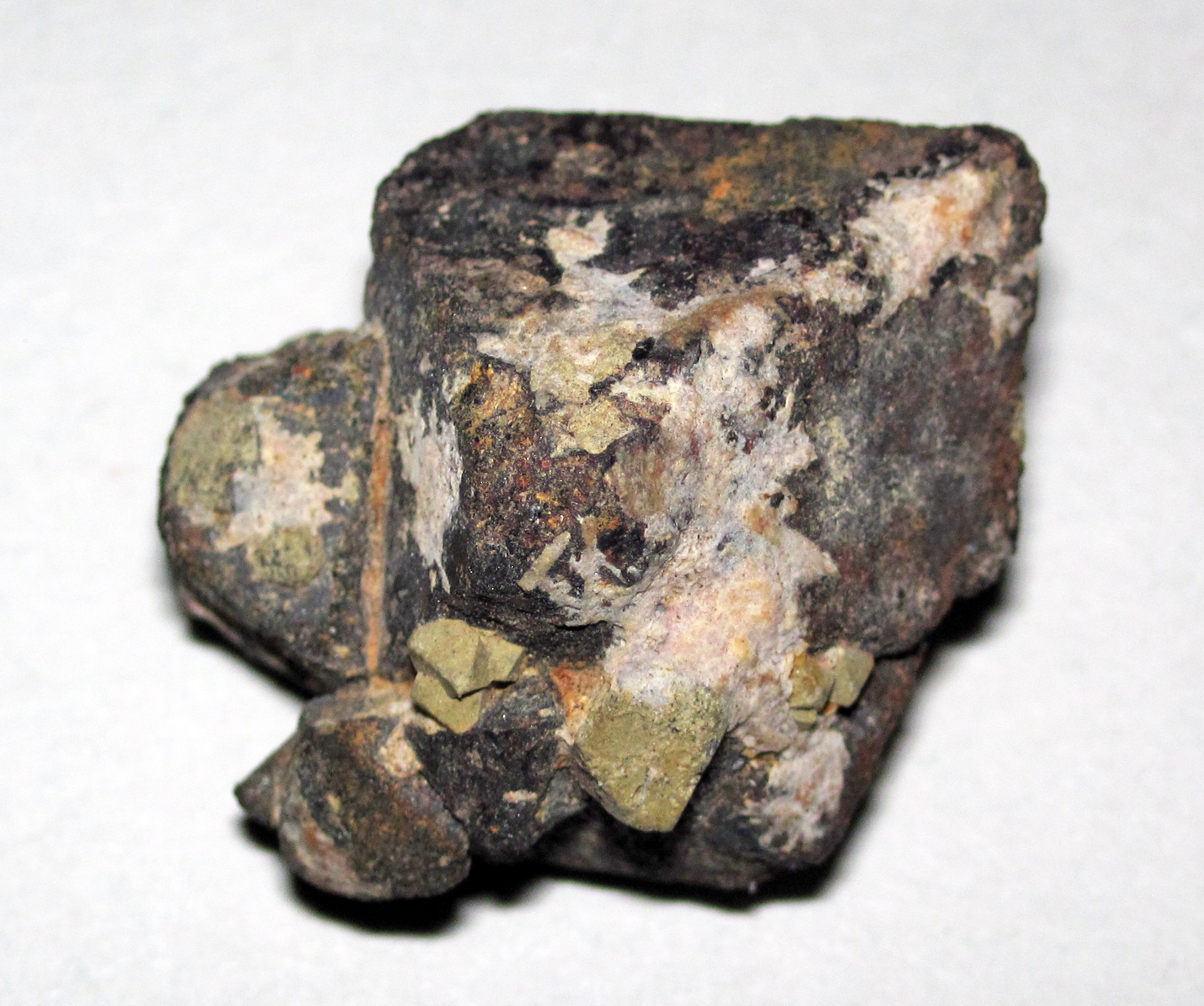
What magnetism tells you about a mineral
Magnetism in minerals comes down to iron — specifically to how the iron atoms’ magnetic moments line up inside the crystal structure. In a few minerals those moments align so that the whole crystal behaves like a small magnet, and it is pulled firmly toward any external magnet. In most minerals the moments cancel out or barely respond, so nothing happens. Because the effect depends on composition and structure rather than surface appearance, magnetism does not fade with weathering the way a bright streak or a fresh face can, which makes it unusually reliable. A mineral that clearly jumps to a magnet has told you it is iron-rich and, in practice, is almost certainly one of a very short list of species.
The minerals that respond to a magnet
Strong magnetism is rare enough that the roll-call is short. Magnetite (Fe₃O₄) is the headline mineral: a black, opaque oxide with a black streak and a hardness around 5.5 to 6.5 that is strongly attracted to any magnet, and naturally magnetised pieces — called lodestone — will pick up iron filings and paperclips on their own. After magnetite the effect drops off quickly.
- Magnetite — strongly magnetic, the benchmark; black, metallic to submetallic, dense at a specific gravity near 5.2.
- Pyrrhotite — a bronze-coloured iron sulfide that is variably but often noticeably magnetic; the only common sulfide that reacts.
- Lodestone — magnetite that is itself permanently magnetised and attracts iron without help.
- Ilmenite — an iron-titanium oxide, weakly magnetic and easily confused with magnetite.
- Chromite and franklinite — both weakly magnetic members of the spinel group.
- Meteoritic iron — nickel-iron from stony-iron and iron meteorites is strongly magnetic, a useful first check on a suspected space rock.
Strongly magnetic
- Magnetite — jumps to the magnet
- Lodestone — magnet in its own right
- Meteoritic nickel-iron
- Some pyrrhotite
Weakly or not at all
- Hematite — usually no reaction
- Ilmenite, chromite — faint tug
- Quartz, feldspar, calcite — none
- Most silicates and carbonates — none
How to run the magnet test in the field
The test itself takes seconds. A small neodymium magnet is ideal because it is powerful enough to reveal even weakly magnetic minerals, and suspending it on a short thread or resting it on a pencil makes the faintest tug easy to see — the magnet swings toward the specimen before they touch. For a stronger reaction you can simply bring the magnet to the rock and feel the pull, or watch whether small grains leap up to it. To check for a natural lodestone, hold the specimen near a compass or a scatter of iron filings and see whether the mineral itself deflects them. Always test a fresh, clean surface: a magnetite pebble wrapped in a clay rind or an iron-stained crust can read weaker than it should, so give the piece a quick clean first. And test the mineral, not the matrix — a magnetic response from one dark grain in a pale rock is telling you about that grain, a distinction that matters when you are working out whether you hold a single mineral or an aggregate, as covered in our guide to rock versus mineral.
Ferromagnetism, paramagnetism and why strength varies
The reason some minerals leap to a magnet while others barely stir lies in how their iron atoms behave. Magnetite is ferrimagnetic: its atomic magnets align in a way that leaves a strong net magnetism, so it is powerfully attracted and can even hold a permanent charge as lodestone. Most other iron minerals are only paramagnetic — their atomic magnets respond feebly and align only while a magnet is present, giving the faint tug you see in ilmenite or chromite. A great many minerals are diamagnetic and are, if anything, very slightly repelled. This is why a strong neodymium magnet is worth carrying: an ordinary fridge magnet will catch magnetite but miss the weakly magnetic species entirely, and knowing the difference between a hard pull and a barely perceptible one is itself a clue. Heating changes things too — roast hematite in a flame and part of it converts to magnetite, which is why some furnace slags and heat-altered ironstones behave magnetically when the parent mineral does not.
Where the magnet test fits with the other field tests
Magnetism is at its best as one move in a short routine. A dense black mineral that grabs the magnet, shows a black streak and feels heavy in the hand is magnetite and very little else — three quick tests and the name is settled. Pair the magnet with the Mohs hardness scale, the streak test and a sense of specific gravity, and the heavy iron minerals separate almost at a glance: magnetite is magnetic with a black streak, hematite gives a red-brown streak but usually ignores the magnet, and ilmenite sits weakly magnetic in between. It also pairs neatly with the acid test when you are sorting a mixed pan of dark grains — the magnetic ones lift out, the carbonate ones fizz, and the rest can be sifted by cleavage and fracture.
Cautions and common mistakes
A few traps catch beginners. The commonest is contamination: tiny flecks of steel from a rock hammer, or magnetite dust already clinging to a magnet, can make a non-magnetic rock seem to react, so wipe the magnet and test a clean broken face. Hematite causes endless confusion because collectors expect an iron oxide to be magnetic; ordinary hematite is not, and only its heat-altered or intergrown-with-magnetite forms respond, so a red streak with no magnetic pull points to hematite rather than magnetite. Beware, too, of man-made magnetic material — furnace slag, mill scale and some ceramic fragments are strongly magnetic and are regularly mistaken for meteorites, which is why a magnet test alone can never confirm a meteorite. And do not over-read a faint tug: many rocks carry a trace of magnetite and will nudge a strong magnet slightly without being a magnetic mineral in their own right. As always, confirm with a second property before you commit to a name, and if you are just starting out, work through the whole toolkit in how to start rockhounding.
Frequently asked questions
What minerals are magnetic?
Magnetite is the only strongly magnetic common mineral, along with naturally magnetised lodestone. Pyrrhotite is a variably magnetic iron sulfide, and ilmenite, chromite and franklinite are weakly magnetic. Meteoritic nickel-iron is strongly magnetic too.
Is hematite magnetic?
Usually not. Ordinary hematite shows little or no attraction to a magnet, which is a handy way to tell it from magnetite. Only heat-altered hematite or specimens intergrown with magnetite react, so a red-brown streak with no magnetic pull points to hematite.
How do you test a mineral for magnetism?
Bring a small strong magnet — a neodymium magnet is best — up to a fresh, clean surface of the specimen and watch for a pull. Suspending the magnet on a thread makes even a faint tug obvious. For a natural lodestone, see whether the mineral itself deflects a compass needle.
What is lodestone?
Lodestone is a naturally magnetised piece of magnetite that behaves as a permanent magnet, attracting iron filings and small steel objects on its own. It was the material used in the earliest compasses. Not all magnetite is lodestone, but all lodestone is magnetite.
Can a magnet test identify a meteorite?
No, not by itself. Most iron and stony-iron meteorites are magnetic, so a lack of magnetism argues against a meteorite — but many earthly rocks and a great deal of industrial slag are also magnetic. Magnetism is only a first screen; confirming a meteorite needs further tests.
Why does only magnetite react so strongly?
Because magnetite is ferrimagnetic: the magnetic moments of its iron atoms align to leave a strong net magnetism. Most other iron minerals are only weakly paramagnetic, responding faintly and only while a magnet is nearby, which is why they give a much softer pull.
Want a magnetite specimen to test your magnet against?
Sponsored — partner shop · Minerals Kingdom
The magnet test works best alongside the rest of the field-test toolkit — the Mohs hardness scale, the streak test, mineral luster, specific gravity and the acid test for carbonates, plus a check for radioactivity with a Geiger counter. New to the hobby? Start with how to start rockhounding.
Written by The Field & Stone Editors · Published by KEVALEX Group.