 FIELD
FIELD Rockhounding in Arkansas
The “Quartz Crystal Capital of the World” — and the only place in the United States where the public can dig diamonds and keep them. Arkansas is a fee-dig paradise with a mild, year-round season.
Arkansas is a rockhound’s dream of accessibility. The Ouachita Mountains around Mount Ida and Hot Springs are riddled with clear quartz, much of it open to fee-dig collecting, and at Crater of Diamonds State Park anyone can search a diamond-bearing field and keep whatever they find. Add a mild climate and Arkansas becomes a year-round destination.
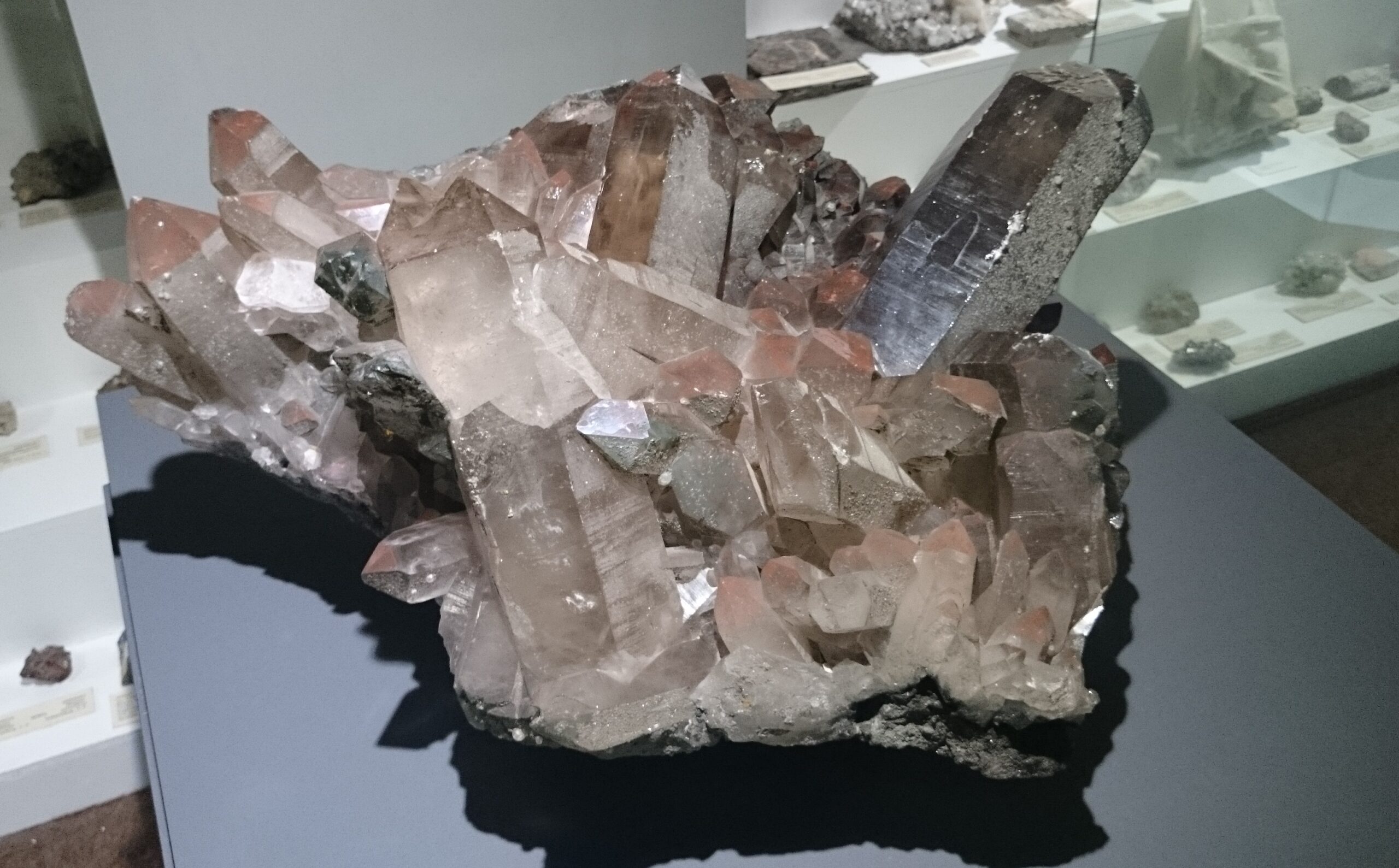
The geology behind the finds
The Ouachita Mountains were folded and fractured during an ancient continental collision, and hot, silica-rich fluids filled those fractures with superb clear quartz crystals — the reason Mount Ida calls itself the Quartz Crystal Capital. Far to the south, near Murfreesboro, an eroded volcanic pipe (lamproite) brought diamonds to the surface, creating the only public diamond site in the country at Crater of Diamonds.
What you’ll find
Classic Arkansas material
- Quartz crystal — Mount Ida / Hot Springs (fee-dig mines)
- Diamond — Crater of Diamonds State Park
- Wavellite, novaculite, smoky quartz
Before you go
- Crater of Diamonds State Park: pay the daily fee, search the plowed field, keep what you find.
- Quartz: many fee-dig mines (Wegner, Ron Coleman, Crystal Vista) near Mount Ida.
- Mild climate makes Arkansas a year-round destination.
- Read ethics & law first.
Arkansas quartz is famous for its water-clear clarity and well-formed points, single and in clusters — and the fee-dig mines let you dig fresh ground or screen tailings. At Crater of Diamonds, finders are keepers: visitors regularly turn up white, brown and yellow diamonds, alongside amethyst, jasper and agate.
Where to go, region by region
Mount Ida & Hot Springs
The self-styled “Quartz Crystal Capital” has numerous fee-dig quartz mines where you screen tailings or dig fresh ground — a reliable way to come home with clear points and clusters. See our field card on the Mount Ida quartz crystal mines. The annual Mount Ida quartz shows are a highlight.
Crater of Diamonds (Murfreesboro)
A state park built on an eroded volcanic pipe — the only public diamond site in the U.S. where finders are keepers. See our field card: Crater of Diamonds State Park.
When to go
Arkansas’s mild climate makes it a year-round destination, though spring and fall are the most comfortable. Diamonds are easier to spot after heavy rain washes the plowed field, and the quartz mines run in most weather.
Gear & field tips
- For quartz: gloves and a screen for the tailings; a mattock if a mine lets you dig fresh ground.
- For diamonds: search the surface after rain, then dry- or wet-sift the soil.
- Clean quartz at home with care; oxalic acid removes iron staining (handle safely).
Rules & access
Arkansas is built for fee-dig collecting: Crater of Diamonds State Park charges a daily admission and lets you keep what you find, while the Mount Ida quartz mines are private fee operations. Wild collecting needs landowner permission, and national-forest rules apply on public ground. Read our guide to collecting ethics & the law.
Clubs & shows
Arkansas hosts the Mount Ida quartz shows and active clubs that can point you to the best mines and sites. Browse our clubs directory.
Want a clear Arkansas quartz cluster?
Sponsored — partner shop · Minerals KingdomFrequently asked questions
Can I really keep diamonds I find in Arkansas?
Yes — at Crater of Diamonds State Park, you pay a daily fee, search the plowed field, and keep any diamonds (and other stones) you find, with no quantity limit on your own discoveries.
Where do I dig Arkansas quartz?
At the fee-dig mines around Mount Ida and Hot Springs, where you screen tailings or dig fresh ground for clear crystals and clusters.
When is the best time to find a diamond?
After heavy rain, which washes soil off the field and exposes stones on the surface — many of the larger diamonds are found lying on top.
Informational only — confirm access and the law with the managing agency before collecting. Written by The Field & Stone Editors · Published by KEVALEX Group.