 FIELD
FIELD Specific gravity: weighing minerals in the field
Two stones the same size can weigh wildly differently in the hand — and that difference, once you learn to read it, is one of the fastest ways to put a name to a mineral.
Specific gravity is a measure of how heavy a mineral is for its size — the ratio of its weight to the weight of an equal volume of water. It costs nothing but a steady hand to estimate, it does not change with weathering the way colour or luster can, and for a handful of dense minerals it is the property that settles the identification on its own. A pale, glassy lump that feels far too heavy for its size is telling you something specific, and this guide explains exactly what.
What specific gravity actually means
Specific gravity, often shortened to SG, is the ratio of a mineral’s weight to the weight of the same volume of water at 4 °C. It is a pure number with no units: a mineral with an SG of 3 weighs three times as much as an equal volume of water, and quartz, at 2.65, weighs a little over two and a half times as much. Because water is the reference and water’s density is almost exactly one gram per cubic centimetre, the SG figure is numerically the same as the mineral’s density in grams per cubic centimetre — the only difference is that density carries units and specific gravity does not. Two things control the number: which atoms make up the mineral, and how tightly those atoms are packed in the crystal structure. Heavy elements such as lead, barium, tin, mercury and the native metals push SG up quickly, which is why sulfides and metals dominate the top of the scale.
The numbers worth carrying in your head
You do not need a table for every species, but a handful of anchor values turns a vague sense of “heavy” into a real measurement. Quartz at 2.65 is the one to memorise first, because it is the commonest mineral you will handle and it sits close to the average for ordinary rock.
- Quartz — 2.65, the reference weight most rocks cluster around.
- Feldspar — 2.55 to 2.63, slightly lighter than quartz.
- Calcite — 2.71, just heavier than quartz.
- Fluorite — 3.18, noticeably dense for a glassy mineral.
- Barite — 4.5, strikingly heavy for a pale, non-metallic stone.
- Pyrite — 5.0, and magnetite and hematite both around 5.2.
- Cassiterite — about 7, the tin ore that surprises everyone.
- Galena — 7.5, the heaviest common mineral most rockhounds meet.
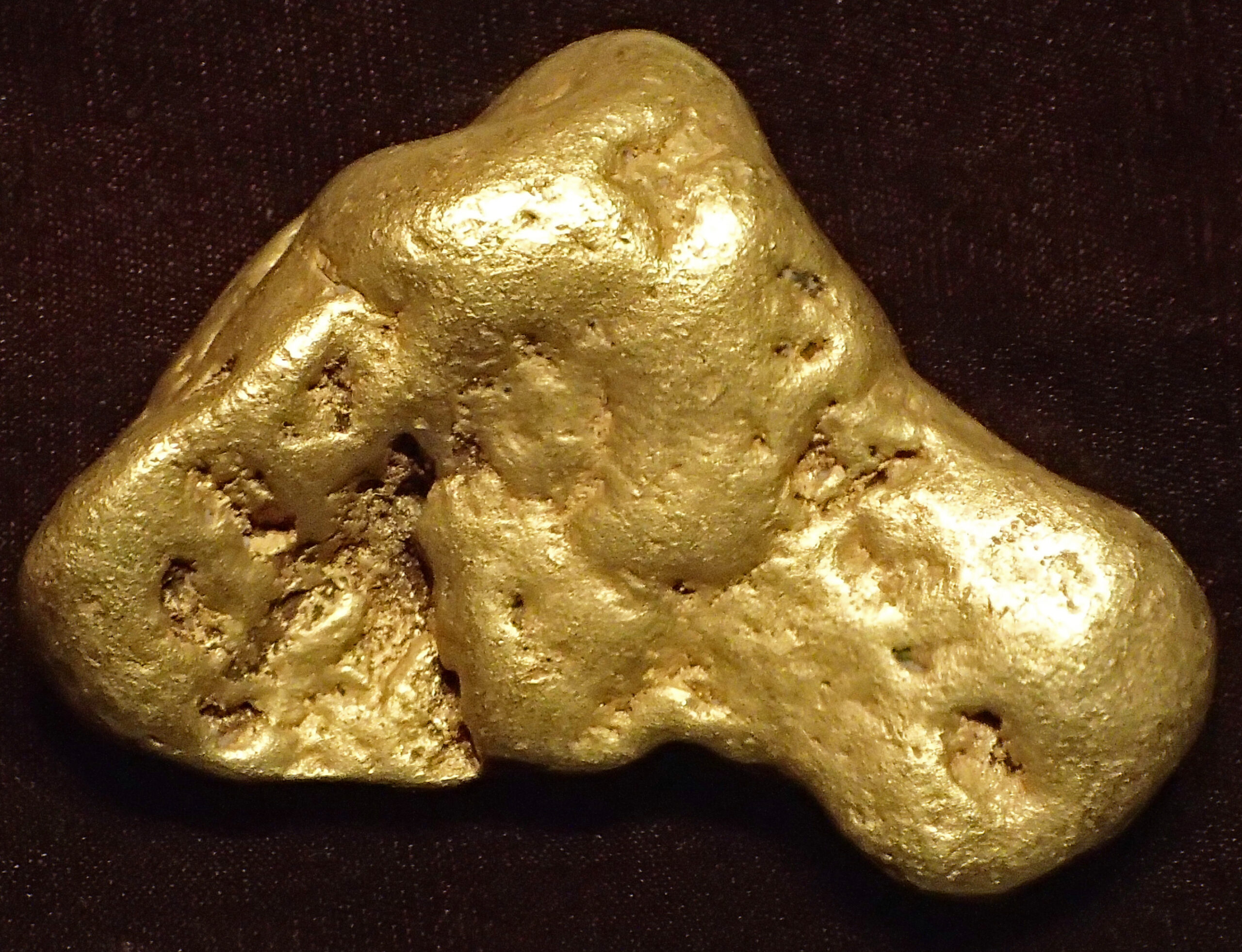
- Native metals — copper 8.9, silver 10.5, gold up to 19.
Feels about right for its size
- Quartz — 2.65
- Feldspar — 2.5 to 2.6
- Calcite — 2.71
- Most ordinary rock — 2.6 to 2.8
Feels far too heavy
- Barite — 4.5, and pale with it
- Hematite — 5.3
- Galena — 7.5
- Gold — up to 19
How to estimate specific gravity in the field
The quickest method is the heft test. Pick up the unknown, then pick up a quartz pebble or a familiar piece of country rock of roughly the same size, and compare how heavy each feels. Anything that feels obviously, surprisingly heavier than the quartz is worth a second look, because ordinary silicate rock clusters tightly between about 2.6 and 2.8 and your hand is remarkably good at spotting a piece that sits well above that. With practice you can separate the 2.6 crowd from a 4.5 barite or a 7.5 galena in a second or two. Heft will not give you a number, but it reliably flags the dense minerals that everything else on the ground cannot imitate.
When you want an actual figure, use the hydrostatic method, which is just Archimedes’ principle with a small spring or digital scale. Weigh the specimen hanging in air and note the value. Then suspend it on a thread so it is fully submerged in a cup of water without touching the sides, and weigh it again — it will read lighter, because the water pushes up on it. Specific gravity is the air weight divided by the difference between the two weights: SG = weight in air ÷ (weight in air − weight in water). A galena cube that weighs 30 grams in air and 26 grams submerged gives 30 ÷ 4, or 7.5, exactly as expected. A clean, non-porous sample and a bubble-free surface are all the method needs to land within a few percent of the published value.
The minerals specific gravity helps you separate
Density earns its keep with the look-alikes that other tests struggle to split. Barite is the classic case: it is pale, often white or honey-coloured, with a non-metallic look that reads as calcite or feldspar until you lift it, at which point its SG of 4.5 gives it away instantly — the old miners’ name “heavy spar” says it all. Galena, at 7.5, is heavier than anything else a beginner is likely to find, so a dense grey cube with bright cubic cleavage is almost self-identifying. In a gold pan, the whole technique depends on specific gravity: gold at 15 to 19 sinks and stays put while quartz sand and gravel wash away, which is exactly why placer gold concentrates in the same traps run after run in the streams of Colorado and across the West. And density is the quiet tell that keeps beginners from confusing brassy pyrite with real gold: pyrite is only about 5.0 and, crucially, brittle, while gold is far heavier and malleable.
Where density fits with the other field tests
Specific gravity is at its best as part of a short routine rather than a stand-alone test. Run it alongside the Mohs hardness scale, the streak test and a look at luster and crystal habit, and the combinations narrow fast. A heavy, soft, grey mineral with a dark streak and cubic cleavage can only really be galena; a heavy, pale, non-metallic mineral with one perfect and two lesser cleavages is barite; a heavy black mineral that pulls a magnet is magnetite. Because heft is instant and needs no kit, it is often the property that tells you which of the slower tests is worth running first. Just be sure you know whether you are weighing a single mineral or an aggregate — a point covered in our guide to rock versus mineral.
Cautions and common mistakes
A few things will throw a reading off. Porosity is the biggest: a vuggy, cavity-riddled or weathered piece traps air and reads light, so always test the densest, freshest fragment you can. Mixed samples mislead too — a vein specimen that is half quartz and half galena will average out to something in between, and only a clean single-mineral piece gives a true value. In the hydrostatic test, a stubborn air bubble clinging to the surface or the specimen brushing the side of the cup will both nudge the number, so dunk it a couple of times and keep it clear. Very small samples exaggerate the error, because a fraction of a gram matters more; a specimen of a few centimetres works far better than a chip. Finally, give the piece a quick clean first, since caked mud adds bulk without adding much weight and quietly drags the figure down.
Frequently asked questions
What is specific gravity in minerals?
Specific gravity is the ratio of a mineral’s weight to the weight of an equal volume of water. It has no units, so a mineral with a specific gravity of 3 weighs three times as much as the same volume of water. Numerically it equals the mineral’s density in grams per cubic centimetre.
How do you measure specific gravity in the field?
Roughly, heft the specimen against a quartz pebble of similar size — anything clearly heavier is worth a closer look. Precisely, weigh the piece in air, weigh it again fully submerged in water, and divide the air weight by the difference between the two.
What is the difference between specific gravity and density?
Density is mass per unit volume, measured in grams per cubic centimetre. Specific gravity is that density divided by the density of water, so the number is the same magnitude but carries no units. In practice the two terms are used almost interchangeably.
Which common minerals are the heaviest?
Among ordinary finds, galena (about 7.5) and cassiterite (about 7) are the heavyweights, and the native metals go higher still — silver near 10.5 and gold up to 19. Barite at 4.5 feels surprisingly heavy for a pale, non-metallic mineral.
Why does a mineral feel heavier than a rock of the same size?
Because it may be a single, dense mineral rather than a mix of lighter ones. Ordinary rock averages around 2.7, so a pure heavy mineral like galena or barite stands out at once. Density depends on both which atoms are present and how tightly they are packed.
Can specific gravity identify a mineral on its own?
Rarely by itself, but it is one of the most decisive clues. Paired with hardness, streak and luster it often settles an identification, especially for the heavy minerals such as galena and barite that nothing else on the ground imitates.
Want dense reference specimens to train your hand?
Sponsored — partner shop · Minerals Kingdom
Specific gravity works best alongside the rest of the field-test toolkit — the Mohs hardness scale, the streak test, mineral luster, cleavage and fracture and crystal habit — and, for unusually heavy ores such as uraninite, a check for radioactive minerals. New to the hobby? Start with how to start rockhounding.
Written by The Field & Stone Editors · Published by KEVALEX Group.