 FIELD
FIELD Double refraction: the calcite test
Lay a clear calcite crystal on a printed line and the line splits in two. That small piece of optical magic is a fingerprint — a fast, reliable field test that tells you what a transparent crystal is.
Double refraction, known technically as birefringence, is the splitting of a single ray of light into two as it passes through certain crystals, so that whatever you view through the crystal appears doubled. The classic demonstration uses a clear rhomb of calcite — the variety called Iceland spar — laid over a line of text: instead of one line you see two, and rotating the crystal makes one image swing around the other. Far from a parlour trick, this is one of the quickest optical tests a rockhound can run, because strong, visible double refraction is uncommon enough that seeing it narrows the field of candidates dramatically. This guide explains what causes double refraction, exactly how to test for it, and which minerals it helps you identify. It pairs naturally with the other optical effects in minerals and with judging a crystal’s diaphaneity.
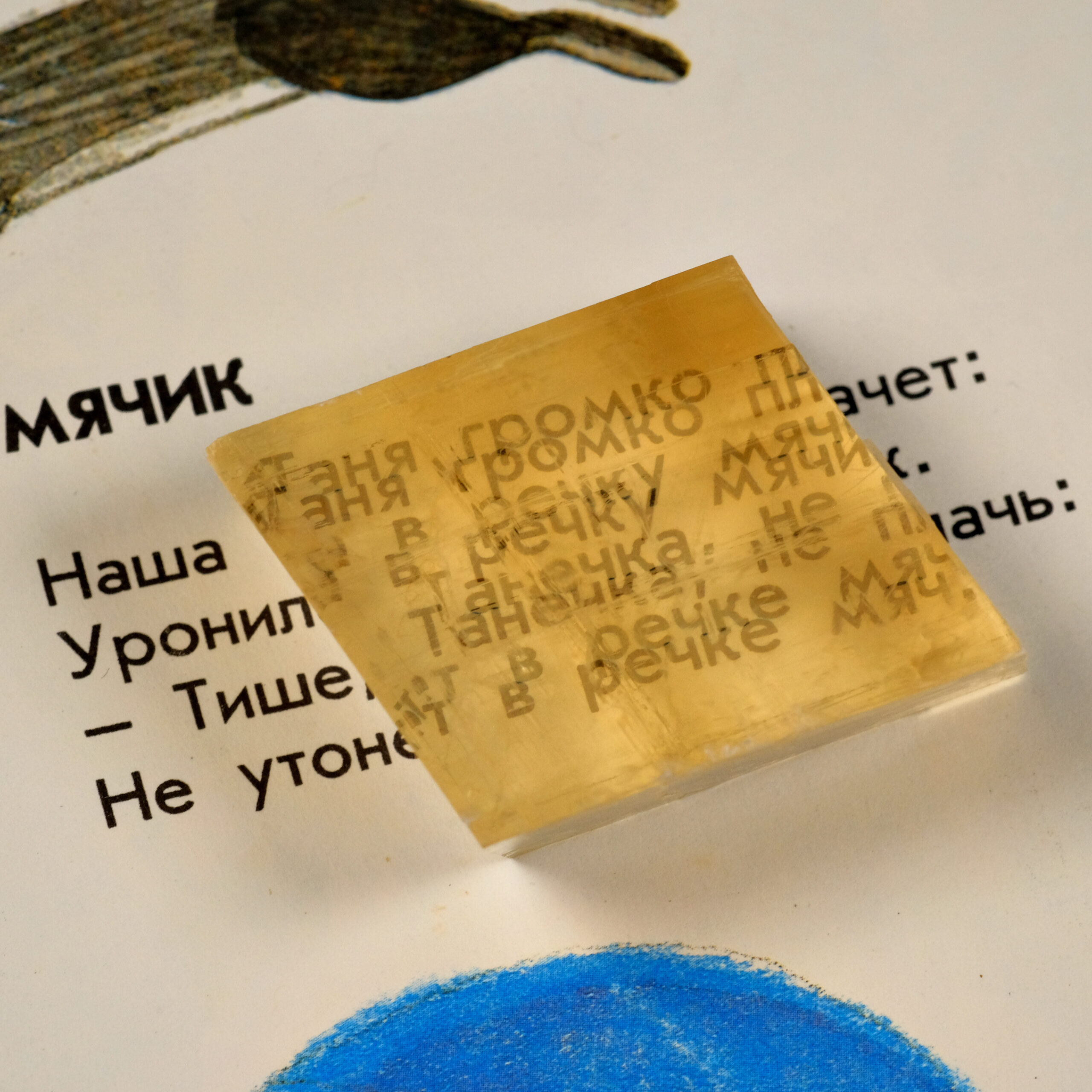
What double refraction is
When light crosses from air into a transparent material it bends, or refracts; how much it bends is set by the material’s refractive index. In most transparent things — glass, water, a diamond — that index is a single value, the same in every direction, and a ray stays a single ray. But in many crystals the internal structure is not the same in all directions, and light travelling through them is split into two rays that travel at slightly different speeds and bend by different amounts. Those two rays emerge separated, and each carries its own image, so anything seen through the crystal appears as two overlapping copies. The size of the gap between the two images depends on how strongly the mineral splits light — its birefringence — and in calcite that gap is large enough to see with the naked eye.
Why calcite splits light so strongly
The cause lies in crystal structure. Minerals that crystallise in the isometric (cubic) system, such as garnet or fluorite, are optically the same in every direction and do not show double refraction — they are singly refractive. Minerals in every other crystal system are anisotropic: their atomic architecture is directional, light behaves differently along different axes, and they are doubly refractive. Calcite belongs to the trigonal system and happens to have one of the largest birefringence values of any common mineral, which is why its double image is so obvious. Most other doubly refractive minerals split light too weakly for the naked eye to catch — the effect is real but you would need a petrographic microscope to see it — so calcite’s dramatic doubling is a special, and especially useful, case.
How to run the calcite test
The test needs nothing but the specimen, a printed line and good light. Choose a clear, transparent part of the crystal — cloudy or coloured calcite will not show the effect well — and set it flat on a sheet of paper ruled with a single sharp line or a line of small text. Look straight down through the crystal: if it is doubly refractive you will see the line as two parallel lines. Now slowly rotate the crystal in place and watch what happens — in a doubly refractive mineral one image stays put while the other travels in a small circle around it, a motion no printing error or thick glass can fake. A dot or a fine cross works even better than a line because the doubling shows in two dimensions. If the print stays stubbornly single no matter how you turn the crystal, the mineral is either singly refractive or too weakly birefringent to show the effect by eye.
What you see
- A single line appears as two lines
- Rotating the crystal swings one image around the other
- A dot or cross clearly doubles
- The effect is strongest through a clear, thick rhomb
What it means
- Strong visible doubling → very likely calcite
- The mineral is anisotropic (not cubic)
- No doubling → cubic, glass, or weak birefringence
- Confirm with hardness and the acid test
Which minerals show visible double refraction
By far the most important for the field is calcite, whose water-clear variety Iceland spar was historically quarried precisely for its strong, clean double refraction and used in optical instruments. When you find a colourless, glassy rhomb-shaped crystal that doubles print and fizzes in weak acid, you can be confident it is calcite. A few other minerals split light strongly enough to notice in large clear pieces — some varieties of the carbonates aragonite, dolomite and siderite, and minerals such as zircon, peridot and tourmaline in gem-quality material — but for most doubly refractive minerals the effect is invisible without a microscope. That is what makes the calcite test so useful: strong, naked-eye doubling in an unknown transparent crystal points hard toward the carbonate family and, most often, straight at calcite.
Cautions and common mistakes
The first mistake is testing a cloudy or coloured specimen; you need a clear window through the crystal for the doubling to read, so pick the most transparent spot. Second, do not confuse double refraction with the simple bending or displacement a thick piece of ordinary glass gives — the giveaway is that true double refraction produces two images and that one circles the other as you rotate the crystal, which glass never does. Third, remember that a negative result is not proof of anything on its own: a single image means the mineral is cubic or merely too weakly birefringent to show by eye, not that any particular mineral is ruled in. Finally, treat the test as one line of evidence and confirm it: calcite is soft (about 3 on the Mohs scale), shows three directions of perfect cleavage that give it its rhomb shape, and fizzes readily in dilute acid. Put the doubling together with those and the identification is secure. A hand lens helps you find a clear window and see the split cleanly.
Frequently asked questions
What is double refraction?
Double refraction, or birefringence, is the splitting of a single ray of light into two as it passes through certain crystals. The two rays travel at different speeds and bend by different amounts, so they emerge separated and anything viewed through the crystal appears as two overlapping images.
Why does calcite show double refraction?
Calcite’s trigonal crystal structure is directional, or anisotropic, so light travelling through it is split into two rays. Calcite happens to have one of the largest birefringence values of any common mineral, which is why its double image is strong enough to see with the naked eye when most doubly refractive minerals need a microscope.
How do you test a crystal for double refraction?
Set a clear part of the crystal on a sheet of paper marked with a single line, dot or line of text and look straight down through it. If the print appears doubled, the mineral is doubly refractive. Rotate the crystal: in a doubly refractive mineral one image stays fixed while the other circles it.
Do all clear crystals show double refraction?
No. Minerals that crystallise in the cubic system, such as fluorite and garnet, are singly refractive and show no doubling, and glass does not either. Minerals in the other crystal systems are doubly refractive, but most split light too weakly to see by eye. Calcite is the standout exception you can test in the field.
Is Iceland spar the same as calcite?
Yes. Iceland spar is the name for water-clear, transparent calcite, historically quarried for its strong, clean double refraction and used in optical instruments. Any clear calcite rhomb will double an image; Iceland spar is simply the clearest, most transparent grade.
Can double refraction alone identify a mineral?
Strong, naked-eye doubling points hard toward calcite, but the best practice is to confirm. Check that the crystal is soft (about Mohs 3), has three directions of perfect cleavage giving a rhomb shape, and fizzes in dilute acid. Together with the doubling, those make the identification of calcite secure.
Want a clear calcite rhomb of your own?
Sponsored — partner shop · Minerals Kingdom
Double refraction is one clue among many — read it alongside the other optical effects in minerals, a crystal’s diaphaneity and its luster. To see the split cleanly, learn how to use a hand lens, and if your clear crystal turns out cloudy and lumpy instead, it may be a concretion.
Written by The Field & Stone Editors · Published by KEVALEX Group.