 FIELD
FIELD Optical effects in minerals: iridescence, chatoyancy and play of colour
A few minerals do something ordinary rock never does — they flash, shimmer, float a band of light or scatter fire across their surface as you tilt them. These effects are not body colour at all, and learning to name them is half the pleasure.
Optical effects in minerals are the flashes, sheens and moving lights that appear when light interacts with a mineral’s internal structure rather than simply reflecting off its surface. They are distinct from a mineral’s body colour and from its luster: the play of fire in an opal or the blue flash across a labradorite is produced inside the stone, by the way light is diffracted, split into interfering waves, or bounced off tiny aligned inclusions. This guide names the main effects, explains what causes each, and shows how to coax them out in the field.
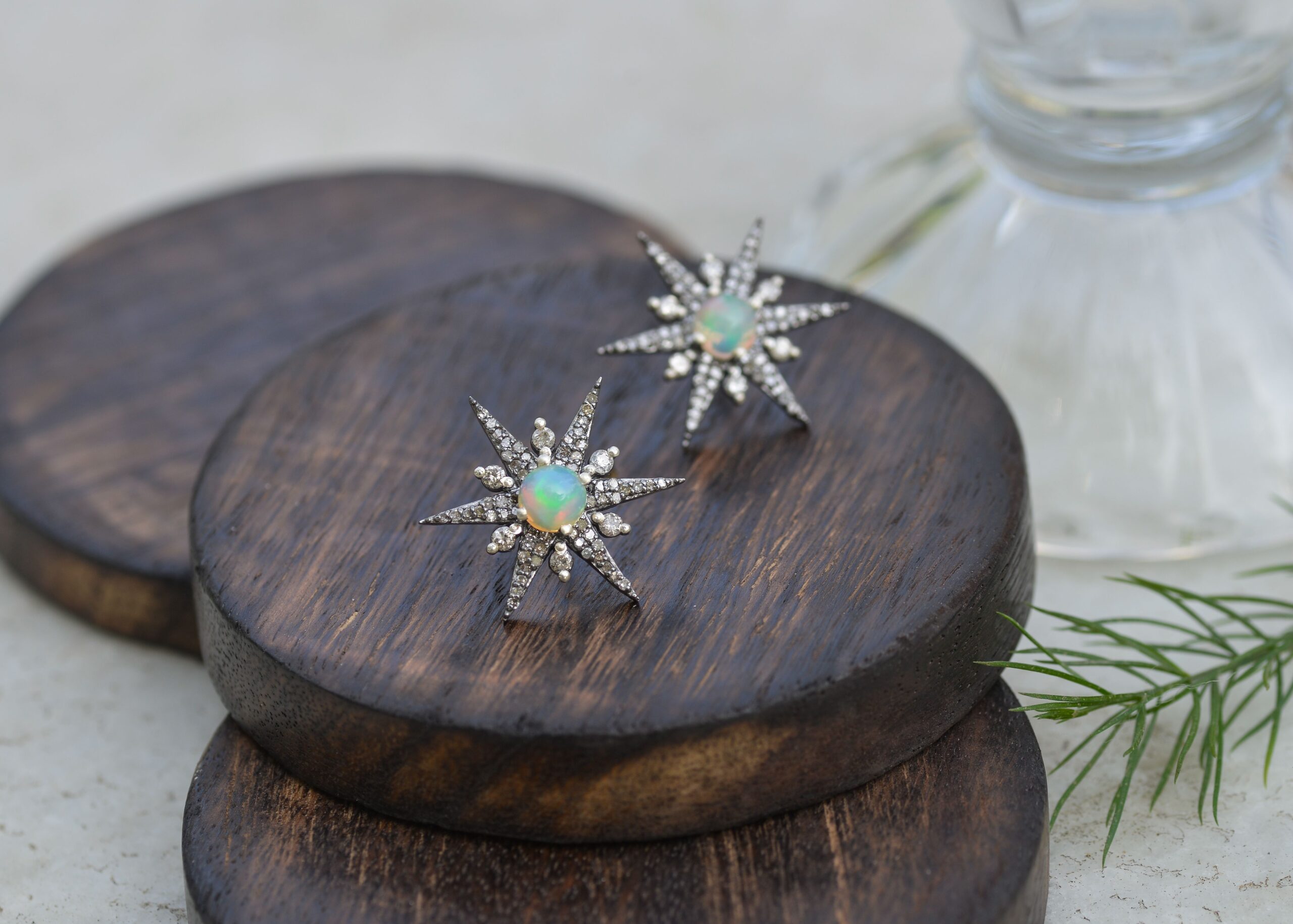
When a mineral does more than sit there in one colour
Most minerals show a single, more-or-less steady colour. A handful do something extra: they change, move or glitter as the light or the viewing angle shifts. These optical phenomena — sometimes grouped as pseudochromatic effects, because the colour is an illusion of physics rather than a pigment — are what make labradorite, opal, moonstone and tiger’s eye so prized. Crucially, they are structural: they depend on layers, lamellae, spheres or aligned fibres inside the stone, so they appear only in specimens with the right internal architecture and they vanish if that structure is ground away. Recognising the effect tells you a great deal, because only a short list of minerals produces each one.
The main effects and what causes them
Each effect has a name, a cause and a short roll-call of minerals that show it. Learn the cause and the mineral usually follows.
- Play-of-colour — shifting patches of spectral fire, caused by light diffracting through a regular 3D array of silica spheres. The signature of precious opal.
- Labradorescence — broad flashes of blue, green and gold that sweep across the stone, caused by interference from fine lamellar intergrowths. Seen in labradorite feldspar.
- Iridescence — rainbow colours from thin films or fine internal layering, as in iris agate, “rainbow” hematite and many tarnished surfaces.
- Chatoyancy — a single bright band of light that glides across the stone, the “cat’s eye” caused by reflection off parallel fibres or channels. Classic in tiger’s eye.
- Asterism — a star of intersecting light bands from several sets of parallel needle inclusions, as in star sapphire and star garnet.
- Adularescence — a soft, floating blue-white glow that seems to drift below the surface, produced by light scattering from thin feldspar lamellae in moonstone.
- Aventurescence — a glittery metallic sparkle from tiny reflective platelet inclusions, seen in sunstone and aventurine quartz.
Effects from layers & structure
- Play-of-colour — opal (diffraction)
- Labradorescence — labradorite (interference)
- Iridescence — thin films & layering
- Adularescence — moonstone (scattering)
Effects from inclusions
- Chatoyancy — parallel fibres (tiger’s eye)
- Asterism — crossed needles (star stones)
- Aventurescence — platelets (sunstone)
- Schiller — aligned flakes & sheets
How to see and coax them out in the field
These effects are shy and need the right light. Use a single, fairly strong light source — the sun or a small torch — rather than flat, diffuse shade, because a point source is what makes the flash or band appear. Then tilt and rotate the specimen slowly: play-of-colour and labradorescence switch on and off through a narrow range of angles, and a cat’s-eye band only lines up when the fibres sit across the light. Wetting the stone or looking at a smooth, freshly broken or polished face helps, because a rough surface scatters the effect into a dull haze. A dark background makes a subtle adularescent glow or a faint star far easier to see. Work patiently; an effect that seems absent under the wrong light can blaze out the moment the angle is right.
Why these are not body colour or luster
It is worth being clear about what you are seeing, because these effects are easy to muddle with the everyday properties. Body colour is a fixed hue produced by absorption — amethyst is purple from every angle. Luster describes how the surface reflects light — glassy, metallic, silky. An optical effect is neither: it is a changing display that lives inside the stone and depends on angle, so it moves as you move. That is also why these effects require a degree of transparency or translucency — light has to get into the stone to be diffracted or reflected back, which ties them to diaphaneity. A completely opaque mineral cannot show play-of-colour, though it can still show surface iridescence from a thin tarnish film.
Cautions and common mistakes
The showiness of these effects makes them a favourite target for imitation, so a little caution pays. Much bright opal is assembled into doublets and triplets — a thin slice of real opal backed and capped to look larger — which is honest when disclosed but easy to mistake for a solid stone; the layering shows on the edge. Goldstone, a glittering man-made glass full of copper flecks, imitates aventurescence and turns up in tumbled parcels. Iridescent tarnish on a sulfide such as bornite or chalcopyrite is a genuine surface effect but is sometimes passed off as something rarer, and it wipes or scratches away where true internal iridescence does not. Finally, do not confuse a fixed sheen with a moving effect — if the colour does not travel as you tilt the stone, it is body colour or luster, not an optical phenomenon. When in doubt, rotate the piece under a single light and watch whether the display moves.
Frequently asked questions
What are optical effects in minerals?
They are flashes, sheens and moving lights — such as play-of-colour, labradorescence, chatoyancy and asterism — produced when light interacts with a mineral’s internal structure rather than simply reflecting off its surface. They are distinct from body colour and luster.
What causes play-of-color in opal?
Precious opal is built from a regular three-dimensional array of microscopic silica spheres. Light passing through that array is diffracted and split into spectral colours, which flash and shift as the stone moves — there is no pigment involved.
What is the difference between chatoyancy and asterism?
Chatoyancy is a single band of light — a cat’s eye — from one set of parallel fibres or channels. Asterism is a star of several crossed bands, produced when two or more sets of parallel needle inclusions reflect light at once.
Why does labradorite flash blue and gold?
The effect, called labradorescence, comes from fine lamellar intergrowths inside the feldspar. Light reflecting off these thin internal layers interferes to produce broad sweeps of blue, green and gold that appear only across a narrow range of angles.
How do I see these effects in the field?
Use a single strong light source, tilt and rotate the stone slowly, wet or use a smooth face, and view against a dark background. The effects switch on and off through a narrow band of angles, so patience and the right light are essential.
Are optical effects the same as a mineral’s color?
No. Body colour is a fixed hue from light absorption and looks the same from every angle. Optical effects are structural displays that change as you move the stone, and they usually require the mineral to be at least translucent.
Want a stone that shows the effect?
Sponsored — partner shop · Minerals Kingdom
Optical effects sit alongside the everyday field tests — mineral luster, mineral colour, diaphaneity and crystal habit. You can dig play-of-colour opal yourself at Idaho’s Spencer Opal Mines. New to the hobby? Start with how to start rockhounding.
Written by The Field & Stone Editors · Published by KEVALEX Group.