 FIELD
FIELD Mineral tenacity: brittle, malleable and everything between
Scratch a mineral and you learn its hardness; try to bend, cut or crush it and you learn its tenacity — the quiet property that separates a metal you can hammer flat from a crystal that bursts into powder.
Tenacity is a mineral’s resistance to breaking, bending, crushing or tearing — the way it behaves when you try to deform it rather than scratch it. It is easily confused with hardness, but the two describe different things: hardness measures resistance to a scratch, while tenacity measures how a mineral holds together under stress. Most minerals are simply brittle and shatter, so the ones that instead bend, dent, slice or spring back stand out at once, and that unusual behaviour is strongly diagnostic. A grain that flattens under a hammer instead of powdering has told you something almost no colour or luster could.
What tenacity tells you about a mineral
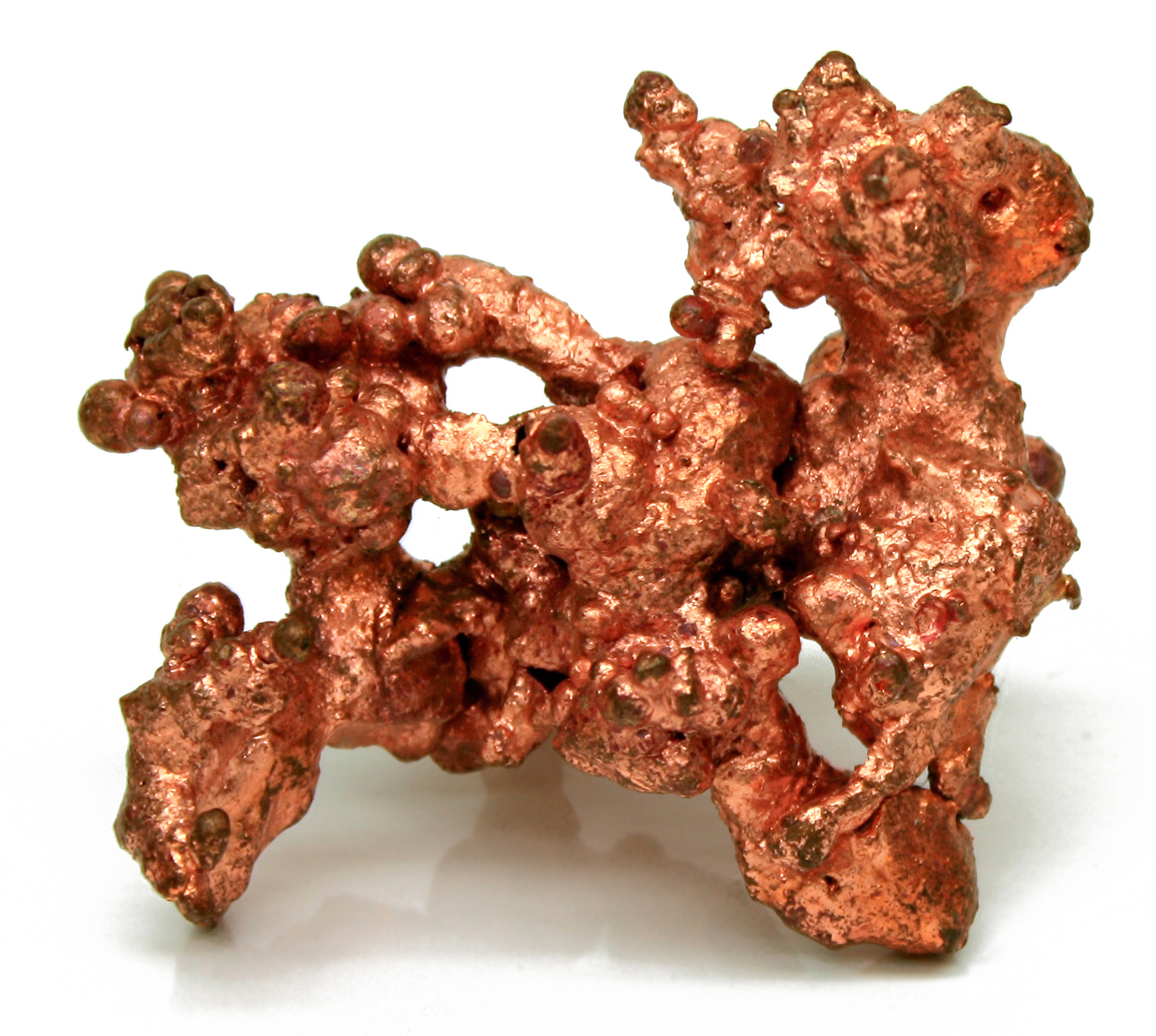
Tenacity is a direct window onto the bonds and structure inside a crystal. Minerals held together by rigid ionic or covalent bonds — quartz, garnet, feldspar and the great mass of the silicates — cannot let their atoms slide past one another, so when the stress becomes too great they simply crack: these are the brittle minerals, and they make up the overwhelming majority. Metallic bonding is different. In native gold, silver and copper the outer electrons are shared in a loose sea, so planes of atoms can shift over each other without the structure flying apart, which is why those metals dent, flatten and stretch. Layered minerals behave differently again: the sheets in mica or talc are strongly bonded within each layer but only weakly held between layers, so thin plates flex. Because tenacity reflects composition and structure rather than surface appearance, it stays constant as a specimen weathers, which makes it a dependable clue once you learn to read it.
The vocabulary of tenacity
Mineralogists use a small set of precise words for the ways a mineral can respond to stress, and each term points at a short list of species. Learning the vocabulary is most of the battle, because once you can name what you are seeing the identification often follows.
- Brittle — breaks or crumbles to powder with no bending; the default for quartz, calcite, fluorite and nearly all silicates.
- Sectile — can be sliced with a knife into a shaving that holds together instead of crumbling; gypsum and several soft ore minerals such as chlorargyrite.
- Malleable — can be hammered or pressed into a thinner sheet without breaking; the native metals gold, silver and copper.
- Ductile — can be drawn out or stretched into a wire; again gold, silver and copper, which is why they are worked in jewellery.
- Flexible — bends under pressure and stays bent when released; talc, chlorite, molybdenite and thin plates of selenite gypsum.
- Elastic — bends but springs back to its original shape; the hallmark of the micas, muscovite and biotite.
Bends, cuts or dents
- Copper, gold, silver — malleable and ductile
- Gypsum — sectile and flexible
- Muscovite, biotite — elastic
- Talc, chlorite, molybdenite — flexible
Shatters — brittle
- Quartz, feldspar — crack and splinter
- Calcite, fluorite — break cleanly
- Pyrite and most sulfides
- Garnet and the great mass of silicates
How to test tenacity in the field
Testing tenacity means gently trying to deform a small piece and watching what happens, so it is best done on a scrap or a hidden edge rather than a display face. To check for sectility, draw a sharp knife across a soft mineral: a sectile species such as gypsum peels a curl that stays whole, while a brittle one of the same hardness crumbles to dust. For malleability, tap a tiny grain with a hammer on a hard surface — a fleck of native copper flattens into a bruised disc, whereas pyrite of similar hardness simply shatters. The distinction between flexible and elastic is the most rewarding to feel: peel a thin sheet from a mica and bend it, and it will bow and snap back to flat; do the same with talc or chlorite and the sheet stays bent. Always work with a fresh, clean surface, since a weathered rind can mask the real behaviour, so give a grubby specimen a quick clean first, and remember you are testing the mineral, not the rock around it — a distinction that matters when you are working out whether you hold a single species or an aggregate, as set out in our guide to rock versus mineral.
Tenacity, hardness and cleavage: keeping them apart
The commonest confusion is between tenacity and hardness, and it is worth settling once. A mineral can be hard and brittle at the same time: diamond is the hardest natural material yet it is brittle and will chip if struck along a cleavage plane. Gold is soft and easily scratched, yet it is tough in the sense that it bends rather than breaks — soft but malleable. Hardness and tenacity are independent properties, and a mineral’s full description needs both. Tenacity also overlaps with cleavage and fracture, but they answer different questions: cleavage is about the flat planes along which a mineral prefers to split, while tenacity is about how the material behaves as it deforms. Mica shows both at once — it cleaves into thin sheets, and those sheets happen to be elastic — and reading the two together is far more powerful than either alone.
Where tenacity fits with the other field tests
Tenacity is at its best as one move in a short routine rather than a test used on its own. A soft, heavy, reddish grain that flattens under a hammer, shows a metallic luster and leaves a shining streak is almost certainly native copper — malleability was the clue that set the others in motion. Pair tenacity with the Mohs hardness scale and a sense of specific gravity and the native metals separate quickly from the brittle sulfides they can resemble. It sits alongside the magnet test and the acid test as one more quick, decisive check — the magnetic grains lift out, the carbonates fizz, and a grain that dents rather than shatters flags a native metal — and the crystal outline you started from, its crystal habit, rounds out the picture.
Cautions and common mistakes
A few traps catch beginners. The first is that the test is destructive: hammering or cutting leaves a permanent mark, so never test a fine specimen on its best face — use a spare chip or a hidden corner. The second is confusing flexible with elastic; the difference is only clear when you release the bent sheet and watch whether it springs back, so bend gently and look closely. Do not expect sectility from a hard mineral, either: a steel knife cannot cut anything much above hardness 5, so sectility is only a meaningful test on soft species, and a knife skating off a hard grain tells you nothing about tenacity. Beware, too, of mistaking a lucky cleavage flake for malleability — a mineral that splits into a thin sheet has cleaved, not bent, so check whether the piece actually deforms or simply parts along a plane. And native metals are genuinely rare in most field settings, so treat a suspected malleable grain with healthy scepticism and confirm it with streak, density and luster before you commit to a name. As always, if you are just starting out, work the whole toolkit together in how to start rockhounding.
Frequently asked questions
What is tenacity in minerals?
Tenacity is a mineral’s resistance to being broken, bent, crushed, cut or torn — in short, how it behaves when you try to deform it. Terms such as brittle, malleable, sectile, ductile, flexible and elastic each describe a different response, and together they help identify a mineral.
What is the difference between tenacity and hardness?
Hardness measures resistance to scratching, while tenacity measures resistance to breaking or deforming. They are independent: diamond is very hard but brittle, and gold is soft yet malleable. A full mineral description needs both properties, because neither one predicts the other.
What does it mean for a mineral to be brittle?
A brittle mineral breaks or crumbles to powder under stress rather than bending. It is by far the most common kind of tenacity: quartz, calcite, fluorite, pyrite and nearly all the silicates are brittle, which is why a mineral that bends or dents instead is so distinctive.
Which minerals are malleable?
The native metals are the malleable minerals a collector meets: gold, silver and copper can all be flattened by a hammer into a thinner sheet without breaking. They are also ductile, meaning they can be drawn into a wire, which is exactly why they have been worked into jewellery for millennia.
How do you test a mineral’s tenacity?
Gently try to deform a small fragment. Cut a soft mineral with a knife to test sectility, tap a grain with a hammer to test malleability, and bend a thin flake to tell flexible from elastic — an elastic sheet springs back, a flexible one stays bent. Because the test damages the specimen, use a spare piece.
What is a sectile mineral?
A sectile mineral can be sliced with a knife into a shaving that holds together, rather than crumbling into powder as a brittle mineral would. Gypsum is the classic example, along with some soft ore minerals such as chlorargyrite. Sectility is only testable on soft minerals a steel blade can actually cut.
Want native metal and mineral specimens to test?
Sponsored — partner shop · Minerals Kingdom
The tenacity test works best alongside the rest of the field-test toolkit — the Mohs hardness scale, the streak test, mineral luster, cleavage and fracture, specific gravity, the magnet test and the acid test. New to the hobby? Start with how to start rockhounding.
Written by The Field & Stone Editors · Published by KEVALEX Group.