 FIELD
FIELD Mineral luster: metallic, glassy and everything between
The way a mineral throws back light — mirror-bright, glassy, waxy, silky or flatly dull — is the first property you can read without touching the specimen at all.
Mineral luster describes how light reflects off a mineral’s surface. It is not about color and not about shine in the everyday sense: it is a specific, named quality that mineralogists split into two families — metallic and non-metallic — with a short vocabulary of sub-types inside each. Because luster costs nothing to observe and needs no tools, it is usually the very first cut you make when narrowing down an unknown find.
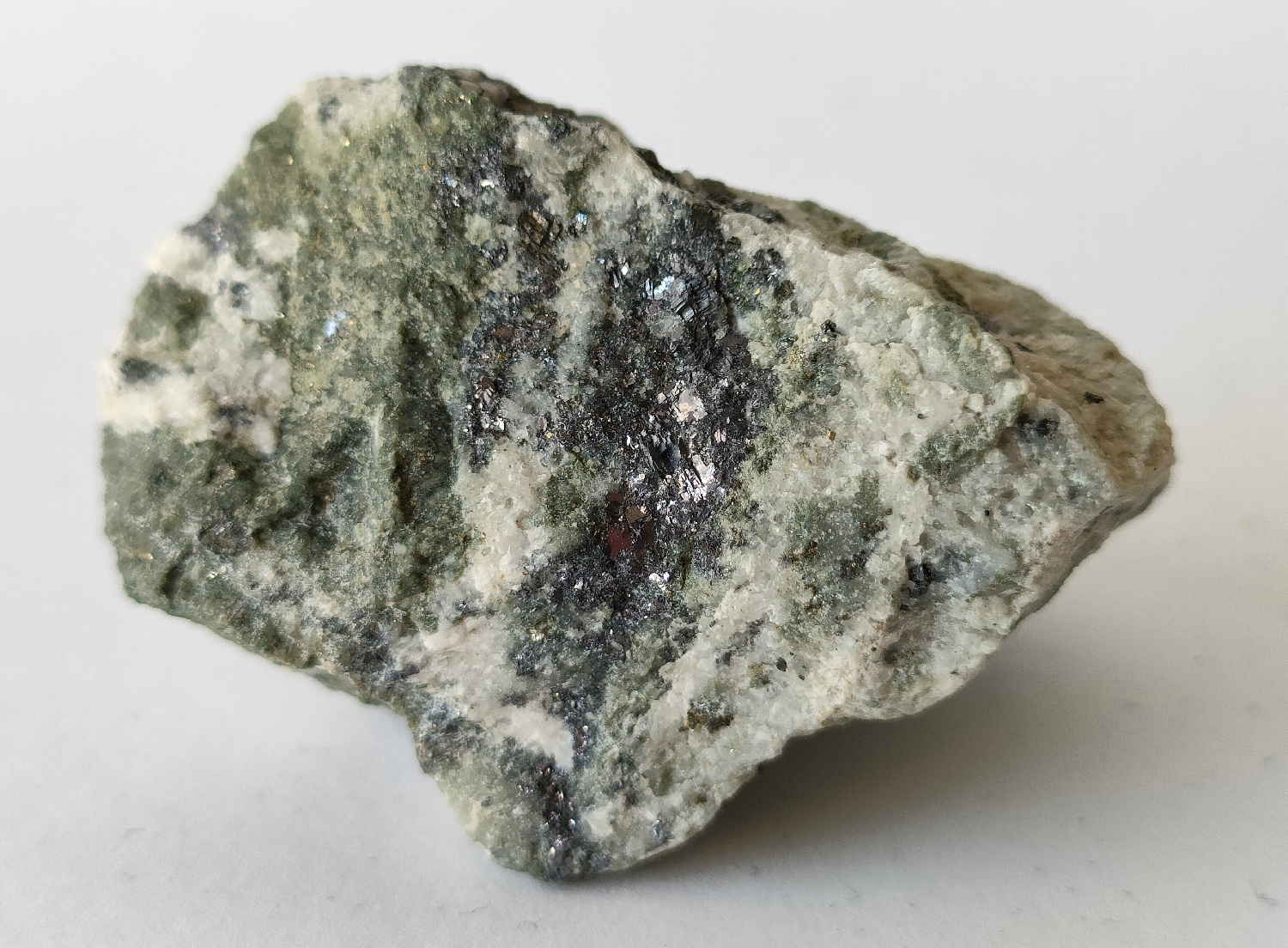
What luster actually measures
Luster is the quality and intensity of light reflected from a mineral’s surface, and it depends on how the mineral’s atoms interact with light. Minerals whose bonding lets electrons move freely — native metals and many sulfides — reflect almost all visible light at the surface and look like polished metal. Minerals that let light pass into them before scattering it back, such as silicates and carbonates, reflect less and look glassy, waxy or pearly instead. Luster is deliberately kept separate from other diagnostic properties: it is not hardness, not streak, and not the shape described by crystal habit. You will hear the British spelling lustre used interchangeably; both refer to exactly the same property.
Metallic luster
A metallic mineral looks like polished metal: opaque, highly reflective, and impossible to see into even on a thin edge. Galena, pyrite, chalcopyrite, magnetite, hematite and native copper all fall here, and so does the sulfide ore family generally. A useful confirmation is the streak test — metallic minerals almost always leave a dark grey, black or coloured streak on unglazed porcelain, while non-metallics usually leave white or none at all. Some references add submetallic for minerals that are nearly opaque but reflect more dully, such as some hematite and sphalerite specimens sitting on the boundary between the two families.
Non-metallic luster: the working vocabulary
- Vitreous (glassy) — the most common luster of all, seen in quartz, feldspar, tourmaline and calcite. Roughly two-thirds of minerals are vitreous.
- Adamantine — brilliant, hard, diamond-like sparkle, produced by a very high refractive index. Diamond, cerussite and some zircon.
- Resinous — looks like hardened tree sap or plastic. Amber, sphalerite and some sulfur.
- Pearly — a soft iridescent sheen, typical of cleavage surfaces in muscovite, talc and gypsum.
- Silky — the satiny shimmer of parallel fibres, as in satin spar gypsum, fibrous serpentine and some malachite.
- Greasy — looks faintly oiled or smeared, common in nepheline, some opal and massive quartz.
- Waxy — the soft, low sheen of chalcedony, jasper and turquoise.
- Dull (earthy) — almost no reflection at all, characteristic of kaolinite, limonite and chalky weathered surfaces.
Metallic family
- Galena — mirror-bright silvery grey
- Pyrite — brassy, high reflectance
- Magnetite — black, opaque, magnetic
- Hematite — metallic to submetallic
Non-metallic family
- Quartz — vitreous
- Chalcedony — waxy
- Sphalerite — resinous
- Muscovite — pearly on cleavage
How to judge luster in the field
Work on a fresh surface wherever possible. Field specimens carry a weathering rind, dust, iron staining or a thin clay film, and every one of those flattens the apparent luster — a brilliant vitreous quartz pebble can look dull as chalk until it is rinsed. Keep the specimen dry too, because water temporarily makes almost everything look vitreous or greasy; that is exactly why wet beach agates look so much better than dry ones. Hold the piece in indirect daylight and tilt it slowly, watching how the highlight travels across the surface: a metallic mineral shows a hard, mirror-like glint that stays sharp, while a pearly one produces a soft sheen that seems to float just below the surface. Compare against a known reference in your kit — a quartz point for vitreous and a pyrite cube for metallic are the two anchors worth carrying. A quick clean before you judge anything is time well spent, and a hand lens makes the surface sheen far easier to read on a fresh face.
Why luster can mislead you
Luster is a genuinely useful first filter, but it is also the property beginners most often misread. The same mineral can present different lusters on different surfaces: muscovite is vitreous on a broken edge and pearly on a cleavage plane, and hematite ranges from bright metallic in specular form to completely earthy as ochre. Grain size matters too — a coarse crystal of a mineral may be vitreous while the fine-grained massive version of the identical species looks dull. Tarnish is another trap: chalcopyrite quickly acquires an iridescent film, and native copper darkens to a matte brown, hiding the metallic surface underneath. Because of all this, treat luster as one line of evidence and confirm with cleavage and fracture, hardness and streak before you commit to a name. It also helps to know whether you are holding a single mineral or an aggregate of several — see our guide to rock versus mineral.
Luster in practice: three quick worked examples
Suppose you pick up a heavy brassy cube in a road cut. Metallic luster plus a cubic habit plus a greenish-black streak points firmly at pyrite rather than gold, which is softer, malleable and leaves a golden streak. Now take a smooth, translucent pebble from a river bar: a waxy rather than vitreous luster, combined with conchoidal fracture, suggests chalcedony — the family that includes agate and jasper, which we separate in agate vs. jasper vs. chert. Finally, a soft, book-like flake that peels apart with a shimmering surface is showing the classic pearly luster of mica on a perfect cleavage plane. In each case luster narrowed the field in seconds and a second test closed the identification.
Frequently asked questions
What is mineral luster?
Mineral luster is the way light reflects from a mineral’s surface. It is described with standard terms — metallic, vitreous, resinous, pearly, silky, greasy, waxy and dull — and is one of the quickest diagnostic properties to observe.
What is the difference between metallic and non-metallic luster?
Metallic minerals are opaque and reflect light like polished metal, as galena and pyrite do. Non-metallic minerals let some light enter before scattering it back, so they look glassy, waxy, pearly or dull instead.
What is the most common type of luster?
Vitreous, or glassy, luster is by far the most common. Roughly two-thirds of all minerals are vitreous, including quartz, feldspar, calcite and tourmaline.
Does luster change when a mineral is wet?
Yes. A film of water fills surface irregularities and makes almost any mineral look more vitreous or greasy than it really is. Always judge luster on a dry, clean, freshly broken surface.
Can one mineral have more than one luster?
It can. Muscovite is vitreous on a broken edge but pearly on a cleavage face, and hematite ranges from bright metallic to earthy depending on the form. Grain size, weathering and tarnish all shift the apparent luster.
Is luster enough to identify a mineral on its own?
No. Luster narrows the possibilities quickly but overlaps between many species. Confirm with hardness, streak, cleavage and crystal habit before settling on an identification.
Want reference specimens to train your eye?
Sponsored — partner shop · Minerals Kingdom
Luster works best alongside the rest of the field-test toolkit — the Mohs hardness scale, the streak test, cleavage and fracture and crystal habit and how heavy a stone feels for its size — its specific gravity and how much light it lets through — its diaphaneity. Some minerals also give themselves away under UV — see fluorescent minerals & UV light. New to the hobby? Start with how to start rockhounding.
Lustre is a physical clue; for a chemical one, try a flame test.
Written by The Field & Stone Editors · Published by KEVALEX Group.