 FIELD
FIELD The streak test: identifying minerals by powder color
Forget color guesswork — drag a mineral across an unglazed tile and the powder it leaves behind is one of the most reliable clues in your field kit.
The streak test tells you the color of a mineral’s powder, which is far more consistent than the color of its surface. Rub a mineral firmly across an unglazed porcelain tile — a streak plate — and read the mark it leaves. Paired with hardness and lustre, it is one of the fastest ways to separate look-alike minerals without any instruments.
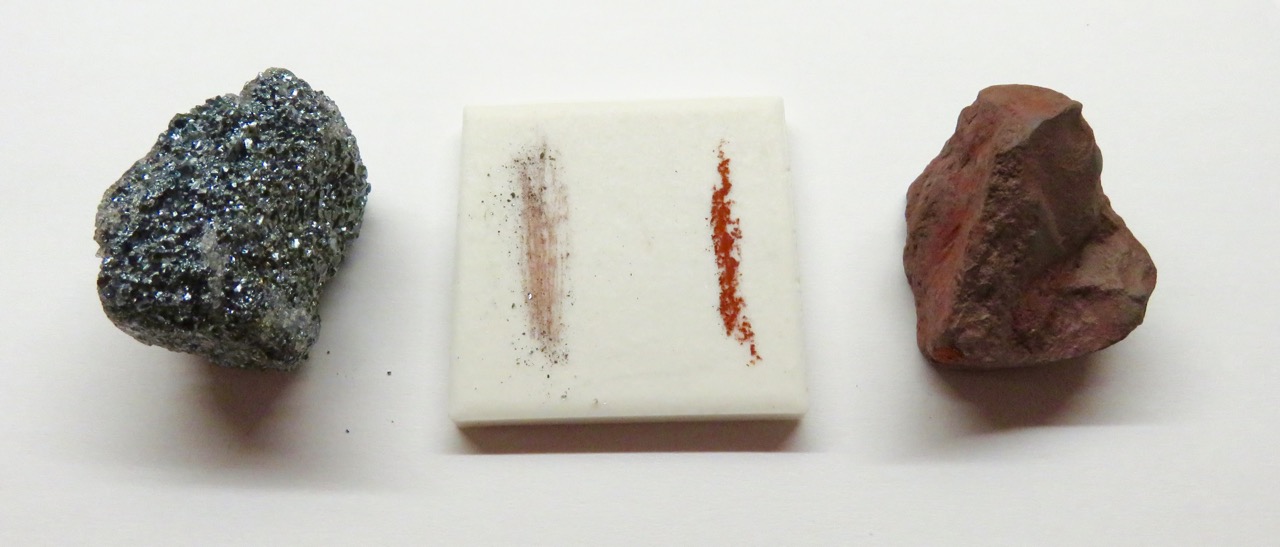
Why streak beats surface color
A mineral’s apparent color can shift widely because of trace impurities or a disturbed crystal structure — a small amount of iron can turn clear quartz purple, yellow or brown, for example. When you crush the same mineral into a fine powder, those surface effects mostly wash out, because light scatters off countless tiny, randomly oriented grains instead of one coherent crystal face. The result is a color that stays far more consistent from specimen to specimen, which is exactly what makes it useful for identification.
What you need
- A streak plate — a small tile of unglazed porcelain, sold cheaply at rock shops.
- No streak plate handy? The unglazed underside of a porcelain mug, bowl or bathroom tile works the same way.
- A hand lens helps confirm a faint streak on a light-colored mineral.
One limit worth knowing before you start: a streak plate is roughly 7 on the Mohs hardness scale. Any mineral harder than that will scratch the plate rather than leave a powder streak, so the test only works reliably on softer minerals.
How to run the test correctly
Press the specimen firmly against the plate and drag it in a single, deliberate stroke — a light tap or a hesitant scribble will not powder the mineral properly. Use a fresh, unweathered edge of the specimen each time, since a dirty or oxidised surface can throw off the color. Then look closely: a genuine streak is a solid line of fine powder that stays put when you blow on it or wipe it lightly, not a faint metallic smear that rubs away.
Classic streak colors
- Hematite: reddish-brown, even when the mineral looks black or silvery
- Galena: grey
- Pyrite: greenish-black
- Malachite: pale green
- Native gold: golden yellow
When streak won’t help
- Quartz, feldspar and most silicates — too hard, white or no streak
- Glassy, vitreous minerals harder than the plate
- Heavily weathered or coated specimens
- Massive ore mixed with several minerals at once
Streak vs. color: classic look-alikes
The streak test earns its keep on a handful of famous mix-ups. Hematite and magnetite can both look black and metallic, but hematite streaks reddish-brown while magnetite streaks black — and magnetite also pulls a compass needle. The best-known case is pyrite versus native gold, the original “fool’s gold” problem: pyrite leaves a greenish-black streak, while real gold leaves a soft golden-yellow streak, settling the question in seconds without a scale or an assay.
Limitations of the streak test
Streak is one clue, not a verdict. Many common rock-forming minerals — quartz, feldspar, most gemstones — are harder than the streak plate itself and simply scratch it, leaving a white mark that tells you nothing useful. Some minerals also vary slightly in streak depending on impurities, and a specimen that is really a fine intergrowth of several minerals can give a misleading blended color. Always combine streak with hardness, lustre and crystal habit before naming a mineral with confidence.
Frequently asked questions
What is a streak test in geology?
A streak test checks the color of a mineral’s powder by dragging it across an unglazed porcelain streak plate. The powder color is far more consistent than the mineral’s surface color and is a standard diagnostic tool in mineral identification.
What household item can I use instead of a streak plate?
The unglazed underside of a porcelain mug, bowl or bathroom tile works just as well as a purpose-made streak plate.
Does the streak test work on all minerals?
No. It only works on minerals softer than the streak plate itself, around 7 on the Mohs scale. Harder minerals, including quartz and most gemstones, simply scratch the plate and give a white or no streak.
How does the streak test tell fool’s gold from real gold?
Pyrite (fool’s gold) leaves a greenish-black streak, while native gold leaves a soft golden-yellow streak — a fast, reliable way to settle the question in the field.
Why does hematite have a red streak if it looks black?
Hematite’s apparent surface color is affected by crystal size and lustre, but its true, consistent color shows up once it is crushed to powder — which is reddish-brown, the same color that gives hematite its name, from the Greek word for blood.
Can I damage a specimen with a streak test?
Yes — the test grinds away a small amount of material and can leave a visible mark. Test on an inconspicuous edge or a broken chip, and never streak-test a finished gemstone or display-quality specimen.
Want a reference mineral set to practise on?
Sponsored — partner shop · Minerals Kingdom
Pair streak with our Mohs hardness scale guide for a fast two-test field kit, add how minerals break and how heavy it is for its size to the mix, read why body colour is the least reliable clue, and start with how to start rockhounding if you are new to the hobby.
Chemistry can back up what the streak suggests: try the flame test for tell-tale metals, or use taste and smell tests for soluble salts and odorous minerals.
Written by The Field & Stone Editors · Published by KEVALEX Group.