 FIELD
FIELD Rock vs. mineral: what’s the difference?
Collectors use the words almost interchangeably, but geology draws a clear line — and knowing which side of it your specimen sits on tells you exactly how to identify it.
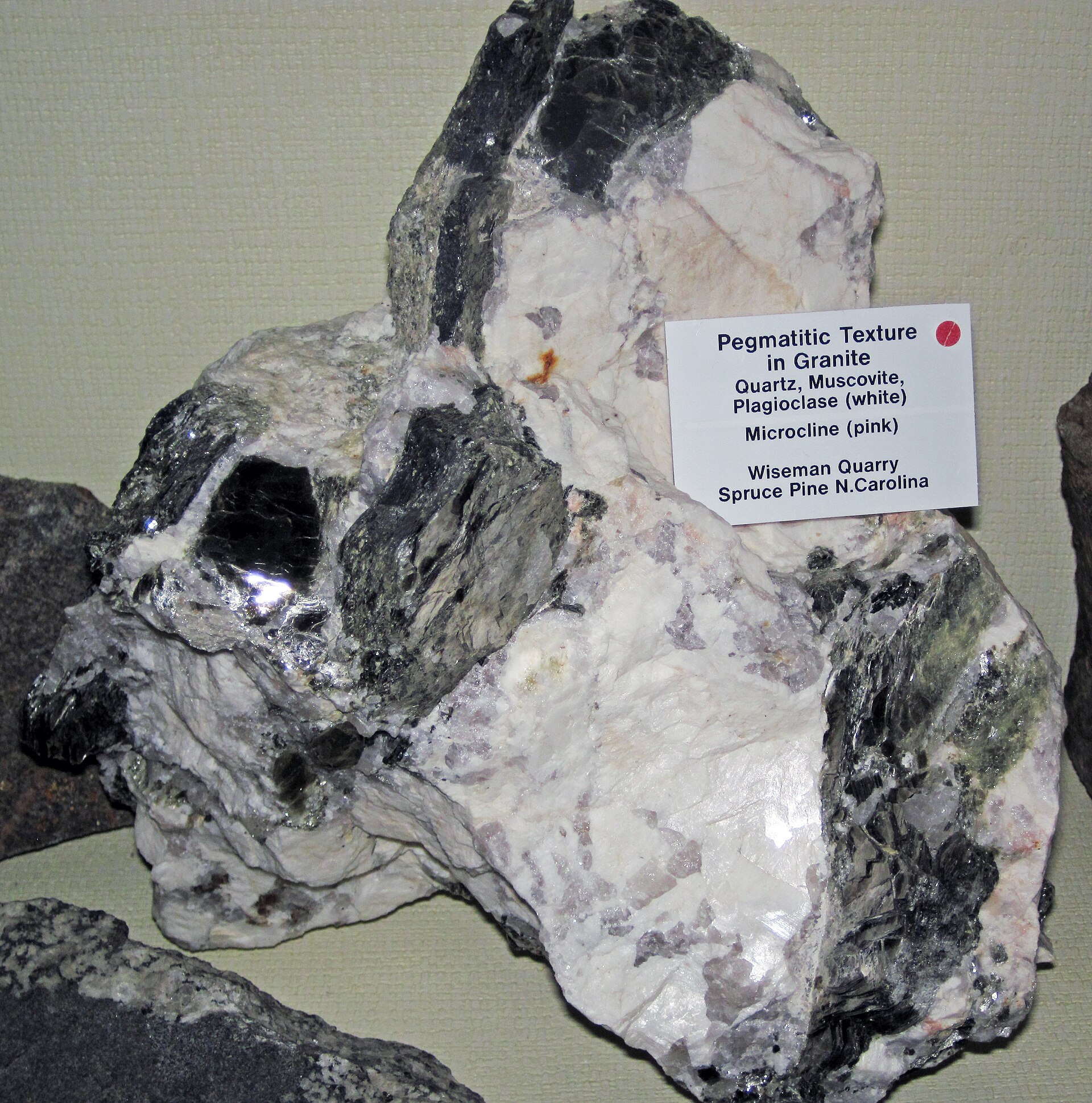
A mineral is a naturally occurring, inorganic solid with a definite chemical composition and an ordered internal atomic structure. A rock is a naturally occurring solid made of one or more minerals packed together. Put simply, minerals are the ingredients and rocks are the recipe: granite is a rock, but the quartz, feldspar and mica grains inside it are minerals.
The five tests for a mineral
Geologists apply a strict, five-part definition. To count as a true mineral, a substance must be:
- Naturally occurring — formed by geological processes, not manufactured in a lab.
- Inorganic — not produced by a living organism’s biological processes.
- Solid — not a liquid or gas at normal surface conditions.
- A definite chemical composition — expressible as a formula, such as quartz (SiO₂) or halite (NaCl).
- An ordered atomic structure — its atoms are arranged in a repeating three-dimensional crystal lattice.
Roughly 6,000 minerals have been described, but only a few dozen — the common rock-forming minerals like quartz, feldspar, mica, calcite and the amphiboles — make up the great bulk of the rocks you will ever pick up.
What a rock is
A rock is simply a solid aggregate of mineral grains. Some rocks are monomineralic, built almost entirely from a single mineral: quartzite is nearly all quartz, limestone is mostly calcite, and rock salt is halite. Most rocks, though, are polymineralic — granite is the classic example, an interlocking mix of quartz, feldspar and mica. Because rocks are mixtures, they do not have a single fixed chemical formula the way a mineral does; their composition varies with the proportions of the minerals inside them.
Rocks are grouped into three families by how they form, a story we cover in full in our guide to igneous, sedimentary and metamorphic rocks. Identifying a rock means recognising both its constituent minerals and its texture — grain size, layering and how the crystals fit together.
A mineral is…
- One substance with a fixed formula
- An ordered crystal structure
- Testable by hardness, streak, cleavage
- Examples: quartz, calcite, pyrite, gold
A rock is…
- An aggregate of one or more minerals
- No single fixed chemical formula
- Identified by minerals plus texture
- Examples: granite, limestone, basalt, schist
The awkward middle: mineraloids
A few well-known collectibles fail the strict definition and get their own label, mineraloid. Obsidian is volcanic glass — it cooled too fast to grow a crystal lattice, so it lacks the ordered structure. Opal is made of tiny silica spheres without long-range crystal order. Amber is fossilised tree resin and jet is a form of fossil wood, so both are organic. Pearl is produced by a living mollusc, which also rules it out. These are all popular with collectors and lapidaries, but strictly speaking none of them is a true mineral.
Where gemstones and native metals fit
Most gemstones are minerals — diamond, ruby (corundum), emerald (beryl) and amethyst (quartz) all pass the five tests. A few gem materials are rocks, such as lapis lazuli, which is really a mixture of lazurite, calcite and pyrite. Native metals like gold, silver and copper are minerals too: they occur naturally, are inorganic and solid, have a definite composition and a crystal structure, even when you usually find them as shapeless nuggets rather than tidy crystals.
Why the difference matters to a rockhound
The distinction is not just pedantry — it changes how you identify a find. For a mineral, you reach for single-property tests: hardness, streak, cleavage and fracture, and crystal habit. For a rock, those tests apply to each grain, and you focus instead on which minerals are present and how they are arranged. Knowing which question to ask is half the battle when you tip out a bag of finds at the end of the day.
Frequently asked questions
What is the main difference between a rock and a mineral?
A mineral is a single naturally occurring inorganic solid with a definite chemical formula and an ordered crystal structure. A rock is an aggregate of one or more minerals and has no single fixed formula.
Is granite a rock or a mineral?
Granite is a rock. It is built from several minerals locked together — mainly quartz, feldspar and mica — which is why you can see different-coloured grains in a single piece.
Is quartz a rock or a mineral?
Quartz is a mineral (silicon dioxide, SiO₂). When quartz makes up almost an entire rock, that rock is called quartzite, but the quartz itself is a mineral.
Why is obsidian not a mineral?
Obsidian is natural volcanic glass that cooled too quickly to form an ordered crystal structure, so it fails one of the five mineral tests. It is classed as a mineraloid instead.
Are gemstones rocks or minerals?
Most gemstones are minerals, such as diamond, ruby and amethyst. A few are rocks, like lapis lazuli, and a few are organic mineraloids, like amber and pearl.
Can a rock be made of just one mineral?
Yes. These are called monomineralic rocks — quartzite is almost all quartz, limestone is mostly calcite, and rock salt is essentially the mineral halite.
Want single-mineral specimens for your collection?
Sponsored — partner shop · Minerals Kingdom
Ready to identify what you find? Learn the rock families in our igneous, sedimentary and metamorphic guide, then build a mineral ID kit with the Mohs hardness scale and streak test. New here? Start with how to start rockhounding.
Written by The Field & Stone Editors · Published by KEVALEX Group.