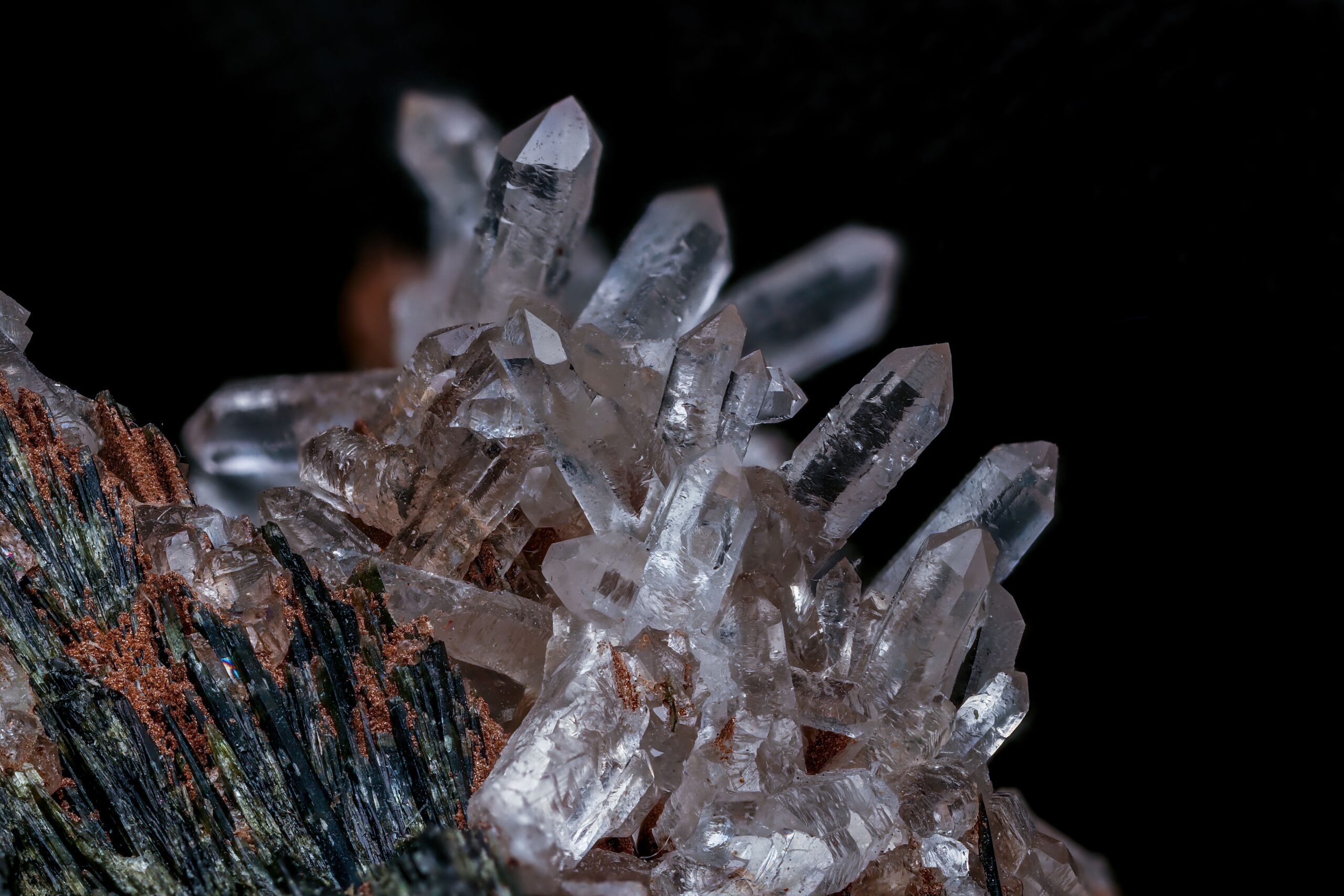
Mount Ida wears its title proudly: the “Quartz Crystal Capital of the World.” The Ouachita Mountains around this small Arkansas town hold some of the finest clear quartz on Earth, and a cluster of fee-dig mines let anyone dig their own glass-clear points and clusters — and keep every crystal they pull from the red clay.
The geology behind the crystals
The Ouachita Mountains were folded and heated hundreds of millions of years ago, and hot, silica-rich fluids filled the cracks in the hard sandstone with quartz veins. Where those veins had room to grow into open pockets, the quartz formed superb clear crystals and clusters. Arkansas quartz is prized worldwide for its water-clear transparency — so much so that quartz is the Arkansas state mineral.
The fee-dig mines
Several family-run mines around Mount Ida and nearby Jessieville open their ground to the public, including Wegner, Ron Coleman, Sweet Surrender and Twin Creek. Most let you dig freshly machine-loosened ground or sort the tailings for a smaller fee, and offer guided digs for beginners. Whatever you find is yours to keep. The town even hosts a World Championship Quartz Crystal Dig each autumn.
What you’ll find
The crystals
- Clear single points — the classic find
- Clusters — many points on a base
- Smoky & phantom quartz
- Rare doubly-terminated & twin crystals
Access & the law
- Fee-dig on private mine claims — pay a daily rate, keep your finds.
- Guided and self-dig options; tools often available to rent.
- Surrounding Ouachita National Forest has its own collecting rules — check before digging off the mines.
How to dig
At most mines, machines loosen fresh vein material and diggers work it with hand tools — a mattock, a trowel and a bucket. Watch the freshly turned clay and the pocket walls for the flash of a crystal face, then work it out gently so you don’t chip the point. Tailings digging is easier and cheaper: you sort mine-run piles for crystals the machinery missed.
Getting there
Mount Ida sits in the Ouachita Mountains of west-central Arkansas, roughly an hour and a half from Hot Springs. The mines are signed from town and reached on good roads, though the digs themselves are muddy — bring boots and a change of clothes.
When to go
The digs run spring through fall; many mines open several days a week (commonly Tuesday–Saturday), but hours vary, so confirm before you drive out. A day or two after rain is ideal — the clay is workable and crystals show well.
Plan your trip
Pair this with the wider Arkansas rockhounding guide — Arkansas is also home to the Crater of Diamonds. Read collecting ethics & the law before you go.
Frequently asked questions
Do I keep the quartz I dig?
Yes — the mines are fee-dig operations, and every crystal you find on your paid dig is yours to keep.
How do I clean the iron stain off?
Fresh crystals come out orange with iron oxide. A soak in a suitable cleaner (the mines will advise which and how) restores the clear luster. A first rinse and scrub removes the clay.
Can I collect for free in the national forest?
The Ouachita National Forest has its own rules for mineral collecting; check current regulations with the Forest Service before digging outside the fee mines.
What tools do I need?
A mattock or hand pick, a trowel, gloves and buckets. Many mines rent tools and offer guided digs for first-timers.
When are the mines open?
Generally spring through fall, several days a week, but schedules vary by mine — confirm hours and rates before your trip.
Want a finished quartz cluster?
Sponsored — partner shop · Minerals Kingdom
Written by The Field & Stone Editors. Informational only — confirm mine access, fees and forest rules before collecting. Published by KEVALEX Group.
 FIELD & STONE
Field & Stone is the American rockhounding field guide — where to find rocks, minerals and fossils across all fifty states. Real localities, the best seasons, collecting law and the rock & gem clubs that keep the craft alive, from the Olympic Peninsula agate beaches to the diamond fields of Arkansas.