 FIELD
FIELD In the high desert near Plush, the Bureau of Land Management maintains a free public collecting area in Rabbit Basin where anyone can dig gem sunstone — clear, yellow, pink, red and rare copper-schiller stones — and keep them within personal-use limits. It is one of the few places in the country where you can collect a gemstone on public land, for free, all day long.
The geology behind the stones
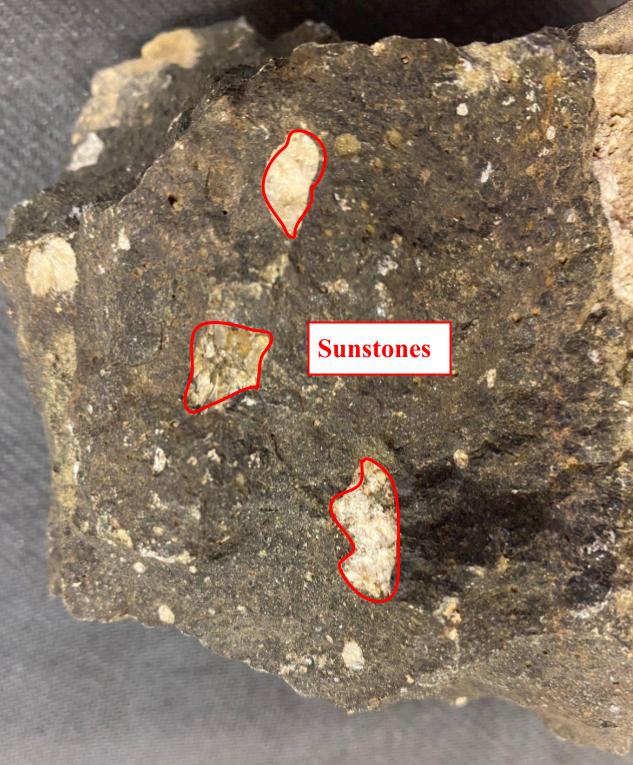
Oregon sunstone is a gem feldspar (a labradorite plagioclase) that crystallized as large phenocrysts in slow-cooling basalt lava. As the flows weathered away, the tough crystals were freed and now sit loose in the decomposed soil. What makes the Plush stones special is copper: microscopic platelets of native copper suspended inside some crystals scatter light to produce the famous schiller shimmer, and heavier copper content deepens the color toward pink, red and green. This copper-bearing sunstone is essentially unique to Oregon.
The colors & the schiller
Sunstone here runs a remarkable range: water-clear, straw and champagne yellow, soft pink and salmon, and — rarest and most valuable — deep red, green and bicolor stones. The prize is copper schiller: tilt a stone in the sun and a metallic glint slides across it. Clear and yellow stones are common on the free ground; the richest reds and schiller tend to come from the deeper, copper-rich zones worked by the nearby private mines.
What you’ll find
The stones
- Water-clear sunstone
- Yellow, champagne, pink & salmon
- Red & green (rarer)
- Copper schiller (shimmer) — the prize
Access & the law
- BLM free public collecting area — personal-use quantities.
- Nearby private mines (fee dig) offer richer ground and the best red & schiller material.
- Remote & hot — carry water, fuel and a spare tire; fill your holes.
How to collect
Two approaches work here. Many visitors surface-hunt, walking the open ground and scanning for the tell-tale flash of a clear or colored crystal against the drab soil. Others dig and screen the decomposed material, sifting out the heavier sunstone. A shovel, a screen, a spray bottle to rinse dusty finds, and patience are all you need. There is no need to break rock — the crystals are already free in the ground.
Getting there
The collecting area is in Rabbit Basin, roughly 25 miles north of the tiny town of Plush in Lake County, reached by graded and dirt roads through open range. It is genuinely remote high desert with no services: carry water, fuel, food and a spare tire, and watch the weather, as the roads turn to gumbo when wet. A high-clearance vehicle is a good idea.
When to go
Plan for late spring through fall. Summers are hot and dry but accessible; winter brings snow and impassable mud. As with all desert digging, the cooler ends of the day are both more comfortable and better for spotting flash.
Free area or fee mine?
The BLM area is completely free and productive for clear and yellow stones — a great, no-cost day out. If your heart is set on red or schiller sunstone, the adjacent private fee mines sell access to richer, deeper ground and often let you dig their tailings for a smaller fee. Many collectors do both: the free area first, then a fee dig for the rarer colors.
Plan your trip
Pair this with the wider Oregon rockhounding guide — Oregon also offers world-class obsidian at Glass Butte. Read collecting ethics & the law before you go.
Frequently asked questions
Can I really dig Oregon sunstone for free?
Yes — the BLM public collecting area near Plush is free to everyone, and you keep what you find within personal-use limits. Adjacent private mines offer richer ground for a fee.
What is schiller?
A metallic shimmer caused by microscopic copper platelets inside the crystal. Copper-schiller sunstone is essentially unique to Oregon and the most prized material here.
What colors will I find?
Mostly clear and yellow on the free ground, with pink and salmon also common. Red, green and strong schiller are rarer and concentrate in the deeper, copper-rich zones.
Do I need tools?
A shovel and screen help, but you can surface-hunt with nothing but sharp eyes. Bring water and sun protection above all.
When is it open?
The public area is open year-round, but access is practical mainly from late spring to fall — winter snow and mud close the roads.
Want cut Oregon sunstone?
Sponsored — partner shop · Minerals Kingdom
Written by The Field & Stone Editors. Informational only — verify BLM rules and access before collecting. Published by KEVALEX Group.