The gravel beaches of Michigan’s Upper Peninsula are among the best places in the country to hunt the Lake Superior agate — a richly banded red-and-orange gem weathered from billion-year-old lava. No tools, no digging: you simply walk the shore and read the pebbles.
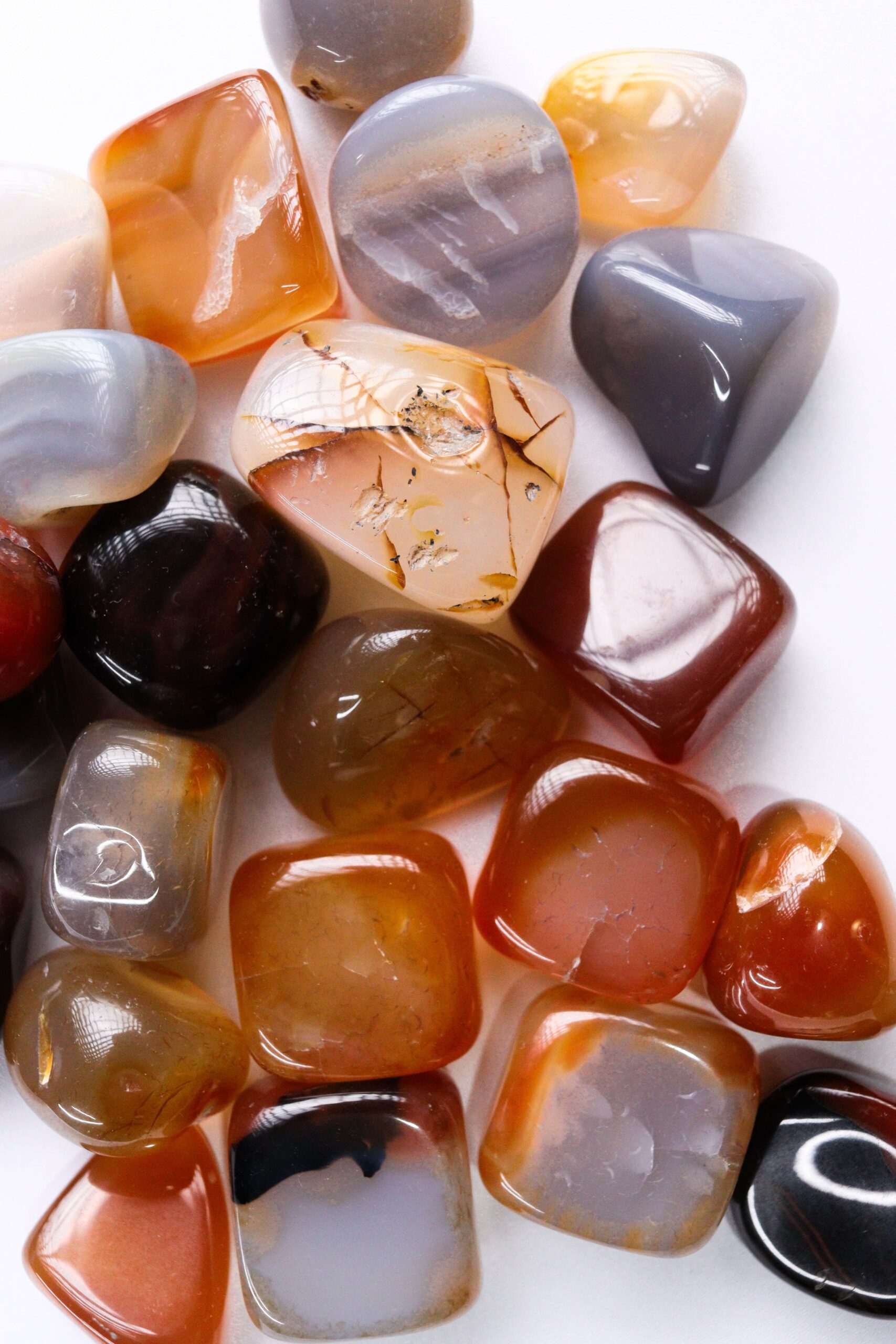
The geology behind the agates
About a billion years ago, the North American continent began to tear apart along the Midcontinent Rift, flooding the Lake Superior basin with basalt lava. Silica-rich fluids filled the gas cavities in that lava to form agates, their iron-rich bands giving the classic red-orange color. Much later, glaciers ground up the old lava and spread the agates far and wide, and the waves of Lake Superior now sort them onto the beaches.
What you’ll find
The stones
- Lake Superior agate — red/orange & white banding (“fortification”)
- Datolite & native copper (Keweenaw)
- Jaspers & basalt “puddingstone”
- Rare greenstone (chlorastrolite) — Michigan’s state gem
Access & the law
- Public beaches allow personal-use collecting of loose stones.
- Isle Royale National Park is off-limits — no collecting, including greenstone.
- Respect private frontage and any local limits; leave no trace.
How to hunt
Walk the gravel slowly and scan the wet stones at the water’s edge and the fresh drift lines. Many hunters carry a spray bottle to wet a suspect pebble, since a dry agate can look dull. There’s nothing to dig — the lake resorts the beach with every storm, so the same stretch can reward repeat visits.
Where to go
The Keweenaw Peninsula, the shore around Grand Marais and the beaches toward Whitefish Point are classic agate grounds, and the Keweenaw also yields native copper and datolite from its old mining country. Any public gravel beach along the big lake is worth a look after a blow.
When to go
Prime time is spring, after the winter ice breaks up and storms have reworked the beaches, and any time after a strong blow through the open-water season. Fresh gravel means fresh agates.
Plan your trip
Pair this with the wider Michigan rockhounding guide, and read collecting ethics & the law before you go.
Frequently asked questions
Do I need tools to find Lake Superior agates?
No — this is surface collecting on gravel beaches. A bag and a spray bottle to wet suspect stones are all you need.
How do I recognize one?
Look for a waxy, translucent surface, a pitted or ridged “peel,” and red-and-white banding on any broken edge. Wetting the stone makes the translucence obvious.
When is the best time?
Spring after ice-out, and any time after a storm has churned fresh gravel onto the beach.
Can I collect anywhere along the lake?
On public beaches, personal-use collecting is generally fine, but Isle Royale National Park is off-limits, and you should respect private frontage.
What else might I find?
Native copper and datolite in the Keweenaw, jaspers and basalt “puddingstone,” and — rarely — greenstone, Michigan’s state gem.
Want a polished Lake Superior agate?
Sponsored — partner shop · Minerals Kingdom
Written by The Field & Stone Editors. Informational only — verify beach access and local rules before collecting. Published by KEVALEX Group.
 FIELD & STONE
Field & Stone is the American rockhounding field guide — where to find rocks, minerals and fossils across all fifty states. Real localities, the best seasons, collecting law and the rock & gem clubs that keep the craft alive, from the Olympic Peninsula agate beaches to the diamond fields of Arkansas.