 FIELD
FIELD Rockhounding in Michigan
Petoskey stones on the Lake Michigan shore, Lake Superior agates in the Upper Peninsula, and native copper in the Keweenaw — Michigan is a beachcomber’s rockhounding paradise.
Michigan is a beachcomber’s state. Glaciers ground up an ancient coral reef and a vast copper deposit and spread the pieces along thousands of miles of Great Lakes shoreline — so the classic Michigan hunt isn’t digging, it’s walking the beach with your eyes down, looking for the tell-tale honeycomb of a Petoskey stone or the glow of a Lake Superior agate.
The geology behind the finds
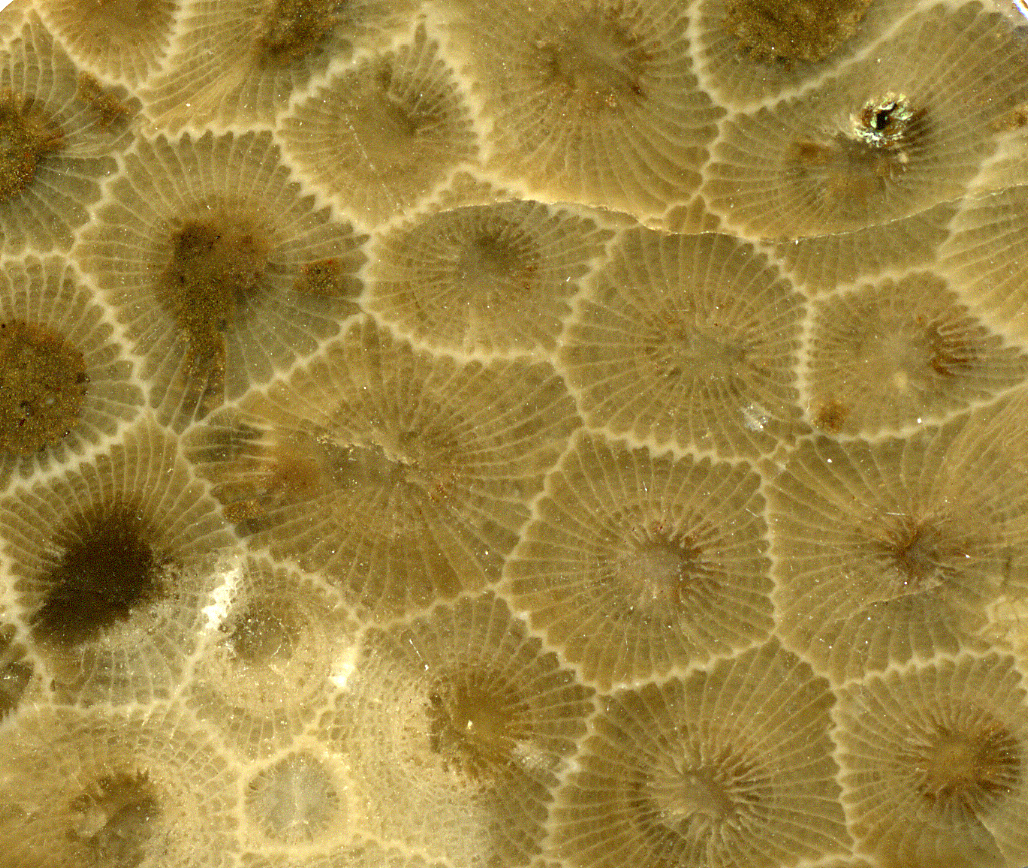
The Petoskey stone is fossil colonial coral (Hexagonaria) from a Devonian reef, polished by glaciers and waves into the hexagonal-patterned pebbles found along Lake Michigan. In the north, the billion-year-old basalts of the Keweenaw are the world’s great source of native copper, along with datolite, agate and the chlorastrolite (greenstone) that Michigan made its state gem. Glacial action then spread Lake Superior agate across the region.
What you’ll find
Classic Michigan material
- Petoskey stone — fossil coral; Lake Michigan shore (Petoskey/Charlevoix)
- Lake Superior agate — UP beaches
- Native copper, datolite, chlorastrolite — Keweenaw
- Fossils & chain coral
Before you go
- Beach collecting: personal-use limits apply on state-managed shoreline.
- Isle Royale National Park: no collecting (greenstone stays there).
- Respect private frontage and old mine sites in the Keweenaw.
- Read ethics & law first.
The Petoskey stone is the people’s favourite — dull when dry, it reveals its six-sided coral pattern when wet or polished. Lake Superior agate brings rich red-and-white banding, and copper country offers native copper, gemmy datolite nodules and the elusive greenstone for those who know where (legally) to look.
Where to go, region by region
Lake Michigan shore
The Petoskey / Charlevoix beaches are the place for Petoskey stones — wet the pebbles or look just at the waterline, where the coral pattern shows best. It’s an easy, family-friendly hunt.
The Keweenaw & Lake Superior
Copper country yields native copper, datolite and, on Superior’s beaches, Lake Superior agate. Respect private mine land and frontage; collect on public beaches within limits.
When to go
Michigan beachcombing runs late spring through fall, and storms that churn the shoreline often expose fresh agate and Petoskey stones. Spring, after ice-out, and after autumn blows can be especially productive.
Gear & field tips
- A spray bottle or just the lake itself — wet stones reveal both the Petoskey pattern and agate banding.
- Polarised sunglasses cut glare on wet gravel.
- Search at the waterline after a blow, when fresh material is sorted onto the beach.
Rules & access
Beach collecting is allowed within personal-use limits on much state-managed shoreline, but some parks restrict it, and Isle Royale National Park prohibits collecting entirely — its famous greenstone must stay put. Old Keweenaw mines and private frontage are off-limits. Confirm local rules and read our guide to collecting ethics & the law.
Clubs & shows
Michigan’s Great Lakes clubs run beach trips and shows, and copper-country clubs know the legal collecting spots. Browse our clubs directory.
Want a polished Petoskey stone or Lake Superior agate?
Sponsored — partner shop · Minerals KingdomFrequently asked questions
Where do I find Petoskey stones?
Along the Lake Michigan shore around Petoskey and Charlevoix. Look at the waterline or wet the pebbles to spot the hexagonal coral pattern.
Can I collect Isle Royale greenstone?
Not in Isle Royale National Park — collecting is prohibited there. Chlorastrolite turns up rarely on Keweenaw beaches outside the park.
How much can I take from the beach?
Personal-use limits apply on state-managed shoreline (commonly a modest weight per person per year). Check the current Michigan rules before a big haul.
Informational only — confirm access and the law with the managing agency before collecting. Written by The Field & Stone Editors · Published by KEVALEX Group.