 FIELD
FIELD The flame test: identifying minerals by flame colour
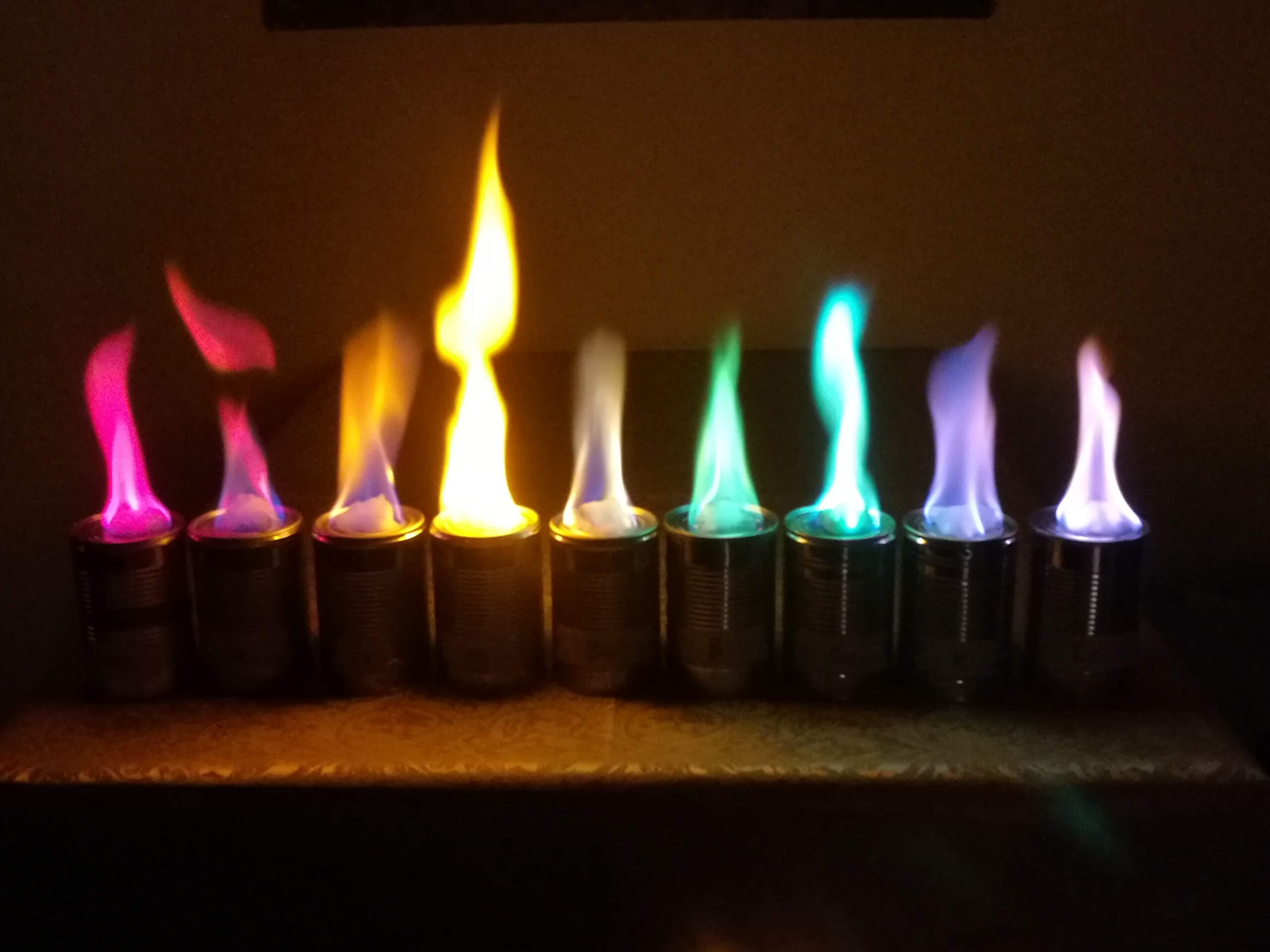
Hold a scrap of the right mineral in a hot flame and the flame itself changes colour — copper burns green, strontium blood-red, sodium a hard yellow. It is old-school chemistry that still earns its place in a rockhound’s kit.
The flame test is one of the oldest chemical tests in mineralogy: heat a tiny amount of a mineral in a clean, hot flame and certain metal elements colour that flame a characteristic hue. It works because the heat excites the electrons of specific metals, which then release that energy as light of a very particular colour — a fingerprint for the element, not the mineral as a whole. It will never name a species on its own, but as a quick chemical clue alongside hardness, streak and lustre, it can be decisive — especially for telling apart look-alike minerals that differ only in the metal they carry. This guide explains what the flame test detects, the colours to know, how to run it safely, and where it helps and misleads.
What the flame test actually detects
The flame test responds to metal cations, not to whole minerals. When a metal salt is heated strongly, its electrons absorb energy and jump to higher levels; as they fall back they emit light at wavelengths set by that particular element, which your eye reads as a colour. Because the emission comes from the metal ion, two very different minerals that share the same metal — say the strontium in celestine and in strontianite — will flash the same colour. That is the key to reading the test correctly: it tells you an element is present, and you combine that with the mineral’s other properties to reach a name.
Only some elements give a useful colour. The alkali metals, alkaline earths and a handful of others (copper, boron, lead) show clearly; many common rock-forming elements — silicon, aluminium, iron, magnesium — give little or no visible flame colour, which is itself informative when a sample stays stubbornly colourless.
The colours worth knowing
A working rockhound only needs a short list. The table pairs the flame colour with the element and some minerals that carry it.
Warm colours
- Persistent yellow → sodium (halite, albite, many others)
- Brick / orange-red → calcium (calcite, fluorite, gypsum)
- Crimson → strontium (celestine, strontianite)
- Carmine red → lithium (lepidolite, spodumene)
Cool colours
- Lilac / violet → potassium (orthoclase, sylvite)
- Green → copper (malachite, azurite) or boron (borax, colemanite)
- Pale (apple) green → barium (barite, witherite)
- Bluish-white → lead or arsenic (with a garlic smell)
Two of these need a note. Sodium gives such a strong, lingering yellow that a trace of it — and sodium is nearly everywhere, on your fingers and in dust — will drown out fainter colours. And potassium’s pale lilac is easily swamped by that sodium yellow, which is why chemists view a suspected potassium flame through cobalt-blue glass, which filters out the yellow and lets the violet show.
How to run a flame test
You need a hot, clean, near-colourless flame — a gas burner or a small butane torch — and a length of clean platinum or nichrome wire with a small loop at the end. Dip the loop in dilute hydrochloric acid, then hold it in the flame until it glows without adding any colour of its own; repeat until the wire is “clean.” Moisten the loop, pick up a few grains of the powdered mineral, and hold it at the edge of the hottest part of the flame. Watch the first instant of colour, because sodium contamination creeps in quickly and turns everything yellow after a moment.
No wire to hand? A time-honoured field version is to crush a little of the mineral, moisten it, and introduce it on the tip of a clean knife or in a small flame from a torch. It is cruder, but a strong copper green or strontium crimson will still announce itself. Test a fresh, clean fragment rather than a weathered surface, and compare against a known sample when you can — calibrating your eye on a piece of labelled celestine or malachite makes the unknowns far easier to judge.
Where the flame test earns its keep
The test shines when two candidates look identical but carry different metals. A colourless, glassy, bladed crystal might be celestine (strontium, crimson flame) or a look-alike sulphate; the flame settles it in seconds. Green crusts that could be copper minerals betray themselves with a clean green flame. A white, heavy, tabular mineral that flashes apple-green points to barium and the barite family. And a lithium-bearing pegmatite mineral such as lepidolite will give a distinctive carmine that ordinary micas never do.
It is also a fast reality check on collector labels. If a specimen sold as a strontium mineral refuses to give any crimson at all, that is a reason to look harder, not to assume the label is right.
What it cannot do — and its traps
The flame test has real limits. Many minerals contain no flame-active metal and simply stay colourless, so a null result rarely rules a candidate in or out by itself. Sodium contamination is the classic trap: its yellow masks weaker colours and appears from the faintest trace, so a fleeting yellow means little. Iron and other transition metals can muddy or mask a colour, and a few elements (potassium especially) are so faint they are missed without cobalt glass. Finally, the colour identifies an element, not a species — strontium in celestine and in strontianite flame alike, so you still need hardness, the acid test, crystal habit and the other clues to reach a firm name.
Frequently asked questions
What does a flame test tell you about a mineral?
It tells you which flame-active metal the mineral contains, because heat makes certain metal ions emit light of a characteristic colour. It identifies an element rather than a species, so you combine the result with hardness, streak and habit to name the mineral.
Why does copper turn a flame green?
Heating excites the electrons in copper ions, and as they drop back to lower energy levels they emit light concentrated in the green part of the spectrum. Many copper minerals such as malachite and azurite show this clearly; copper halides push the colour toward blue-green.
Why is the yellow sodium flame such a nuisance?
Sodium emits an intense, persistent yellow and is present almost everywhere — in dust, sweat and most samples — so even a trace floods the flame with yellow and hides fainter colours. That is why chemists watch only the first instant of colour and view potassium through cobalt-blue glass.
Do I need special equipment to try it?
A clean platinum or nichrome wire, dilute hydrochloric acid to clean it, and a hot gas or butane flame are ideal. A cruder field version using a torch and a moistened fragment still reveals strong colours like copper green or strontium crimson.
Is the flame test dangerous?
It uses an open flame and can release toxic fumes from arsenic-, lead- and sulphur-bearing minerals, so work in good ventilation, avoid inhaling the smoke, heat only a little, and keep acid off your skin. Treat unknown or possibly hazardous specimens with extra caution.
Can the flame test identify a mineral on its own?
No. It reveals a metal element, not a species, and many minerals give no colour at all. Use it as one line of evidence alongside hardness, streak, lustre, the acid test and crystal habit rather than as a stand-alone verdict.
Want reference specimens to practise flame colours?
Sponsored — partner shop · Minerals Kingdom
The flame test is a chemical clue — read it alongside the physical ones. Confirm a carbonate with the acid test, check a metal-bearing crust against its streak, and weigh the result together with hardness and lustre. For iron-bearing suspects, the magnet test is a useful partner.
Written by The Field & Stone Editors · Published by KEVALEX Group.