 FIELD
FIELD How to tell a fossil from a rock
Not every oddly shaped stone is a fossil, and not every fossil looks obviously alive — here’s what actually separates the two in the field.
A true fossil preserves the shape, structure or trace of something that was once alive — shell ridges, bone texture, leaf veins, a shed exoskeleton — mineralised or impressed into rock. A rock that merely looks organic thanks to erosion, mineral banding or a lucky crack is a pseudofossil. Repeating symmetry, fine surface detail and a texture that contrasts with the surrounding rock are the clues that tell them apart.
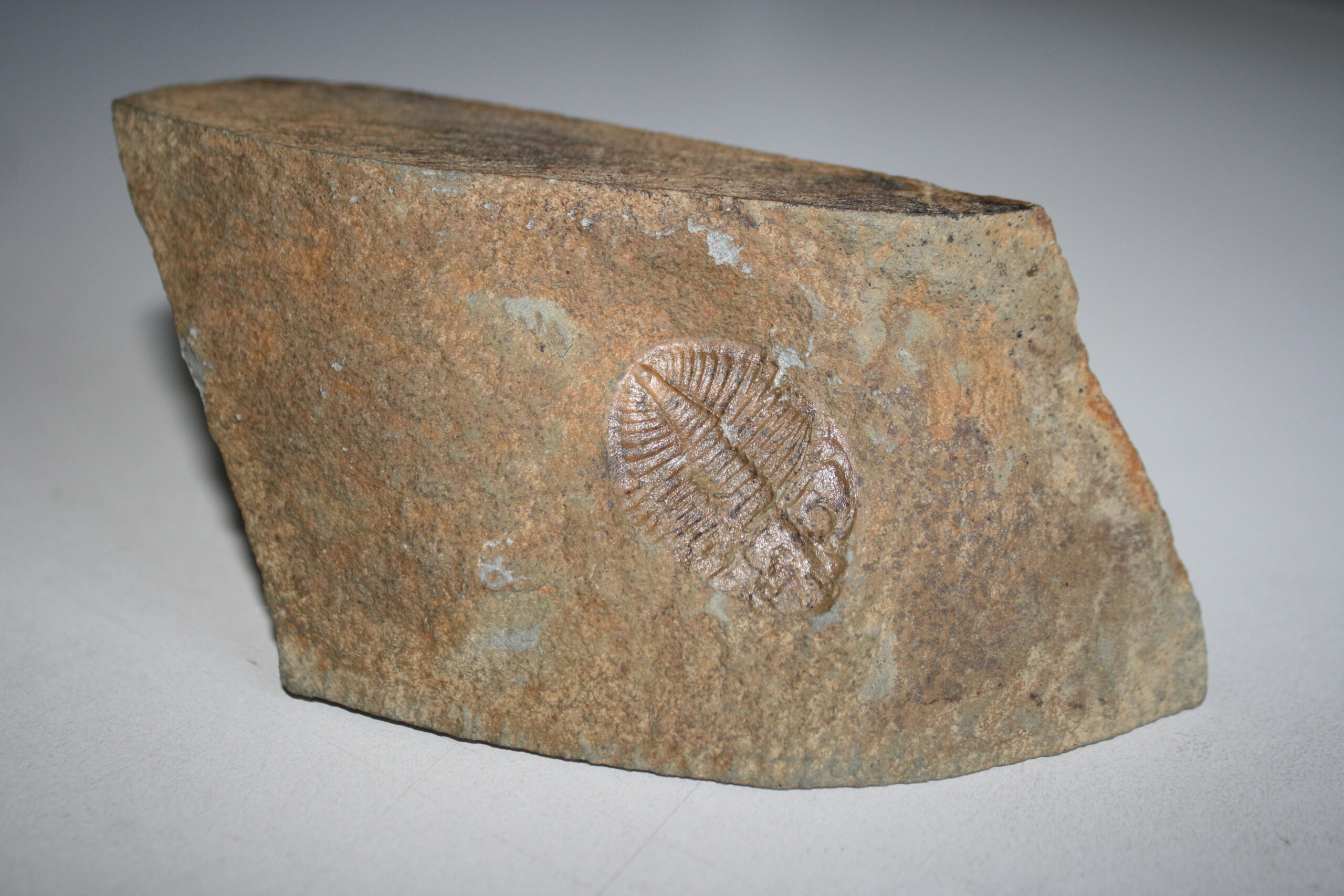
What actually counts as a fossil
A fossil is any preserved evidence of past life, and it comes in more forms than most beginners expect. Body fossils preserve the actual remains — a shell, a bone, a shed trilobite exoskeleton — often replaced mineral-for-mineral by silica or calcite in a process called permineralization, or left as a hollow mold and cast. Trace fossils preserve evidence of activity rather than the organism itself: footprints, burrows, root traces, even fossilised droppings. Collectors generally use a loose age threshold of roughly 10,000 years to separate a fossil from recent organic material.
The clues that say “yes, it’s a fossil”
- Repeating symmetry — segments, ribs, spirals or radial patterns that are too regular to be a random mineral growth.
- Fine surface detail — growth lines, pores, ridges or veining that mirrors real biological structure.
- A texture that contrasts with the host rock — a fossil often has a different color, lustre or grain than the matrix around it, because it formed from different material.
- Organised internal structure visible on a broken or polished face, rather than a uniform mineral fill.
Common look-alikes (pseudofossils)
Plenty of natural stones fool experienced collectors. Concretions are rounded mineral masses that grow around a nucleus in sedimentary rock and can mimic an egg, a skull or a shell without containing any organic material at all. Dendrites are branching, fern-like patterns of manganese or iron oxide that form along cracks in rock — they look remarkably plant-like but are purely mineral. Septarian nodules show cracked, cell-like patterns filled with calcite or barite, and moqui marbles are simple iron-oxide concretions with no fossil origin whatsoever.
Likely a fossil
- Repeating segments or radial symmetry
- Recognisable shell, bone or plant structure
- Found in marine or lake sedimentary rock
- Contrasting texture from the host rock
Likely a pseudofossil
- Branching, fern-like mineral pattern (dendrite)
- Perfectly round nodule with no internal structure
- Concentric mineral banding (Liesegang rings)
- Found in igneous or non-fossiliferous rock
How to test a suspected fossil without damaging it
Start with a hand lens and look for repeating pattern at a scale too fine to see with the naked eye. Compare the hardness and texture of the suspected fossil against the surrounding matrix using the Mohs hardness scale — a genuine fossil often differs noticeably from its host rock. Avoid reaching for acid: a vinegar or acid test can identify calcite, but it will also dissolve a calcite-replaced fossil, destroying the very thing you are trying to identify. Note the rock type and locality too — fossils only occur in sedimentary rock, so a find in obviously volcanic or metamorphic stone is almost certainly a pseudofossil. Photograph the specimen and compare it against a reference guide before doing any further cleaning or chiselling.
Why the difference matters
Beyond curiosity, getting this right protects both the specimen and you. Genuine fossils can be scientifically significant, and rules on collecting them vary by land ownership — always check local regulations, covered in our collecting ethics & the law guide, before removing anything from public land. If you want to practise on material that is confirmed fossiliferous from the start, a fee-dig site such as U-Dig Fossils in Utah lets you split shale that is guaranteed to contain trilobites.
Frequently asked questions
What is the easiest way to tell if a rock is a fossil?
Look for repeating symmetry — segments, ribs or spirals — and a texture or color that contrasts with the surrounding rock. A random, one-off shape with no internal structure is more likely a pseudofossil.
What is a pseudofossil?
A pseudofossil is a naturally formed mineral pattern, such as a dendrite, concretion or banding, that resembles a fossil but contains no actual organic remains or trace of life.
Are dendrites in rock actually fossilized plants?
No. Dendrites are branching deposits of manganese or iron oxide that form along cracks and surfaces in rock. They are purely mineral, despite their striking resemblance to moss or ferns.
Do all fossils turn to stone?
Not always. Some fossils are permineralised (mineral-replaced) and effectively stone, but others are preserved as molds and casts, impressions, or, rarely, as unaltered original shell or bone material in very young or well-protected deposits.
Is it legal to keep fossils I find while rockhounding?
It depends on where you find them. Rules differ between private land, state land and federal land, and some fossils, especially vertebrate remains, have extra protections. Check our collecting ethics & the law guide before you dig.
Can I use acid to test a fossil?
Be careful. A dilute acid test can confirm calcite, but many fossils are themselves calcite-replaced, so the same test can dissolve and destroy the specimen. Save acid testing for plain rock, not a suspected fossil.
Want confirmed fossil specimens to study?
Sponsored — partner shop · Minerals Kingdom
New to the hobby? Start with how to start rockhounding, then read our Mohs hardness scale guide to build out your field-testing kit. One fossil common enough to deserve its own guide is petrified wood, which keeps a tree’s rings and grain in solid silica.
Written by The Field & Stone Editors · Published by KEVALEX Group.