Fairburn Agate — Buffalo Gap National Grassland
The Fairburn agate is South Dakota’s state gem and, to many collectors, the finest fortification agate in the United States. There’s no mine and no fee: you hunt for it in the surface gravels and eroded badlands of the Buffalo Gap National Grassland, where personal collecting is allowed — but the agates are rare, and finding one is the whole challenge.
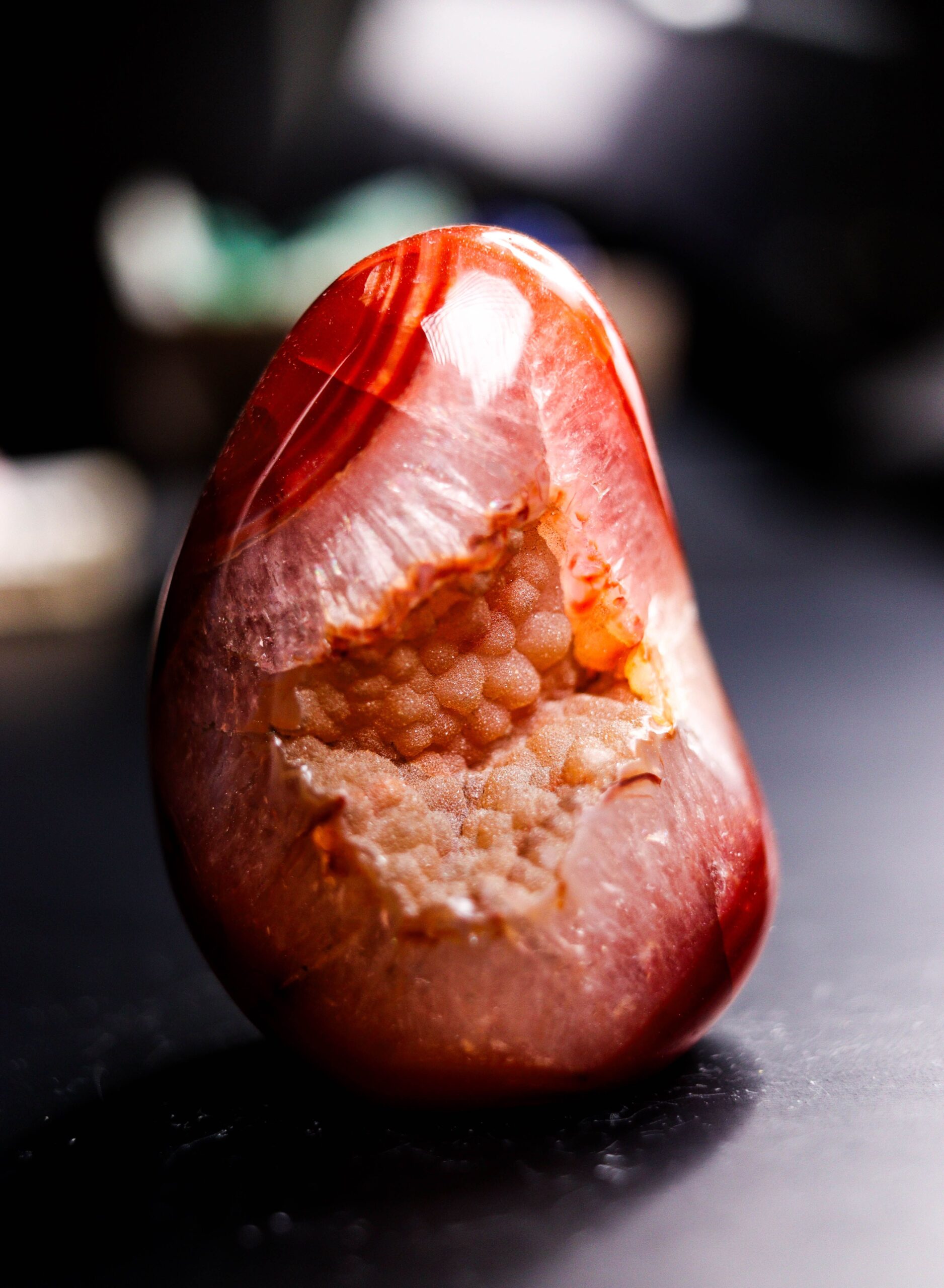
What is a Fairburn agate?
A Fairburn is a chalcedony agate with distinctive fortification banding — sharp, angular concentric lines that resemble the walls of a fort — in warm reds, oranges, golds and the sought-after “holly-blue.” They weathered out of an ancient limestone formation and were scattered across the prairie, so today they turn up as loose, waterworn pebbles in the gravels. Their rarity and beauty make them the most collectible agate in the country.
Where to hunt
The classic ground is the Buffalo Gap National Grassland in southwestern South Dakota, where surface gravels and eroded slopes hold Fairburns and the more common prairie agates. Much of the surrounding land around the town of Fairburn is private ranch, so you must stay on public grassland or ask permission before hunting private property.
What you’ll find
The agates
- Fairburn agate — fortification banding (the prize)
- Prairie agate — more common, banded
- Chalcedony & jasper
- Bubblegum & tepee-canyon agate nearby
Access & the law
- National grassland: personal-use surface collecting is allowed without a permit.
- Limit is roughly 25 lb/day plus one specimen; selling or bartering is not allowed.
- No fossils or artifacts; Badlands National Park is off-limits; ask permission on private ranch land.
How to hunt
This is patient, eyes-down surface hunting. Walk the gravel washes, dry creek beds and eroding badland slopes, scanning for banding and translucence; many hunters carry a spray bottle to wet suspect stones. There’s nothing to dig — the prairie and the rain do the exposing — but be prepared to cover ground, because a good Fairburn is a genuine trophy.
Getting there
The grassland lies in southwestern South Dakota, between Rapid City and the Badlands, near the small town of Fairburn and Buffalo Gap. Ranger-district offices can point you to open public parcels; carry water and watch the weather, as dirt roads turn greasy when wet.
When to go
Hunt spring through fall, ideally after rain, which washes the gravels clean and exposes fresh stones. Summer is hot and open; winter closes much of the prairie.
Plan your trip
Pair this with the wider South Dakota rockhounding guide, and read collecting ethics & the law before you go.
Frequently asked questions
Is it legal to collect Fairburn agates?
Yes, on the Buffalo Gap National Grassland: personal-use surface collecting is allowed without a permit, up to about 25 lb per day plus one specimen. Selling is not permitted, and Badlands National Park is off-limits.
Do I need to dig?
No — Fairburns are surface finds in gravels and eroded slopes. It’s eyes-down hunting, not digging.
How do I recognize a Fairburn?
By its tight, angular fortification banding in reds, golds and holly-blue, and the waxy translucence of chalcedony. They’re often small.
When is the best time?
Spring through fall, especially after rain, which exposes fresh stones and brightens their color.
Can I hunt on the ranch land near Fairburn?
Only with the landowner’s permission — much of the area is private. Stay on the public national grassland otherwise.
Want a display agate while you hunt for a Fairburn?
Sponsored — partner shop · Minerals Kingdom
Written by The Field & Stone Editors. Informational only — confirm current grassland rules and land boundaries before collecting. Published by KEVALEX Group.
 FIELD & STONE
Field & Stone is the American rockhounding field guide — where to find rocks, minerals and fossils across all fifty states. Real localities, the best seasons, collecting law and the rock & gem clubs that keep the craft alive, from the Olympic Peninsula agate beaches to the diamond fields of Arkansas.