The little town of Spencer in eastern Idaho sits on one of the top precious-opal sources in the United States. Its mine runs public fee digs where you can unearth bright, play-of-color opal yourself — the famously thin-layered material that is often cut into triplets to show off its play-of-colour fire.
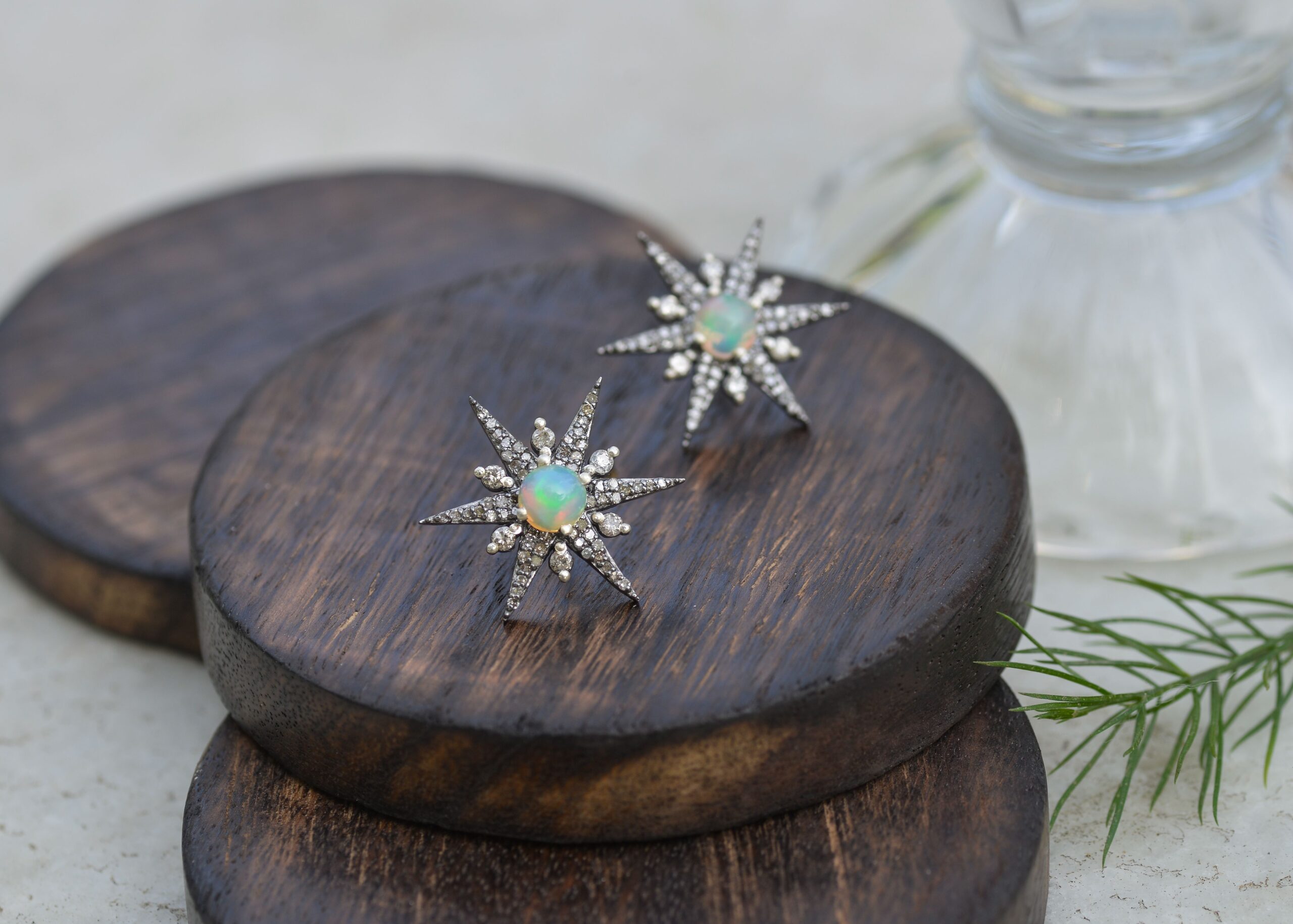
The geology behind the opal
Spencer’s opal formed where silica-rich water filled the gas cavities of ancient rhyolite lava, layering precious opal against a rhyolite base. Because the bright opal grew in thin sheets rather than solid nodules, much of it is cut into triplets — a slice of opal capped with clear quartz over a dark backing — to protect and display the fire. It’s a distinctive material with a loyal following among cutters.
The public digs
The operation offers two ways to collect. On scheduled public dig days (usually by reservation in the warm months) you work the actual mine ground and keep what you find within a set limit. For an easier taste, there’s a “mini” dig / tailings pile in town where you can screen mine-run material for smaller pieces any time the shop is open. Tools are provided or rented.
What you’ll find
The opal
- Precious opal with play-of-color
- Thin seams & layers in rhyolite
- Material suited to triplets & doublets
- Common (potch) opal & matrix pieces
Access & the law
- Fee-dig mine — pay to dig, keep what you find within the daily limit.
- Mine-ground digs are usually by reservation; the tailings dig is walk-in.
- Open in the warm months; confirm dates before traveling.
How it works
On a mine dig you break and split the opal-bearing rhyolite along its seams, watching for the flash of color in fresh faces. At the town tailings pile you simply screen and sort mine-run material. Either way, a spray bottle to wet pieces and a keen eye for fire are your best tools.
Getting there
Spencer lies in Clark County in eastern Idaho, just off Interstate 15 toward the Montana border. The opal shop in town is the starting point for both the mini-dig and reservations for the mine-ground digs.
When to go
Digs run in the warm months (roughly late spring through early fall); the high country closes with snow in winter. Reserve mine-ground dig days in advance, as spots are limited.
Plan your trip
Pair this with the wider Idaho rockhounding guide — Idaho is also home to the star garnets of Emerald Creek. Read collecting ethics & the law before you go.
Frequently asked questions
Can I dig my own opal at Spencer?
Yes — the mine runs public fee digs. On scheduled mine-ground days (by reservation) you keep what you find within a limit, and a walk-in tailings pile in town offers an easier option.
Why is Spencer opal made into triplets?
Because the bright opal occurs in thin layers. Cutting it as a triplet — opal capped with clear quartz over a dark backing — protects the thin seam and shows off its fire.
Do I keep what I find?
Yes, within the operation’s daily limit on the mine-ground digs; tailings-pile finds are yours as well.
Do I need a reservation?
Usually for the mine-ground dig days, which have limited spots. The town tailings dig is generally walk-in during shop hours.
When is it open?
The warm months, roughly late spring through early fall. Confirm the season’s dates before making the drive.
Want a finished opal triplet?
Sponsored — partner shop · Minerals Kingdom
Written by The Field & Stone Editors. Informational only — confirm dig days, reservations and fees before visiting. Published by KEVALEX Group.
 FIELD & STONE
Field & Stone is the American rockhounding field guide — where to find rocks, minerals and fossils across all fifty states. Real localities, the best seasons, collecting law and the rock & gem clubs that keep the craft alive, from the Olympic Peninsula agate beaches to the diamond fields of Arkansas.