Graves Mountain is the most famous collecting site in Georgia — and one of the few places to find world-class rutile, lazulite and blue kyanite. The mountain is private, but its caretaker opens it to the public free of charge twice a year for a three-day Rock Swap & Dig, and finders are keepers.
A mountain open twice a year
Graves Mountain is an old kyanite mine, now private land. Rather than lock it away, the caretaker hosts a free public Rock Swap & Dig on two weekends each year — traditionally the last weekend of April and the first weekend of October — with collecting typically from 8 a.m. to 6 p.m. There’s no fee to dig, and whatever you find is yours. All you must do is stop at the hospitality tent to sign a liability waiver before heading up.
The famous minerals
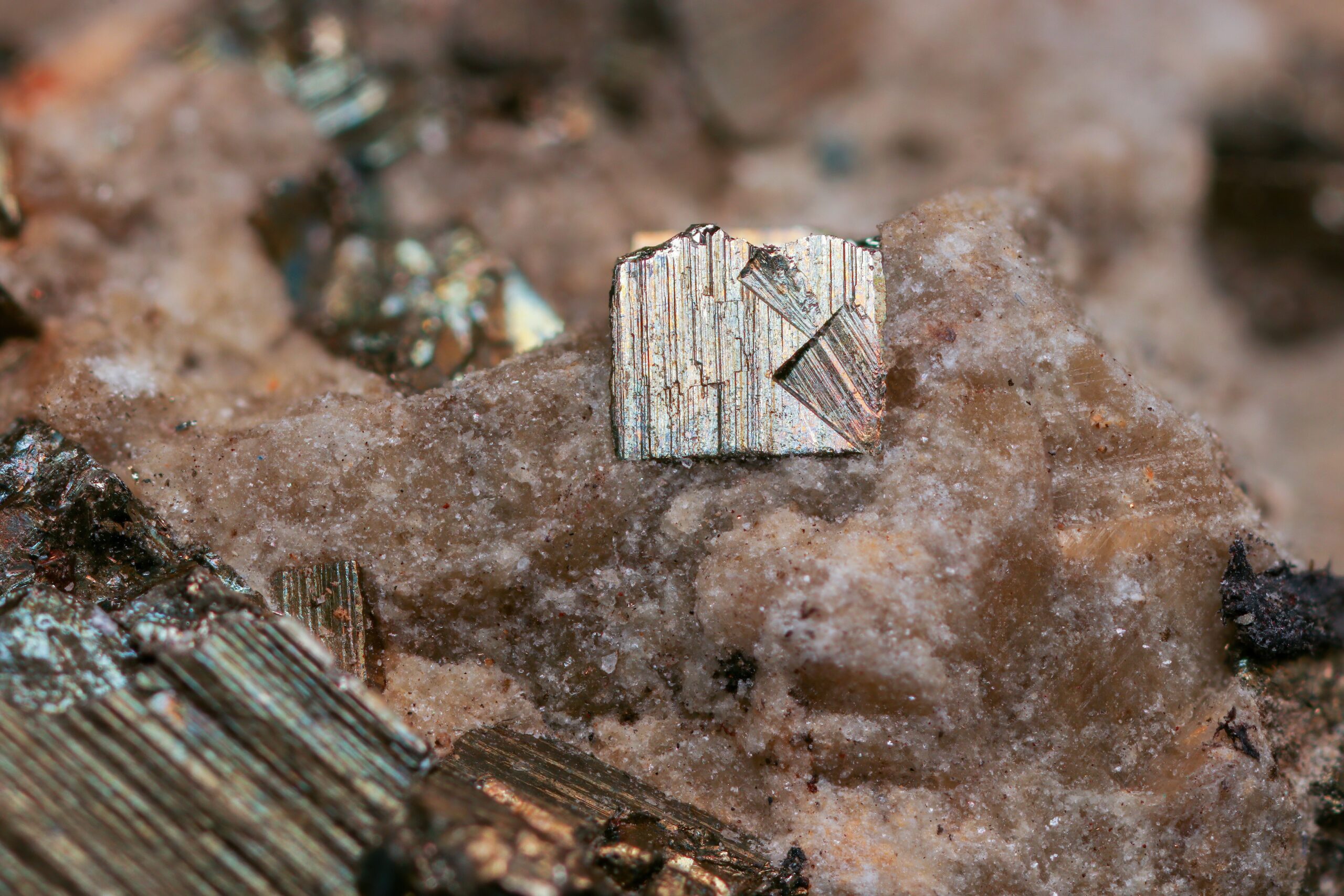
Graves Mountain built its reputation on quality. Its rutile and lazulite are among the finest anywhere, and collectors also prize the mountain’s blue-bladed kyanite, its iridescent hematite and pyrite that flash rainbow colors, silvery pyrophyllite, and unusual blue quartz. It’s a genuinely mineralogical site — less about gemstones, more about superb, well-formed crystals.
What you’ll find
The minerals
- Rutile & lazulite — world-class
- Kyanite — blue blades
- Iridescent hematite & pyrite — “rainbow” flash
- Pyrophyllite, ilmenite, fuchsite & blue quartz
Access & the law
- Private land — open to the public only on the scheduled dig weekends.
- Free to collect; sign the liability waiver at the hospitality tent.
- Finders keepers; other-date access can be arranged with the caretaker for groups.
How to collect
Collecting is a mix of surface hunting the mine terraces and splitting the host rock (a tough quartzite-schist) to free crystals. A rock hammer, chisel, pry bar, gloves and eye protection cover it. Many of the best iridescent pieces are found simply by turning over rubble on the benches, so take your time and look closely.
Getting there
Graves Mountain rises near Lincolnton in Lincoln County, eastern Georgia, not far from the Savannah River and Clarks Hill Lake. The site is well known locally and signed during dig weekends; follow event directions, as access is only granted on those dates.
When to go
Plan around the two annual dig weekends — generally late April and early October. These are the only times the mountain is open to the general public, so check the current dates before making the trip.
Plan your trip
Pair this with the wider Georgia rockhounding guide, and read collecting ethics & the law before you go.
Frequently asked questions
Can anyone collect at Graves Mountain?
Only on the scheduled dig weekends, when the private mountain is opened to the public free of charge. You must sign a liability waiver at the hospitality tent first.
When are the dig weekends?
Traditionally the last weekend of April and the first weekend of October, roughly 8 a.m. to 6 p.m. Confirm the current dates before you travel.
Is there a fee?
No — collecting on the public dig weekends is free, and whatever you find is yours to keep.
What’s the most sought-after find?
Fine rutile and lazulite, blue kyanite, and the iridescent “rainbow” hematite and pyrite the mountain is famous for.
What tools should I bring?
A rock hammer, chisel, pry bar, gloves and eye protection — plus boots and clothes you don’t mind staining with red Georgia mud.
Want display-quality pyrite or kyanite?
Sponsored — partner shop · Minerals Kingdom
Written by The Field & Stone Editors. Informational only — Graves Mountain is private; confirm dig-weekend dates and rules before visiting. Published by KEVALEX Group.
 FIELD & STONE
Field & Stone is the American rockhounding field guide — where to find rocks, minerals and fossils across all fifty states. Real localities, the best seasons, collecting law and the rock & gem clubs that keep the craft alive, from the Olympic Peninsula agate beaches to the diamond fields of Arkansas.