 FIELD
FIELD Rockhounding in Washington
From the agate beaches of the Olympic Peninsula to petrified wood in the Columbia Basin and the elusive Ellensburg Blue, Washington is one of the great Pacific-Northwest rockhounding states — and much of it is on public land.
Washington packs an unusual amount of variety into one state. Three forces shaped its rockhounding: Cascade volcanism, the vast Columbia River basalt flows, and a wave-battered Pacific coast. Together they scattered agate, jasper, petrified wood, fossils and gem feldspar across beaches, riverbeds, ridges and desert — a lot of it reachable on a day trip.
The geology behind the finds
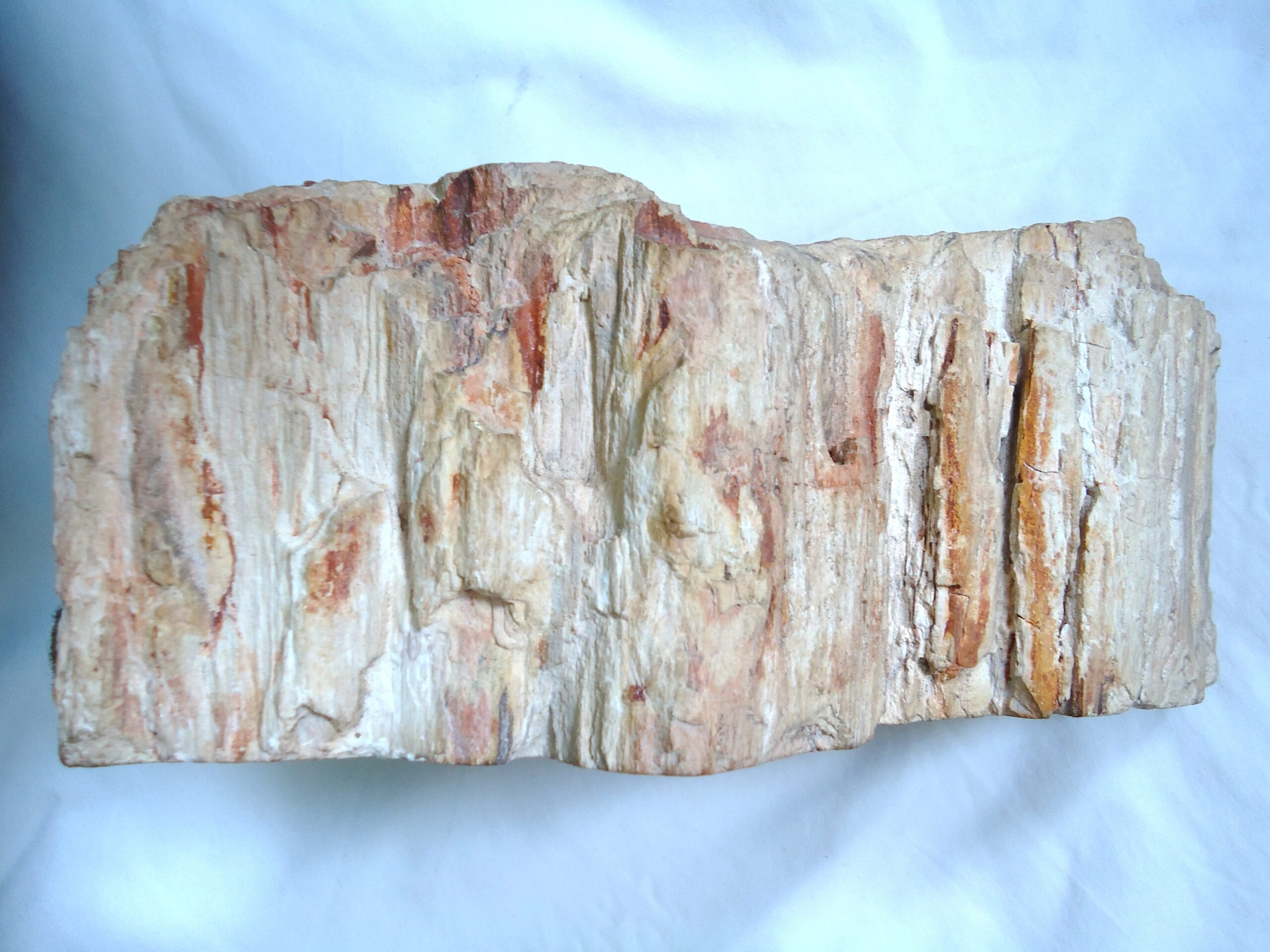
Most of Washington’s collectable material comes from two events. First, repeated Columbia River basalt eruptions buried entire forests, mineralising the wood into the petrified logs the state later adopted as its gem. Gas pockets and cracks in those same lava flows filled with silica to form agate, chalcedony and geodes. Second, glaciers and rivers spent millennia tumbling and sorting that material, concentrating it on beaches and gravel bars where it’s easy to find today.
That two-step — volcanic creation, then glacial & wave concentration — is why a beginner with a bucket can do well in Washington without ever swinging a pick.
What you’ll find
Classic Washington material
- Beach agate, jasper & carnelian — Olympic Peninsula & outer coast
- Petrified wood — the state gem; Columbia Basin
- Ellensburg Blue agate — rare, Kittitas County
- Geodes, carnelian & agate — Walker Valley (Skagit)
- Fossils — Stonerose (Republic), Racehorse Creek
Before you go
- Coastal tidelands: check Washington DNR maps for public access.
- Ginkgo Petrified Forest (Vantage) is a protected park — no collecting.
- Some sites charge a dig fee or need a club field trip.
- Read collecting ethics & the law first.
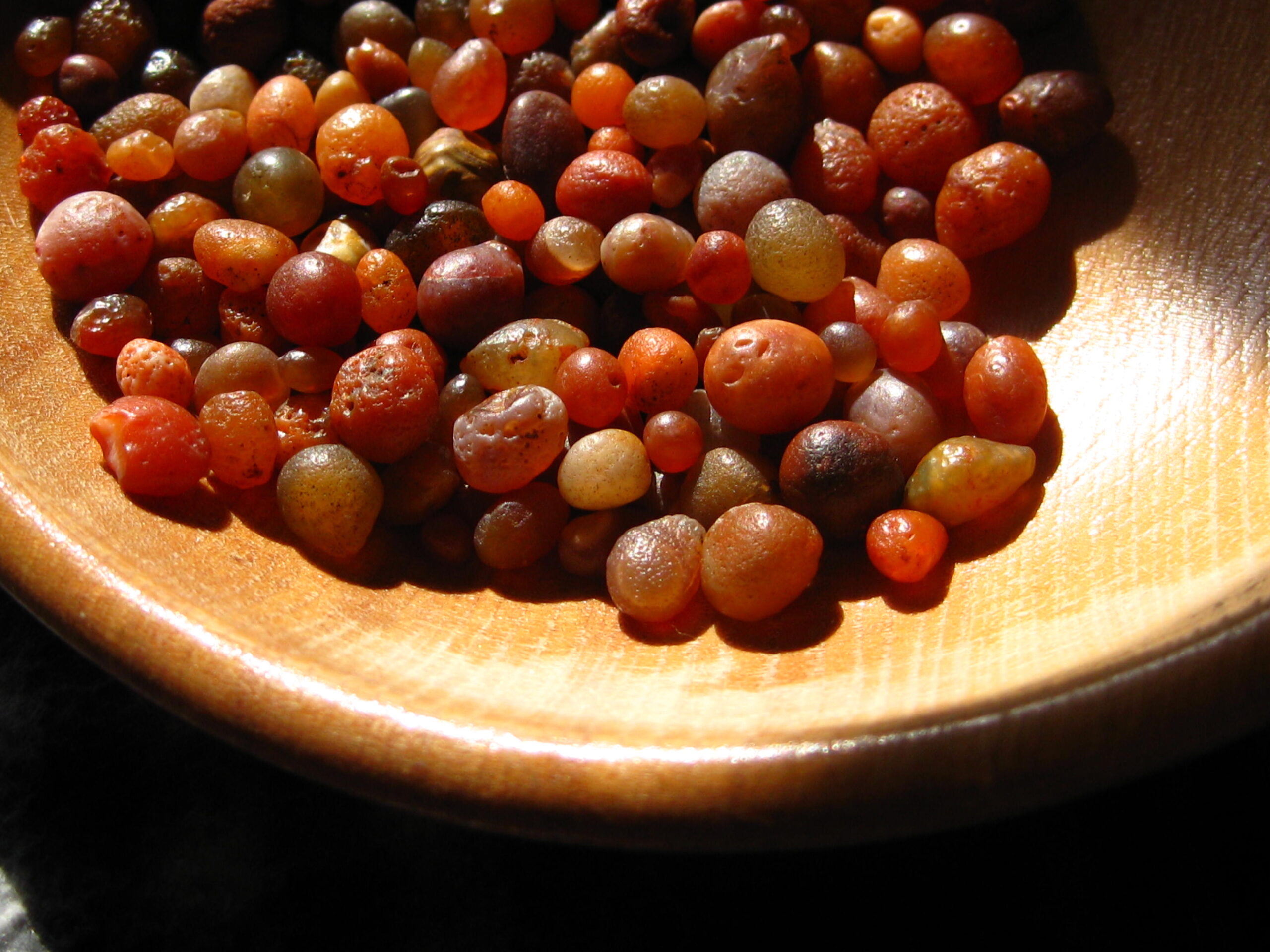
Agate is the everyday prize — translucent, waxy and often banded, it turns up as wave-polished pebbles on the coast and as nodules in the desert. Red and yellow jasper and orange carnelian ride along with it. Inland, the headline acts are petrified wood (sometimes still showing growth rings and bark) and the legendary Ellensburg Blue, a cornflower-blue agate so scarce that good pieces are local heirlooms.
Where to go, region by region
The Olympic Peninsula & outer coast
Beaches along the Strait of Juan de Fuca and the outer coast (the Ocean Shores / Damon Point area) yield wave-polished agate, jasper and carnelian, best on a falling tide after winter storms churn the gravel. This is the gentlest introduction to the hobby in the state — see our field card on the beach agates of the Strait of Juan de Fuca.
Central Washington & the Columbia Basin
The basalt country around Vantage, Saddle Mountain and the wider Columbia Basin is petrified-wood country. Collecting is possible on some public ground away from the protected Ginkgo park — always confirm you’re outside park and refuge boundaries.
Kittitas County — the Ellensburg Blue
The ranch country around Ellensburg is the only source of the true Ellensburg Blue agate. Most prime ground is private; access is usually via fee arrangements, local clubs or surface hunting on permitted land.
The Cascades & Walker Valley
The Walker Valley geode site in Skagit County is a long-popular DNR-managed digging area for carnelian-filled geodes and agate. The Teanaway / Red Top area near Ellensburg is known for agate and blue agate seams.
Fossil sites
For a change of pace, the Eocene beds at Republic (Stonerose) and Racehorse Creek (Whatcom County) preserve leaf and other fossils — collecting rules vary by site, so check before you go.
When to go
On the coast, the best window is October to March: winter storms expose fresh gravel and the lowest tides of the season uncover more beach. Inland desert and mountain sites are better in spring and fall, avoiding deep snow and peak summer heat. Wherever you go, a falling tide or a recent rain that has washed the ground clean will dramatically improve your odds.
Gear & field tips
- A bucket or mesh bag, gloves, and a spray bottle (wet stones reveal agate’s translucence).
- For the desert, a rock pick and safety glasses if you’ll break nodules; a shovel and screen for geode beds.
- Check a tide table for the coast and aim for the hours around low water.
- Backlight suspect pebbles against the sky — agate glows; ordinary basalt stays dark.
Rules & access
Washington’s mix of DNR land, state parks, national forest, refuges and private property means the rules change from site to site. National and state parks (including Ginkgo Petrified Forest) prohibit collecting. DNR and Forest Service land generally allow reasonable personal-use collecting, but check current rules. On the coast, collect on public tidelands only and keep to personal-use quantities. When in doubt, ask the managing agency — and always read our guide to collecting ethics & the law.
Clubs, shows & museums
Washington has an active club scene, and the Olympic Peninsula societies are where Field & Stone began — start with the Sequim Rock Club, the Port Townsend Rock Club and the Clallam County Gem & Mineral Society in our clubs directory. Club field trips are the fastest way to reach the best ground legally, and the region’s rock shops and museums — like the historic Woolly Mammoth Rock Shop & Museum — are part of the tradition.
Want Washington-style agate without the tide tables?
Sponsored — partner shop · Minerals KingdomFrequently asked questions
Can I collect petrified wood in Washington?
Yes, in many places on public DNR and Forest Service land within personal-use limits — but not in Ginkgo Petrified Forest State Park, where it’s protected. Always confirm the land status of your specific site.
Where can a beginner find agate?
The Strait of Juan de Fuca and outer-coast beaches are the easiest: no digging, just timing the tide. See our beach agates field card.
What is Ellensburg Blue?
A rare cornflower-blue agate found only in Kittitas County — prized, scarce, and mostly on private ranch land, so access usually means a fee dig, a club trip or permission.
Informational only — confirm access and the law with the managing agency before collecting. Written by The Field & Stone Editors · Published by KEVALEX Group.