 FIELD
FIELD Walker Valley — dig-your-own geodes
In the foothills near Mount Vernon in Skagit County, Washington, the Walker Valley geode site is one of western Washington’s few places to dig your own geodes. On state DNR land, collectors work seams in the volcanic rock for hollow, chalcedony-lined nodules and crack them to reveal quartz and agate. It is a popular, family-friendly dig — but rules and access can change, so confirm the current DNR status before you go.
The geology behind the geodes
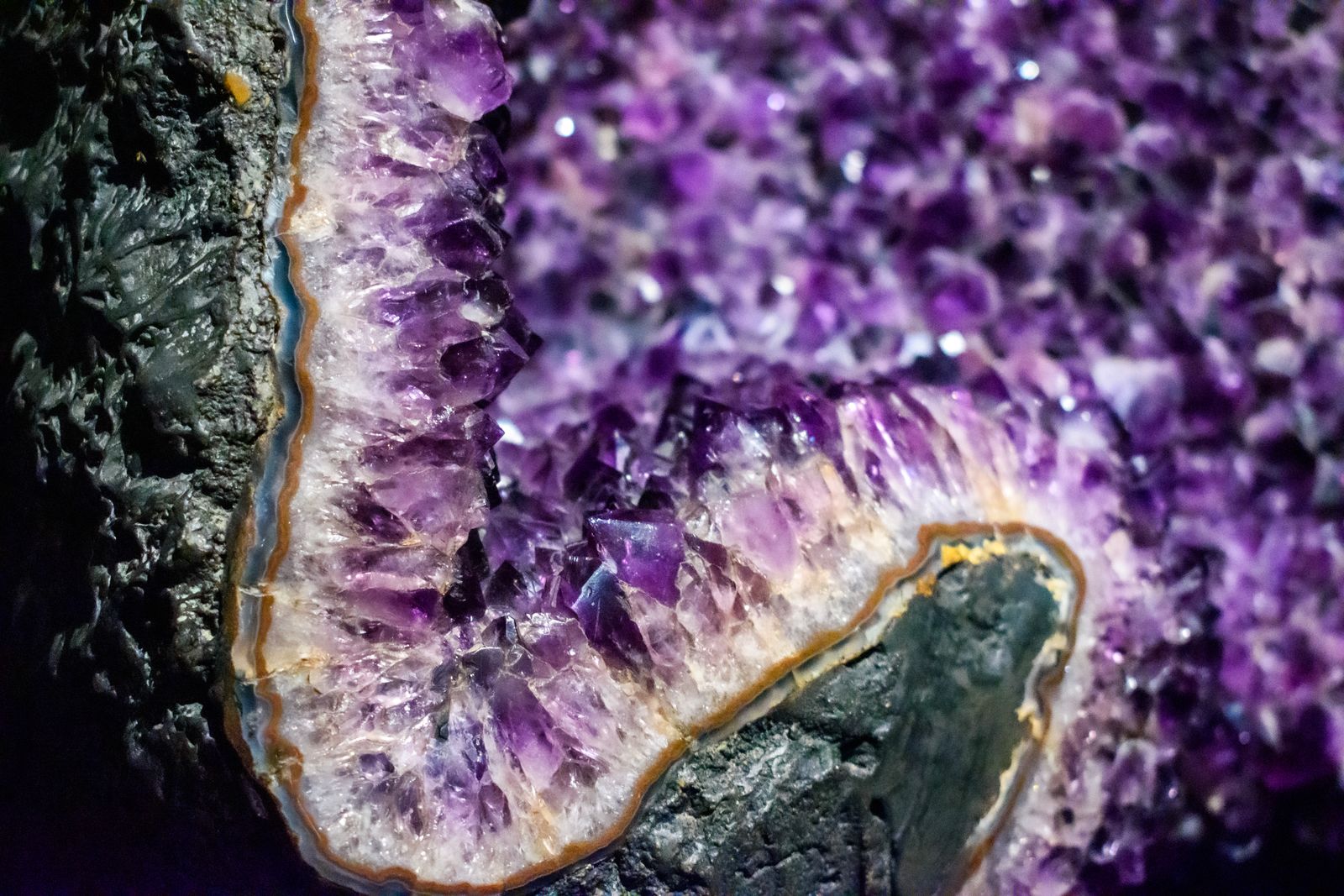
The Walker Valley geodes formed in andesite, a volcanic rock. Gas bubbles and cavities in the cooling lava were later lined by silica-rich fluids that deposited chalcedony, agate and quartz, sometimes leaving a hollow, crystal-lined geode and sometimes a solid nodule. The geodes occur in seams and layers in the rock, so collecting here means finding and following those bands rather than simply picking the surface — which is exactly what makes cracking one open so satisfying.
What you’ll find
The minerals
- Geodes — hollow, chalcedony-lined nodules
- Agate and banded chalcedony
- Quartz crystal linings
- Solid nodules for cutting
Access & the law
- State DNR land — recreational collecting for personal use has been allowed.
- Rules, day-use and tool limits can apply and change.
- Confirm current DNR access and regulations before visiting.
How collecting works
Walker Valley is a dig-and-pry site: collectors chase the geode-bearing seams in the andesite with hand tools, working nodules loose and bagging them to open later. Typical gear is a rock pick, pry bar, small shovel, gloves, eye protection and buckets, plus a pipe cutter at home for clean cuts. It is moderate physical work on a wooded hillside that can be muddy, so wear boots and old clothes, bring water, and protect your eyes when striking rock. Popular weekends can be busy, so arrive early.
Access, rules & stewardship
The site is on Washington DNR land, where recreational rock collecting for personal use has traditionally been allowed, but the agency can set day-use rules, tool restrictions or closures, and access has been adjusted at times. Check the current DNR status and regulations before you travel, park only where permitted, fill significant holes, and pack out all trash. Responsible, low-impact digging is what keeps sites like this open to the public.
A western Washington favorite
Good dig-your-own sites are scarce on the wet west side of the Cascades, which is exactly why Walker Valley is such a local institution. Generations of Puget Sound rockhounds and their kids have made the short trip from the I-5 corridor to break open their own geodes, and the thrill of splitting a dull nodule to find a sparkling quartz-lined cavity never gets old. Its accessibility from the Seattle area, combined with genuine geodes, keeps it on every Washington collector’s list.
Getting there
The site is reached from Mount Vernon, off I-5 in Skagit County, via local and forest roads toward Walker Valley. Gather supplies in town, as there are no services at the site. Roads can be rough and muddy, so a higher-clearance vehicle helps; use current DNR directions and confirm the access road and any gates are open before you make the drive.
When to go
The practical season is spring through fall, when the ground is workable; western Washington winters are wet and the hillside turns to mud. Late spring through early autumn offers the driest digging, and a rain-free stretch is best. Bring rain gear regardless — this is the Pacific Northwest — plus water and eye protection.
Plan your trip
Pair this with the wider Washington rockhounding guide, and read collecting ethics & the law before you go.
Frequently asked questions
What is Walker Valley known for?
Dig-your-own geodes — hollow, chalcedony- and quartz-lined nodules — collected free on Washington DNR land near Mount Vernon, one of few such sites in western Washington.
Is it free to collect there?
Recreational collecting for personal use has been allowed on the DNR land, subject to rules that can change. Confirm the current DNR access and regulations before visiting.
What tools do I need?
A rock pick, pry bar, small shovel, gloves, eye protection and buckets for digging, plus a pipe cutter at home to open geodes cleanly.
Is it good for families?
Yes — it is a popular family dig, though the hillside can be muddy and striking rock requires eye protection and supervision for children.
When is the best time to go?
Spring through fall, ideally during a dry stretch. Western Washington winters are too wet and muddy; bring rain gear year-round.
Want a ready-cut geode?
Sponsored — partner shop · Minerals Kingdom
Written by The Field & Stone Editors. Informational only — access varies; confirm current DNR status and rules before collecting. Published by KEVALEX Group.