 FIELD
FIELD Rockhounding in Massachusetts
Rhodonite, babingtonite and Connecticut Valley dinosaur tracks — Massachusetts pairs a distinctive state gem and mineral with some of America’s most famous fossil footprints.
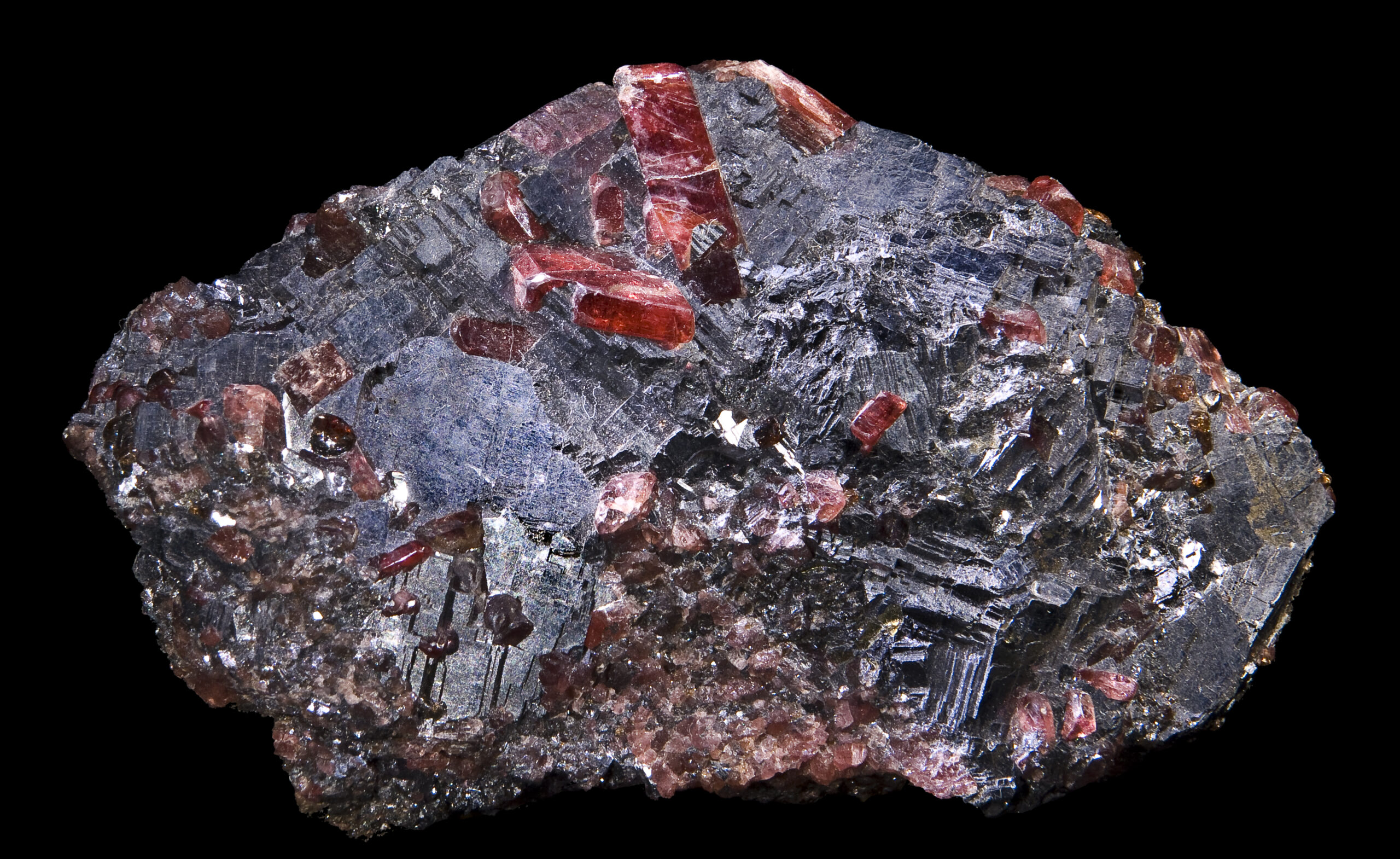
Massachusetts has a deep mineral pedigree. Its old quarries and metamorphic rocks yield rhodonite (the state gem), the rare green-black babingtonite (the state mineral), garnet and zeolites — while the Connecticut River valley is world-famous for the dinosaur trackways that helped found the science of ichnology.
The geology behind the finds
Manganese-rich metamorphic rocks grew pink rhodonite, and the basalt “traprock” of the Connecticut Valley hosts babingtonite and zeolites (prehnite, datolite, apophyllite) in old quarries. Metamorphic schists produced garnet, staurolite and beryl. The same Connecticut Valley basalts, deposited in an Early Jurassic rift, preserve the dinosaur trackways for which the region is renowned.
What you’ll find
Classic Massachusetts material
- Rhodonite (state gem)
- Babingtonite & zeolites — traprock
- Garnet, staurolite
- Dinosaur tracks (observe in place)
Before you go
- Many classic quarries are closed/private — collect via clubs.
- Trackways are protected — view, don’t remove.
- Read ethics & law first.
Rhodonite brings a soft rose-pink to the cabber’s bench, and Massachusetts babingtonite is a connoisseur’s mineral found in fine crystals in the traprock quarries. The dinosaur tracks of the Connecticut Valley are best enjoyed at protected sites — a window into the Jurassic that belongs to everyone.
Where to go, region by region
The Connecticut Valley (traprock)
Old basalt quarries around the valley produced babingtonite, prehnite and zeolites. Most are closed or private, so access is through clubs and organised trips; the famous dinosaur tracks are protected at state and local sites.
Central & western Massachusetts
Metamorphic rocks yield rhodonite, garnet and staurolite — again, mostly via clubs and with permission.
When to go
Massachusetts collecting runs spring through fall. Spring is good for fresh exposure in quarries and roadcuts, while the dinosaur-track sites are pleasant to visit throughout the warm season.
Gear & field tips
- For traprock minerals: a rock hammer and eye protection for the basalt; look for vugs lined with crystals.
- For rhodonite and garnet: scan metamorphic outcrops and dumps for the colour.
- Enjoy trackways with a camera, not a chisel — they’re protected.
Rules & access
Most of Massachusetts’s classic localities are closed or private quarries, so collecting is best done through clubs and with permission. Dinosaur trackways are protected — view but never remove them. Read our guide to collecting ethics & the law.
Clubs & shows
Eastern Federation clubs are active in Massachusetts and arrange the quarry trips that make access possible. Browse our clubs directory.
Want rhodonite or a zeolite specimen?
Sponsored — partner shop · Minerals KingdomFrequently asked questions
What is babingtonite?
A rare green-black silicate that occurs in fine crystals in the Connecticut Valley traprock — Massachusetts adopted it as the state mineral.
Can I collect dinosaur tracks in Massachusetts?
No — the famous Connecticut Valley trackways are protected. Visit and photograph them at the dedicated sites, but don’t remove them.
How do I access the quarries?
Most are closed or private, so the practical route is through a mineral club that organises permitted field trips.