 FIELD
FIELD Rockhounding in Iowa
Iowa loves geodes so much it made them the state rock — and the Keokuk geode beds are world-famous. Add Lake Superior agate in the glacial drift and rich Devonian fossils, and the Hawkeye State quietly delivers.
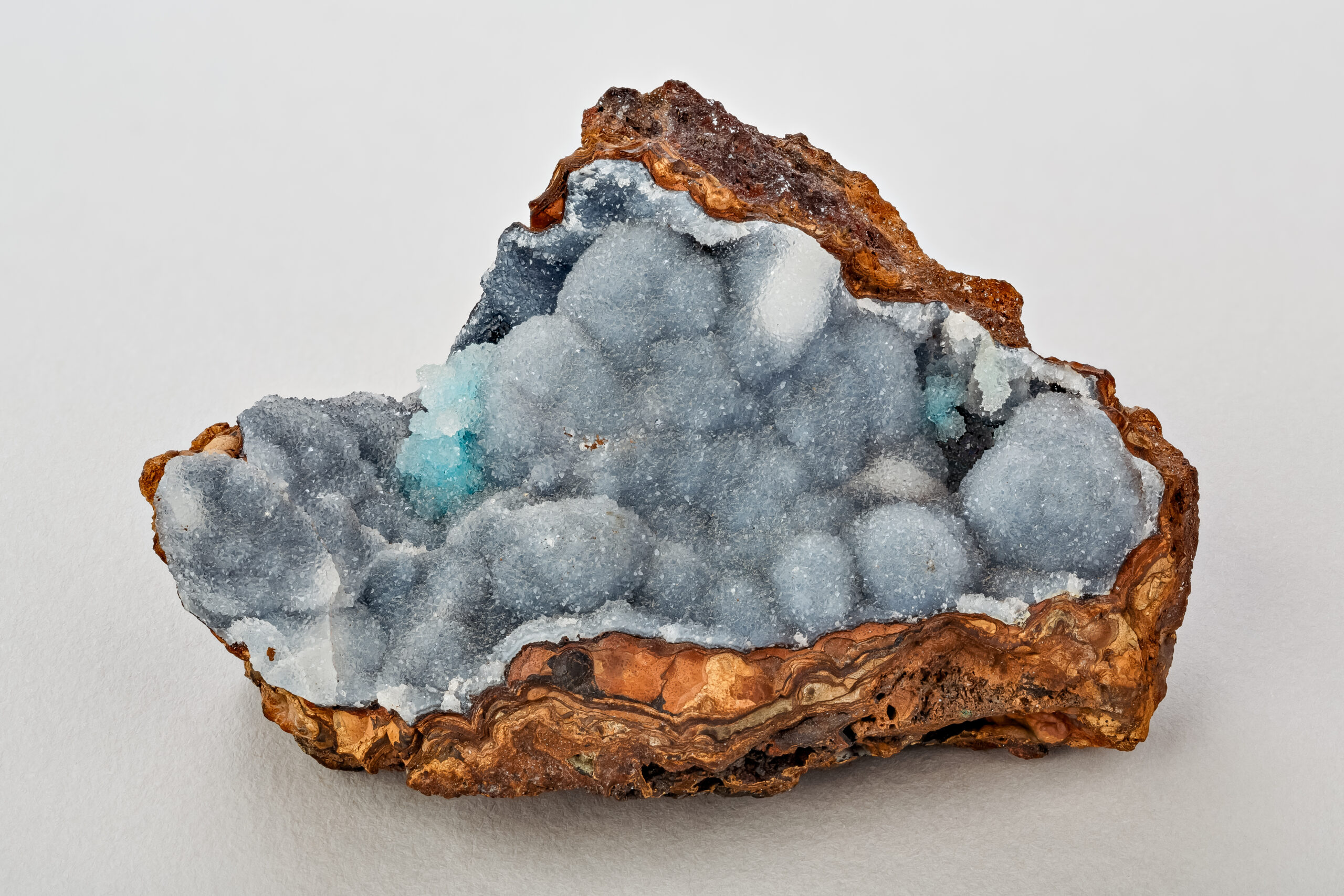
Few states identify with a single find the way Iowa does with the geode — it’s the official state rock, and the Keokuk area of the southeast produces some of the finest quartz and calcite geodes anywhere. Glacial gravels across the rest of the state carry Lake Superior agate, and Iowa’s Paleozoic seas left a generous fossil record.
The geology behind the finds
The Keokuk geodes formed in a Mississippian-age shale, where silica and other minerals crystallised inside hollow nodules — lining them with sparkling quartz and, sometimes, calcite, dolomite, pyrite or rarer minerals. Continental glaciers later spread Lake Superior agate across Iowa’s gravels, and the state’s Devonian rocks (famously the Floyd County fossil gorge) preserve corals, brachiopods and crinoids.
What you’ll find
Classic Iowa material
- Keokuk geodes — quartz, calcite, rarer minerals
- Lake Superior agate — glacial drift
- Fossils — Devonian seas (corals, crinoids)
Before you go
- Geode State Park: no collecting. Use nearby fee-dig/private sites with permission.
- River-gravel collecting often crosses private land.
- Read ethics & law first.
The joy of a Keokuk geode is the reveal: a dull, lumpy ball cracks open to a glittering crystal cavity. The best come from fee-dig farms near Keokuk, where you dig the shale and break the nodules on the spot. Lake Superior agate adds a banded prize to any gravel walk.
Where to go, region by region
Keokuk geode country (southeast Iowa)
Private fee-dig farms in the Keokuk area (extending into nearby Missouri and Illinois) let you dig your own geodes — the classic Iowa rockhounding day. Note that the state park named for geodes does not allow collecting.
Glacial gravels & rivers
Gravel bars and pits across Iowa carry Lake Superior agate — collect with the landowner’s or operator’s permission.
Devonian fossil sites
Northeast Iowa’s Devonian exposures (such as the Floyd County area) are noted for corals and crinoids.
When to go
Iowa collecting runs spring through fall. Spring rains expose fresh geodes in the shale and fresh agate in the gravels; the fee-dig farms generally operate through the warm season.
Gear & field tips
- For geodes: a mattock to dig the shale and a way to break nodules (or a saw at home for clean halves).
- For agate: wet stones in the gravel to spot the banding.
- Always confirm permission — the best geode ground is private.
Rules & access
The key Iowa rule: Geode State Park prohibits collecting, so use the nearby fee-dig farms and private sites with permission. Gravel pits and riverbanks are private too. Read our guide to collecting ethics & the law.
Clubs & shows
Midwest Federation clubs run geode and agate trips and know which farms welcome collectors. Browse our clubs directory.
Want a cracked Keokuk geode?
Sponsored — partner shop · Minerals KingdomFrequently asked questions
Can I collect geodes at Iowa’s Geode State Park?
No — despite the name, collecting is not allowed in the state park. Use the nearby fee-dig farms in the Keokuk area instead.
What’s inside a Keokuk geode?
Usually a sparkling quartz lining, often with calcite, and sometimes dolomite, pyrite, or rarer minerals — every one is a small surprise.
Where else can I find agate in Iowa?
In glacial gravels and pits statewide — Lake Superior agate was carried south by the ice. Collect with permission.