 FIELD
FIELD Rockhounding in Kentucky
Colorful Kentucky agate, quartz geodes, the gemmy fluorite of the western fluorspar district and rich Ohio Valley fossils — the Bluegrass State has a state rock worth hunting.
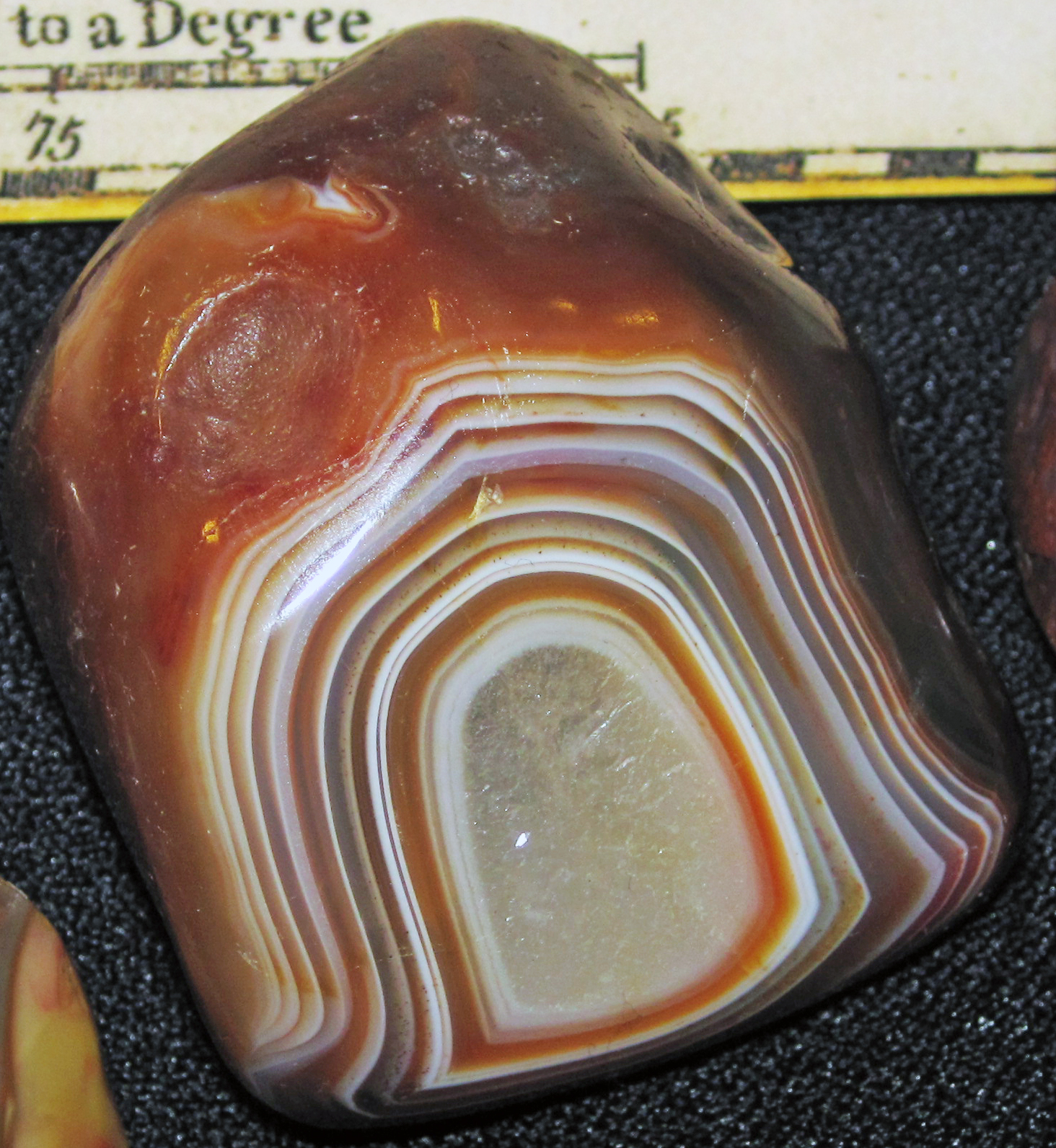
Kentucky made the colorful banded Kentucky agate its state rock, and the creeks of the eastern counties are where collectors hunt it. The state also offers quartz geodes, the famous fluorite of its western fluorspar district, and the abundant Paleozoic fossils of the Ohio Valley.
The geology behind the finds
In eastern Kentucky, silica filled cavities in Mississippian limestone to form Kentucky agate — typically red and grey, prized for its bold banding. The western fluorspar district around Marion (Crittenden and Livingston counties) produced gem-grade purple and yellow fluorite with sphalerite and calcite. And the state’s Ordovician and Mississippian rocks are packed with brachiopods, corals and crinoids.
What you’ll find
Classic Kentucky material
- Kentucky agate — Estill / Powell / Madison counties
- Geodes & quartz
- Fluorite — western fluorspar district
- Brachiopods, corals, crinoids
Before you go
- Prime agate creeks cross private land — permission required.
- The fluorspar mines are closed — fluorite reaches collectors via the trade.
- Read ethics & law first.
Kentucky agate takes a brilliant polish and its red-and-grey bands make it a lapidary favourite — fine pieces are local treasures. Geodes turn up in the same limestone country, and Kentucky fluorite (purple, yellow, blue) is a classic collector mineral, now mostly bought rather than dug.
Where to go, region by region
Eastern Kentucky — agate creeks
The creeks of Estill, Powell and Madison counties are the home of Kentucky agate. Almost all the ground is private, so landowner permission or a club connection is essential.
The western fluorspar district
Around Marion, the historic fluorite mines are closed, but the district’s famous purple and yellow fluorite circulates through shows and shops.
Fossil country
Ohio Valley exposures (such as the Falls of the Ohio area) and Mississippian limestones yield abundant fossils — collect with permission.
When to go
Kentucky collecting is best spring through fall. Lower creek water in late summer and fall exposes more agate-bearing gravel, while spring storms refresh the supply.
Gear & field tips
- For agate: walk the creek gravels and wet stones to spot the red banding; a small pick helps in weathered limestone.
- For geodes: a way to crack nodules and check the interior.
- Confirm landowner permission before entering any creek or field.
Rules & access
Kentucky’s agate creeks are largely private, and the fluorspar mines are closed, so permission and the specimen trade are the keys to the best material. Fossils are widely collectable with permission. Read our guide to collecting ethics & the law.
Clubs & shows
Southeast and Midwest Federation clubs are active in Kentucky and can open doors to private agate ground. Browse our clubs directory.
Want polished Kentucky agate or fluorite?
Sponsored — partner shop · Minerals KingdomFrequently asked questions
Where is Kentucky agate found?
In creeks of Estill, Powell and Madison counties in eastern Kentucky. Most sites are private, so you’ll need landowner permission or a club connection.
Can I collect Kentucky fluorite?
The western fluorspar mines are closed, so the famous purple and yellow fluorite is now bought through the mineral trade rather than field-collected.
Is Kentucky good for fossils?
Yes — Ohio Valley and Mississippian limestone exposures are rich in brachiopods, corals and crinoids, collectable with permission.