 FIELD
FIELD Rockhounding in Kansas
Chalk-bed fossils from an ancient sea, jelinite amber, and Cretaceous shark teeth — Kansas is a fossil state with pockets of mineral interest.
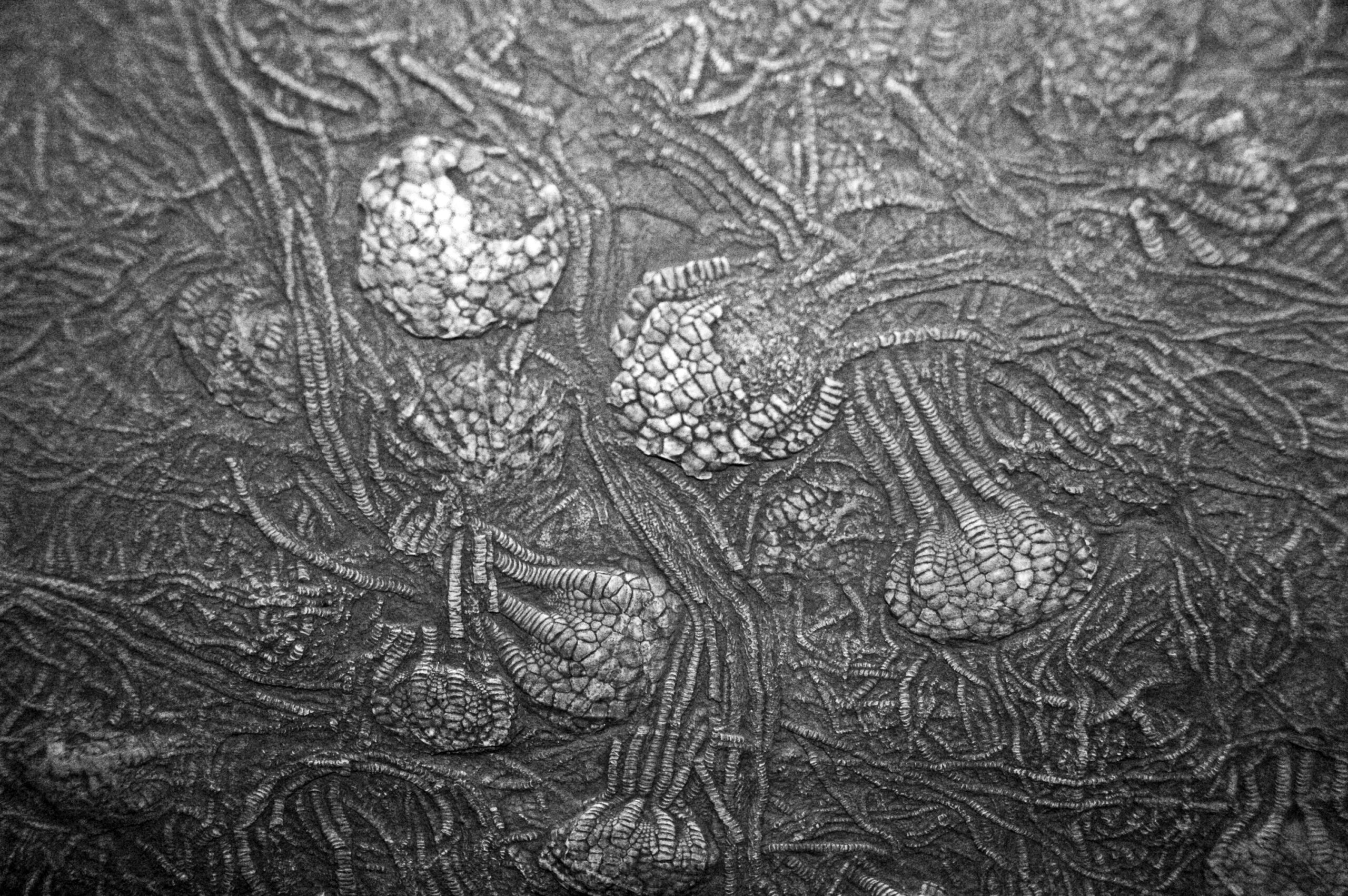
Eighty million years ago, a great inland sea covered Kansas — and its chalky seafloor preserved one of the world’s most spectacular marine-fossil records. Mosasaurs, giant fish, flying reptiles and sharks lie in the Smoky Hill chalk of the west, while jelinite amber and chalcedony add a touch of mineral interest.
The geology behind the finds
Western Kansas is famous for the Niobrara (Smoky Hill) chalk — fine-grained Cretaceous sea-bottom sediment that entombed marine reptiles, the huge fish Xiphactinus, sharks and Pteranodon. Eastern Kansas’s older rocks hold Pennsylvanian fossils, and the state yields jelinite amber, plus chalcedony, agate and the occasional geode in its gravels.
What you’ll find
Classic Kansas material
- Marine fossils — Smoky Hill chalk (west)
- Shark teeth
- Jelinite amber
- Chalcedony, agate, geodes
Before you go
- Most chalk exposures are private ranchland — permission is essential.
- Vertebrate fossils may require scientific oversight.
- Read ethics & law first.
The Kansas chalk is a paleontologist’s dream and a careful collector’s privilege — sharks’ teeth and fish bone weather out of the soft white rock, while complete vertebrate specimens are scientifically important and best left to museums. Jelinite amber and chalcedony round out the offering for mineral collectors.
Where to go, region by region
Western Kansas — the chalk country
The badlands and bluffs of the Smoky Hill region (think Monument Rocks and the surrounding ranchland) expose the famous chalk fossils. Nearly all of it is private, so arrange permission — and treat significant vertebrate finds responsibly.
Eastern Kansas & gravels
Pennsylvanian limestones and stream gravels yield fossils, chalcedony and agate for those with landowner permission.
When to go
Kansas collecting is best in spring and fall — summer heat is severe on the open plains. Rain freshly exposes fossils and chalcedony, but wet chalk is fragile, so let it dry before handling.
Gear & field tips
- For chalk fossils: soft brushes and patience — the rock is delicate; let wet material dry before lifting.
- For surface finds: a keen eye on weathered slopes and gravels.
- Carry water and watch the weather; the plains offer little shade.
Rules & access
Kansas’s best fossil ground is private ranchland, so permission is non-negotiable — and important vertebrate fossils carry scientific responsibility. Read our guide to collecting ethics & the law before you go.
Clubs & shows
South Central Federation clubs are active in Kansas and can connect you with landowners and field trips. Browse our clubs directory.
Want a Cretaceous shark tooth or fossil?
Sponsored — partner shop · Minerals KingdomFrequently asked questions
Can I collect fossils in the Kansas chalk?
On private ranchland with the owner’s permission you can collect weathered material like sharks’ teeth and fish bone. Complete vertebrate skeletons are scientifically important and are best reported to museums.
What is jelinite?
Jelinite is Kansas amber — fossilised resin found in Cretaceous deposits, a minor but distinctive Kansas collectable.
Where can I see Kansas fossils?
The Sternberg Museum and other Kansas institutions display spectacular Smoky Hill chalk specimens — a great way to understand the region before you collect.