 FIELD
FIELD Rockhounding in Florida
Agatized coral and a genuine fossil bonanza — Florida is light on hard-rock minerals but world-class for fossils, fossil shark teeth and Ice-Age bone.
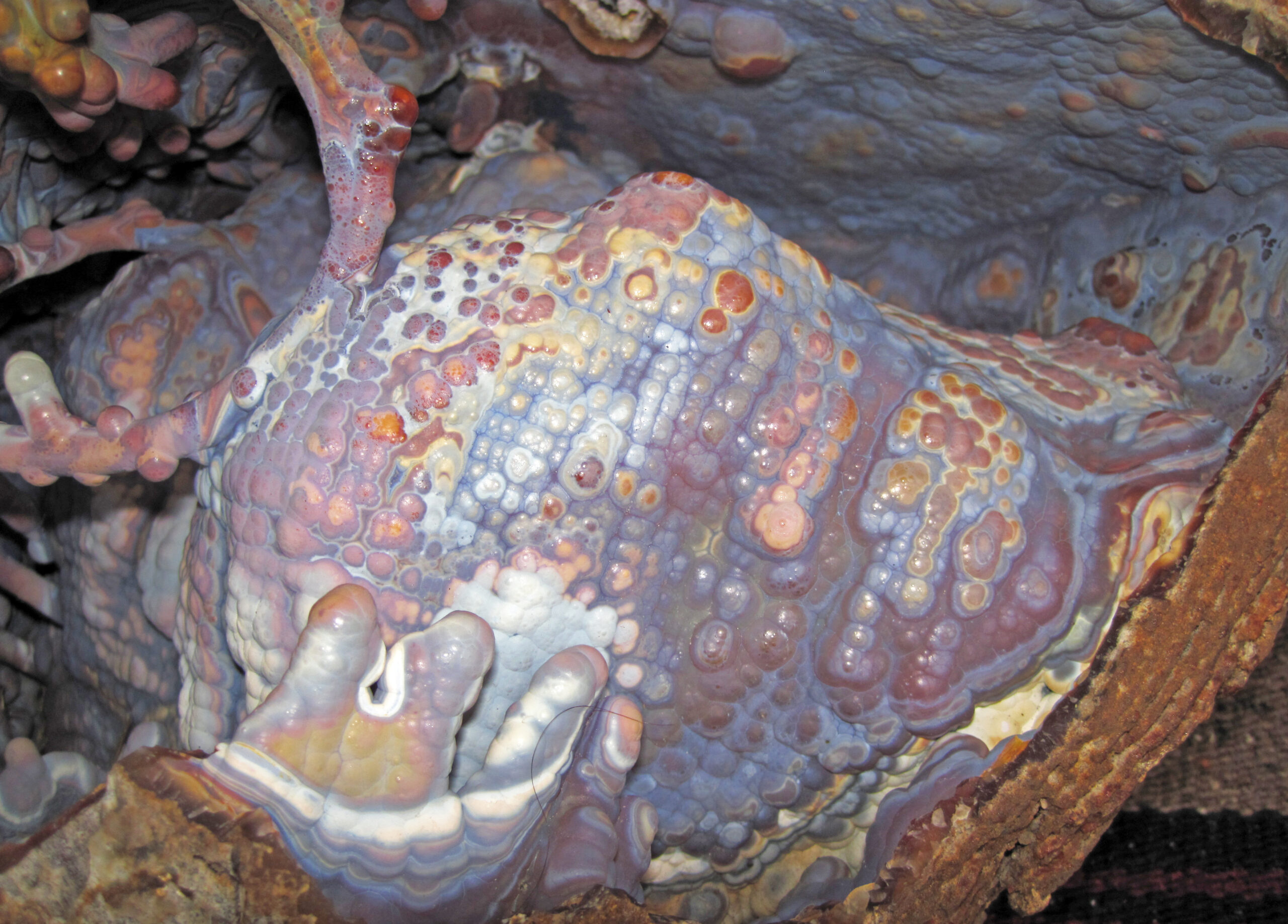
Florida’s geology is young limestone with almost no hard rock, so it’s a fossil state rather than a mineral one — and an exceptional one at that. Agatized coral is the state stone, and the rivers and beaches give up fossil shark teeth (including Megalodon) and Ice-Age bone in remarkable quantity. For a fossil hunter, few states are more rewarding.
The geology behind the finds
Florida sits on a thick platform of marine limestone. In places, silica replaced ancient coral to form agatized coral — the state stone, prized by cabbers. The rivers, especially the Peace River, cut through Miocene-to-Pleistocene sediments and concentrate fossil shark teeth and the bones of mammoths, mastodons, glyptodonts and other Ice-Age animals in their gravels.
What you’ll find
Classic Florida material
- Agatized coral (state stone)
- Fossil shark teeth — Venice, Peace River
- Ice-Age fossils — river gravels
- Calcite, common opal
Before you go
- A state fossil permit is required to collect vertebrate fossils from state land/waters.
- The Peace River is the classic fossil-sifting destination.
- Read ethics & law first.
Agatized coral shows the fossil coral’s structure preserved in chalcedony — beautiful when cut. But the real draw is the shark teeth: Venice is called the “Shark Tooth Capital of the World,” and a day sifting the Peace River gravel can yield teeth, ray plates and fragments of Ice-Age giants.
Where to go, region by region
The Gulf coast — Venice
The beaches around Venice are famous for fossil shark teeth washing in from offshore deposits — a relaxed, family-friendly hunt with a sifting scoop.
The Peace River
Florida’s premier fossil river: sift the gravel for shark teeth and Ice-Age bone. Collecting vertebrate fossils here requires a state fossil permit.
Agatized coral country
Areas such as the Tampa Bay region are known for agatized coral in the limestone.
When to go
Florida’s fossil season is the dry winter — lower river levels expose more gravel in the Peace River and make sifting practical and safe. Beach shark-tooth hunting is good year-round, especially after storms.
Gear & field tips
- For the Peace River: a sifting screen, a small shovel, and a permit for vertebrate fossils.
- For Venice beaches: a “Florida snow shovel” (a long-handled scoop and screen) and patience at the waterline.
- Mind wildlife — Florida rivers have alligators; choose sites and conditions carefully.
Rules & access
Florida requires a state fossil permit to collect vertebrate fossils (like bones and many teeth) from state lands and waterways — a simple, inexpensive permit administered by the Florida Museum of Natural History. Beach collecting of loose shark teeth is generally fine. Read our guide to collecting ethics & the law.
Clubs & shows
Florida has a strong fossil-club scene under the Southeast Federation, with active groups that run Peace River and beach trips. Browse our clubs directory.
Want agatized coral or a Megalodon tooth?
Sponsored — partner shop · Minerals KingdomFrequently asked questions
Do I need a permit to collect fossils in Florida?
Yes for vertebrate fossils (bones and many teeth) from state lands and waters — an inexpensive state fossil permit from the Florida Museum of Natural History. Loose shark teeth on the beach generally don’t require one.
Where is the best place to find shark teeth?
The beaches of Venice (“Shark Tooth Capital”) and the Peace River gravels are Florida’s classic destinations.
What is agatized coral?
Fossil coral whose structure was replaced by chalcedony (agate), preserving the coral pattern in a hard, polishable stone — Florida’s state stone.