 FIELD
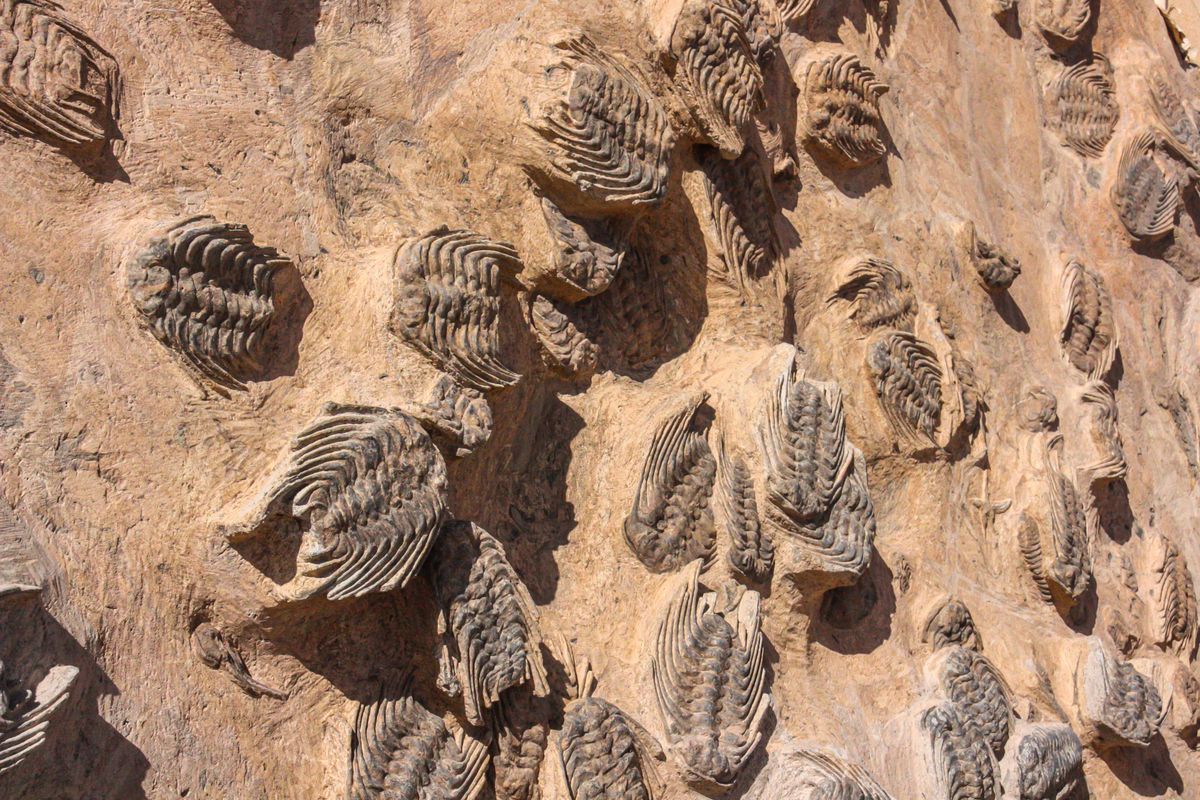
FIELD Out in Utah’s House Range, west of Delta, U-Dig Fossils is a privately operated fee-dig quarry in the Cambrian Wheeler Shale. You pay a per-person fee for a block of time, grab a hammer, and split the soft grey shale into plates — and inside, again and again, you uncover trilobites. The common species, Elrathia kingii, is so abundant here that almost everyone leaves with a handful, and you keep what you find. It is one of the most reliable, beginner-friendly fossil digs in the country.
The geology behind the trilobites
Around 500 million years ago, in the Cambrian Period, this ground lay under a warm, muddy sea. Fine sediment settled in oxygen-poor water and buried countless trilobites before they could decay, preserving them in what is now the Wheeler Shale. That shale splits cleanly along its old mud layers, so when you break a plate open you are prying apart bedding that has not seen daylight since the Cambrian — and the fossils lie flattened on the surfaces between.
What you’ll find
In the shale
- Elrathia kingii — the common trilobite, very abundant
- Rarer trilobite species for the patient splitter
- Whole specimens and partial “float” pieces
- Occasional other Cambrian marine fossils
Access & the law
- Private quarry — a per-person fee is charged.
- Keep what you find for personal use.
- Seasonal hours; closed some days — verify before you drive out.
How the dig works
This is an honest fossil site, not a mineral one — you are here for trilobites, and you find them by hand. You pay a fee for a time block (typically an hourly, half-day or full-day rate — check current rates as they change), and the operators point you to the productive shale piles. From there it is simple, satisfying work: pick up a plate, split it along the bedding, and inspect the surfaces. Bring a rock hammer and safety glasses, or rent tools on site if you arrive empty-handed. Children do well here because the fossils are genuinely common and the technique is easy to learn.
Come prepared
The quarry is remote: from Delta it is a long run west on the highway and then roughly 20 miles of gravel road — around 50 minutes of dirt driving — with no services, water or reliable cell signal at the site. Come with a full tank, plenty of water and food, sun protection, sturdy shoes, gloves and eye protection. Shade is scarce, so a hat and sunscreen matter, and the shale edges are sharp. Treat it as a self-reliant day trip and tell someone your plan.
Utah’s House Range
U-Dig sits in the House Range, part of the same vast West Desert that holds Utah’s other great collecting grounds. The Cambrian rocks here are world-famous among fossil hunters, and the surrounding desert of old ranges and dry basins is one of the richest rockhounding regions in the country. Many visitors combine the trilobite dig with the nearby Dugway geode beds or Topaz Mountain to make a full desert weekend — three very different finds within a day’s driving.
Getting there
The approach is from Delta, Utah, the last town for fuel, water and supplies. From Delta you drive west on the highway, then turn off at the signed U-Dig road and follow a maintained gravel road north for about 20 miles to the quarry. Allow far more time than the mileage suggests, and never set out onto the dirt without a full tank. Because hours and access can change, confirm the current schedule with the operator before you leave town.
When to go
Spring and fall are ideal; the open desert is punishingly hot in summer and access can be muddy or closed in winter. The quarry runs a seasonal schedule and is closed on certain days, so plan around published hours. Go early, carry ample water, and avoid the dirt roads after storms when the clay turns slick.
Plan your trip
Pair this with the wider Utah rockhounding guide and the state’s Dugway geode beds, and read collecting ethics & the law before you go.
Frequently asked questions
Is U-Dig Fossils free?
No — it is a privately operated fee-dig quarry. You pay a per-person fee for a block of time (hourly, half-day or full-day rates are typical), and you keep the trilobites you find. Rates change, so check the current pricing before you go.
What will I find?
Trilobites — mainly Elrathia kingii, which is very common in the Wheeler Shale here. Patient diggers occasionally turn up rarer species and other Cambrian marine fossils.
Do I need my own tools?
A rock hammer and safety glasses are ideal, and gloves help with the sharp shale. If you arrive without gear, tools can usually be rented on site.
Is it suitable for kids?
Yes — the fossils are genuinely abundant and the splitting technique is easy to learn, so it is one of the more family-friendly digs in Utah. Bring eye protection for everyone.
How remote is it?
Very. It is a long highway drive west of Delta followed by about 20 miles of gravel road, with no services, water or reliable cell signal at the quarry. Come fully prepared and confirm hours before you set out.
Want a trilobite specimen?
Sponsored — partner shop · Minerals Kingdom
Written by The Field & Stone Editors. Informational only — a private fee-dig site; confirm current fees, hours and road conditions with the operator before visiting. Published by KEVALEX Group.