 FIELD
FIELD Flint Ridge, in Licking County, eastern Ohio, is the source of Ohio’s official state gemstone: a remarkably colorful flint that ancient toolmakers quarried for thousands of years. Today collectors can dig this rainbow flint at a private fee-dig on the ridge, commonly known as Nethers Farm — a separate operation from the nearby state memorial park, where collecting is not allowed. Confirm the fee-dig’s current operation before you go.
The geology behind the flint
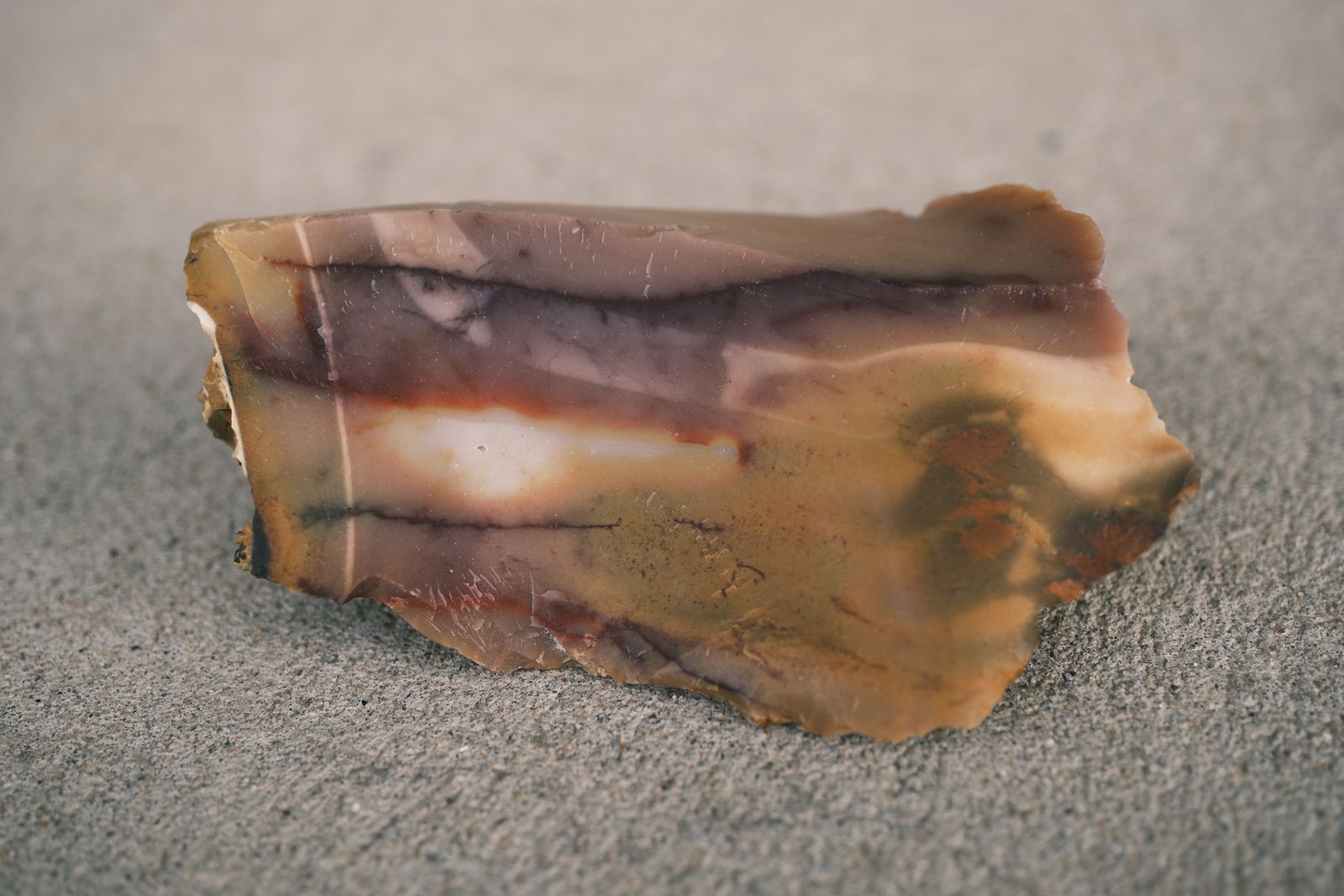
Flint Ridge flint is a Vanport flint, a bedded chert that formed from silica in an ancient Pennsylvanian-age sea. Iron and other trace elements stained it in an unusually wide palette — creamy white, gray, pink, red, blue and green, often swirled in a single piece — which is why this particular flint is prized as a gem and not just a tool stone. It occurs in a hard layer along the ridge, and getting good material means breaking into that flint-bearing rock, exactly as Indigenous quarriers did here for millennia.
What you’ll find
The minerals
- Flint (Vanport chalcedony/chert)
- Multicolored, often banded flint
- Translucent “jewel” flint pieces
- Quartz druse in cavities
Access & the law
- Private fee-dig (Nethers Farm) — pay to dig and keep material.
- No collecting at the state memorial park nearby.
- Confirm current hours, fees and operation before traveling.
How collecting works
This is genuine hard-rock work: you break flint from the bed and split cobbles to reveal fresh color. At the fee-dig you pay to collect and keep what you find, working with a heavy hammer or small sledge, chisels, safety glasses, gloves and buckets. Flint is tough and can be frustrating to reduce, so bring stout tools and patience. Because you carry your finds out, most collectors are selective, keeping the brightest, most translucent pieces for lapidary work and knapping rather than every chunk.
Access & the two Flint Ridges
It is important not to confuse the two sites. The state memorial and museum on Flint Ridge protects the ancient quarries and prehistory — it is a place to learn, but collecting is prohibited there. Digging happens on the adjacent private fee-dig, where the owner charges a fee to collect. Arrangements, hours and even whether the fee-dig is operating can change, so confirm the current situation and get permission before you travel, and never dig on protected or private ground uninvited.
America’s flint capital
Flint Ridge is one of the most important stone-tool sources in North America. For thousands of years, Indigenous peoples quarried its colorful, high-quality flint and traded it across the continent, and in 1965 Ohio made Flint Ridge flint the state gemstone. That deep history, plus the sheer beauty of the multicolored material, gives the ridge a stature few localities match — and the chance to dig your own piece of it at the fee-dig is what draws collectors and knappers from across the Midwest.
Getting there
Flint Ridge sits in eastern Licking County, between Newark and Zanesville and just off I-70 in central-eastern Ohio. The fee-dig and the state memorial are near one another on the ridge; use the operator’s directions for the dig itself. Gather supplies in the nearby towns, and confirm the fee-dig’s open days before you drive, since it does not operate year-round.
When to go
The season runs spring through fall, with comfortable digging weather in late spring and early autumn; Ohio summers can be hot and humid for hard-rock work. The fee-dig typically operates on a limited schedule, so always check current open days and fees before making the trip, and pick a dry day for the best footing.
Plan your trip
Pair this with the wider Ohio rockhounding guide, and read collecting ethics & the law before you go.
Frequently asked questions
What is Flint Ridge known for?
Colorful Vanport flint — Ohio’s state gemstone — quarried for thousands of years and collected today at a private fee-dig on the ridge.
Can I collect at the state memorial park?
No. Collecting is prohibited at the Flint Ridge state memorial. Digging is done at the adjacent private fee-dig (Nethers Farm); confirm its current operation first.
Why is this flint a “gem”?
Trace elements stain it in an unusually wide range of colors — white, pink, red, blue and green — often in one piece, making it prized for lapidary work as well as knapping.
What tools do I need?
A heavy hammer or small sledge, chisels, safety glasses, gloves and buckets. Flint is hard and throws sharp chips, so eye protection is essential.
When is the best time to visit?
Spring through fall, on the fee-dig’s open days. Check the current schedule and fees before traveling, and choose a dry day for good footing.
Want a piece of Ohio flint?
Sponsored — partner shop · Minerals Kingdom
Written by The Field & Stone Editors. Informational only — access varies; collecting is at the private fee-dig, not the state memorial. Confirm current status before collecting. Published by KEVALEX Group.