 FIELD
FIELD Rockhounding in Minnesota
The Lake Superior agate is the prize — glacial gravels and North Shore beaches spread the famous red-banded stone across the whole state, alongside thomsonite and datolite.
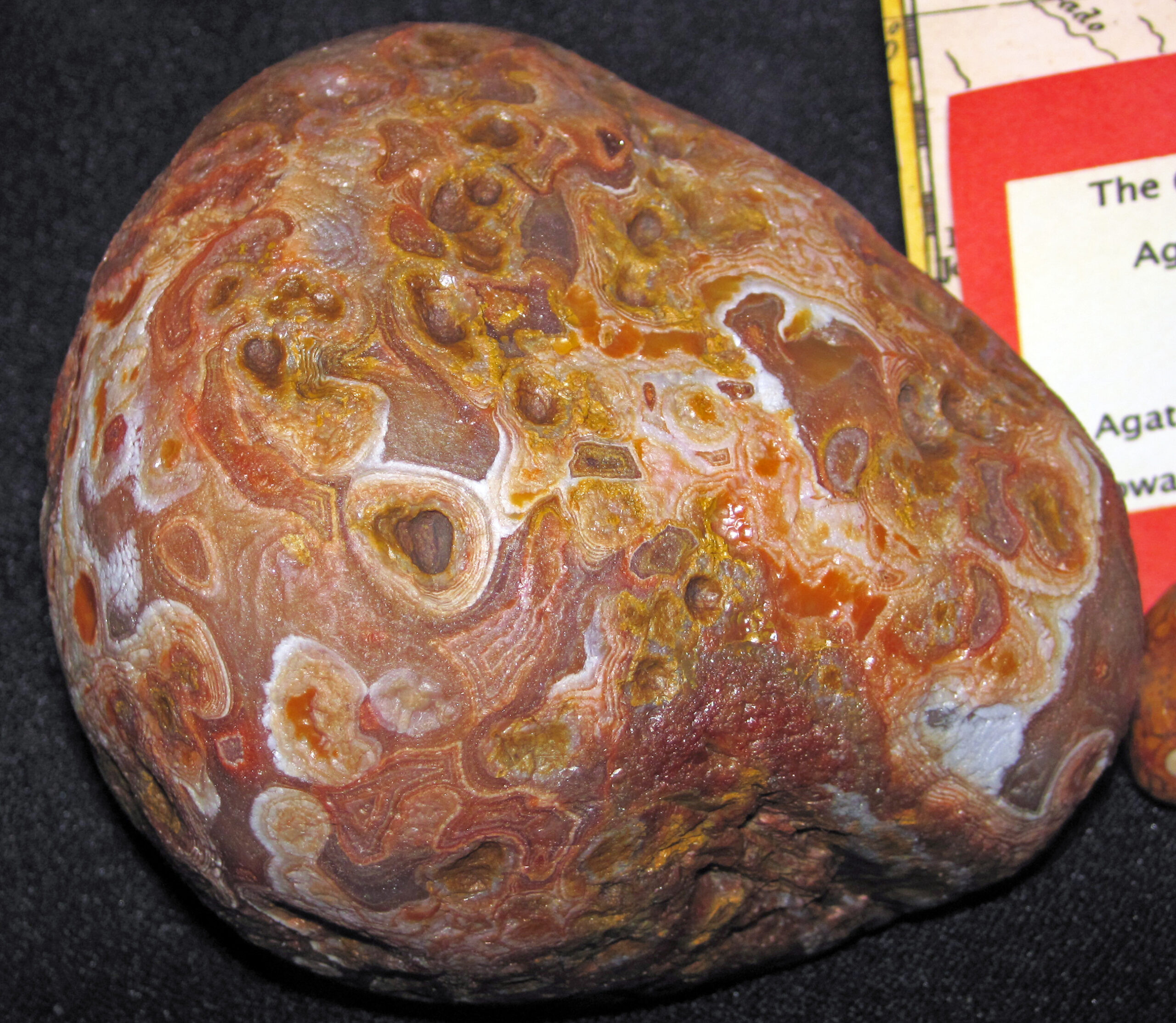
Minnesota’s signature stone formed more than a billion years ago, when lava flows along what is now Lake Superior trapped gas bubbles that later filled with banded silica. Glaciers then bulldozed that agate south and west, scattering it through gravels across the state — which is why you can hunt Lake Superior agate on a Duluth beach or in a farm-field gravel pit hundreds of miles away.
The geology behind the finds
The agate’s iron-rich red-and-white banding comes from the Midcontinent Rift basalts along Lake Superior. Glaciers spread that material far and wide, so Minnesota’s agate turns up both in place on the North Shore and as glacial float in gravels statewide. The same North Shore basalts host pink-eyed thomsonite and datolite, prized by cabbers.
What you’ll find
Classic Minnesota material
- Lake Superior agate — beaches, rivers, gravel pits
- Thomsonite & datolite — North Shore basalts
- Jasper, chert, fossils
Before you go
- Beach collecting: personal-use limits on public shore; some parks restrict it.
- Gravel pits need the operator’s permission.
- Wet pebbles to spot the agate’s banding and glow.
- Read ethics & law first.
The Lake Superior agate is one of America’s most beloved collector stones — its tight red, orange and white “fortification” banding makes even a thumb-sized piece a keeper. Thomsonite, with its concentric pink-and-green eyes, is the North Shore’s other specialty, popular for cabochons.
Where to go, region by region
The North Shore (Lake Superior)
Cobble beaches between Duluth and Grand Marais yield agate and the rare thomsonite. Work the gravel at the waterline, especially after storms churn fresh material ashore.
River gravels & pits
Glacial gravels across central and southern Minnesota carry Lake Superior agate far from the lake — pits and riverbanks (with permission) are productive, and farm fields after spring plowing are a local tradition.
When to go
Minnesota agate hunting runs spring through fall. Spring — after ice-out and after fields are plowed — is prime, and any storm that reworks a beach or a freshly worked gravel pit can expose new stones.
Gear & field tips
- A spray bottle (or the lake) to wet stones — dry agate hides its banding.
- Look for the waxy lustre and translucent edges that separate agate from ordinary basalt.
- Ask permission before entering any gravel pit or private field.
Rules & access
Beach collecting is allowed within personal-use limits on much public shoreline, though some state parks restrict it. Gravel pits and farm fields are private — always get the operator’s or owner’s permission. Read our guide to collecting ethics & the law before you head out.
Clubs & shows
Minnesota’s clubs run agate-hunting trips to the North Shore and to gravel sites, and know which pits welcome collectors. Browse our clubs directory.
Want a top Lake Superior agate?
Sponsored — partner shop · Minerals KingdomFrequently asked questions
Where can I find Lake Superior agates?
On the North Shore beaches between Duluth and Grand Marais, and in glacial gravels and plowed fields across the state (with permission). Wet the stones to spot the banding.
What is thomsonite?
A zeolite mineral with concentric pink-and-green “eyes,” found in the North Shore basalts and popular for cabochons.
When is the best time to hunt?
Spring after ice-out and plowing, and after any storm that reworks a beach or gravel pit.
Informational only — confirm access and the law with the managing agency before collecting. Written by The Field & Stone Editors · Published by KEVALEX Group.